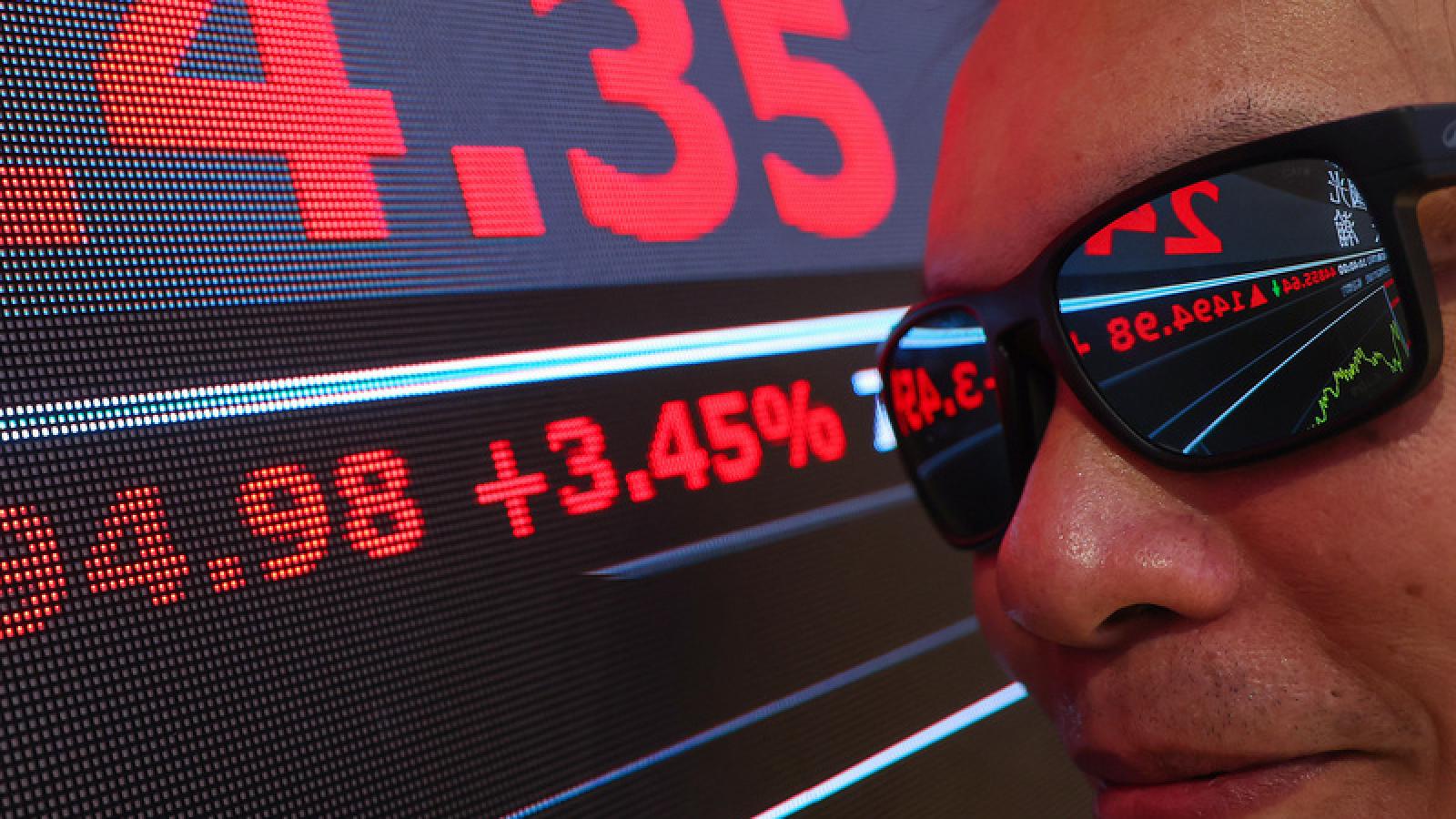
South Korea's stock market has triggered circuit breakers nearly 30 times in the past month, igniting the country's largest financial crisis since the 1998 Asian financial crisis. Rumors tell of a teenage stock prodigy who borrowed at a 5000% high-interest rate and ended up homeless. Similarly, Ashenbrenner, once hailed as America's teenage stock genius for achieving a 1551% return by betting on the AI stock rally, lost everything in just six days—ironically, two days before his wedding.
In finance, there is a theory called 'martingale,' a money management strategy originating in 18th-century France. The core logic of martingale is to double the bet after each loss, continuing until a win occurs. A single win recovers all previous losses and earns the initial stake as profit. Conversely, if every bet wins, the next bet doubles the entire amount. With enough luck, paper wealth grows exponentially at a rate of 2^n. For example, winning ten consecutive times turns 1 unit of money into 1024 units—a 1024% return. However, a single loss wipes everything out, erasing all prior paper gains instantly.
This process assumes 100% self-funded investment. When leverage is introduced, risks multiply. For example, with 4x leverage—ignoring interest costs—both gains and losses are magnified fourfold. A single loss doesn't just wipe out the original stake; it results in a 4x deficit. For instance, a 10% drop in stock value translates to a 40% loss. If this is margin trading, it triggers forced liquidation; if funded by bank loans, investors face halved capital, zero equity, and a debt equal to four times the original amount.
Whether an investor can succeed long-term depends not on IQ or luck, but on stable emotional control and investment strategy. One success may be luck; two or three consecutive wins prove skill. But repeated wins gradually erase risk awareness, replacing it with overconfidence. Investors begin to believe they are invincible—the 'chosen one'—and can't imagine being the last fool in a bull market. Greed and arrogance (or overconfidence/blind optimism) then set the stage for an all-in bet and total collapse. When a large portion of retail investors feel this way, a market bubble is near its bursting point.
Every technological breakthrough is the greatest driver of human civilization. Technology itself is not a bubble, but stock prices of tech sectors can inflate excessively due to public hype, eventually leading to bubble bursts. A century ago, the invention of telephones and televisions during America's Roaring Twenties laid the groundwork for the 1930 Great Depression. The 2000 internet boom wrote the inevitable script for the dot-com crash. History repeats—never believe 'this time is different.'
AI development will undoubtedly impact human civilization for generations, even centuries. AI itself won't burst, but will the investment frenzy and stock price surge it triggers be endless? No. Will the AI stock bubble burst? The answer remains yes.
'What a painful realization!' South Koreans have paid with an entire generation's future to teach the world's investors the harshest lesson. This is neither the first nor the last time in investment history. The story of the American teenage stock genius collapsing two days before his wedding will surely be recorded in investment textbooks. Meanwhile, rumors of Taiwan's first-ever 'four-loan-together' phenomenon demand cautious and appropriate responses from financial regulators.
Greed and arrogance are the sweet poison of investing—the biggest tumor within every investor. Return and risk always go hand in hand; no one wins forever. Wall Street's iron rule reminds us: survival is more important than profit!
*Author is Professor of Finance at National Pingtung University of Science and Technology
FACT BOX
- Source: PR Times
- Category: News