The global artificial intelligence industry is undergoing a structural transition from blind expansion of computing power to rigorous validation of substantive value. In recent years, large language models and massive data centers have attracted enormous global capital, yet commercial revenues and industrial productivity have not demonstrated equivalent breakthroughs. This severe imbalance between capital investment, model parameter scale, and actual economic output reveals the essence of the AI bubble. The focus of industrial competition is rapidly shifting from merely comparing parameter scales and language generation capabilities toward strict verification in scientific research, engineering logic, and real-world applications. For artificial intelligence to escape short-term speculation in capital markets, it must return to the laws of the physical world and the realities of industrial settings.
Deng Yu, the 2026 Fields Medalist, achieved a major mathematical breakthrough in the fields of partial differential equations and statistical physics. Together with collaborators, he derived the Boltzmann equation rigorously from the microscopic motion of hard-sphere particles in dilute gases, successfully establishing a strict link between microscopic deterministic dynamics and macroscopic statistical laws. This research deepens the solution to Hilbert’s sixth problem at the level of kinetic theory of gases and reveals a key principle: the macroscopic evolution and overall behavior of any complex system must be grounded in explicit underlying mechanisms and verifiable mathematical conditions. Systems lacking fundamental physical laws and logical constraints cannot exhibit stable real-world functionality.
This breakthrough in statistical physics precisely mirrors the deep structural problems in today’s AI industry. Over the past few years, global AI development has excessively focused on stacking parameters, training with massive datasets, and competing in computational scale. Tech giants have invested heavily in purchasing chips and building data centers, while financial markets have centered enterprise valuation on capital expenditures for computing power and model leaderboards. However, while model capabilities have significantly improved, software products have become increasingly homogeneous, with most applications still confined to peripheral areas such as content generation, text summarization, customer service, and office assistance.
Computational expansion has created an illusion of technological prosperity, masking the lack of substantive industrial value. Current generative tools, while possessing excellent demonstration capabilities, struggle to integrate into core enterprise production processes. Although they can rapidly generate probabilistic answers, they cannot assume engineering judgments, scientific validation, or real operational risks. When adopting these technologies, enterprises still face fundamental challenges such as poor data quality, system integration difficulties, information security vulnerabilities, and unclear accountability. Even as model parameters continue to grow exponentially, these technical and managerial bottlenecks do not automatically disappear.
The AI bubble has formed due to the vast gap between technological supply and industrial demand. Markets have mistakenly equated improvements in model capability with commercial value and treated infrastructure development as a guarantee of sustained demand growth. As a result, massive funds have become overly concentrated in a few platforms and computing suppliers, while end-user willingness to pay and productivity gains are insufficient to support such enormous capital expenditures. As return on investment falls far below expectations, the industry is inevitably entering a period of repricing and adjustment.
The outcome of the next phase of global technological competition will depend on AI’s ability to deeply penetrate scientific research, product development, and actual manufacturing. Models must be capable of handling real physical constraints such as material properties, equipment operating conditions, energy consumption limits, and engineering specifications, and must withstand rigorous testing through experimental data and industrial performance. Industry evaluation metrics have fully shifted from parameter scale to professional data accumulation, rigorous validation capabilities, and physical constraints.
The lessons from statistical physics remind us that the evolution of complex systems must return to the rigorous foundations of mathematics and physics. In recent years, the tech community has frequently linked and promoted the concepts of “emergence” and “artificial general intelligence (AGI),” packaging the statistical correlations arising from parameter scaling as breakthroughs in autonomous cognition and cross-domain reasoning, attempting to predict technological leaps through abstract marketing language. However, this narrative, which exaggerates probabilistic language outputs as AGI, completely ignores the underlying conditions, operational mechanisms, and scientific validation pathways for intelligence formation. Emergent phenomena lacking physical boundaries and genuine causal relationships will ultimately fail to evolve into reliable tools capable of bearing industrial responsibilities.
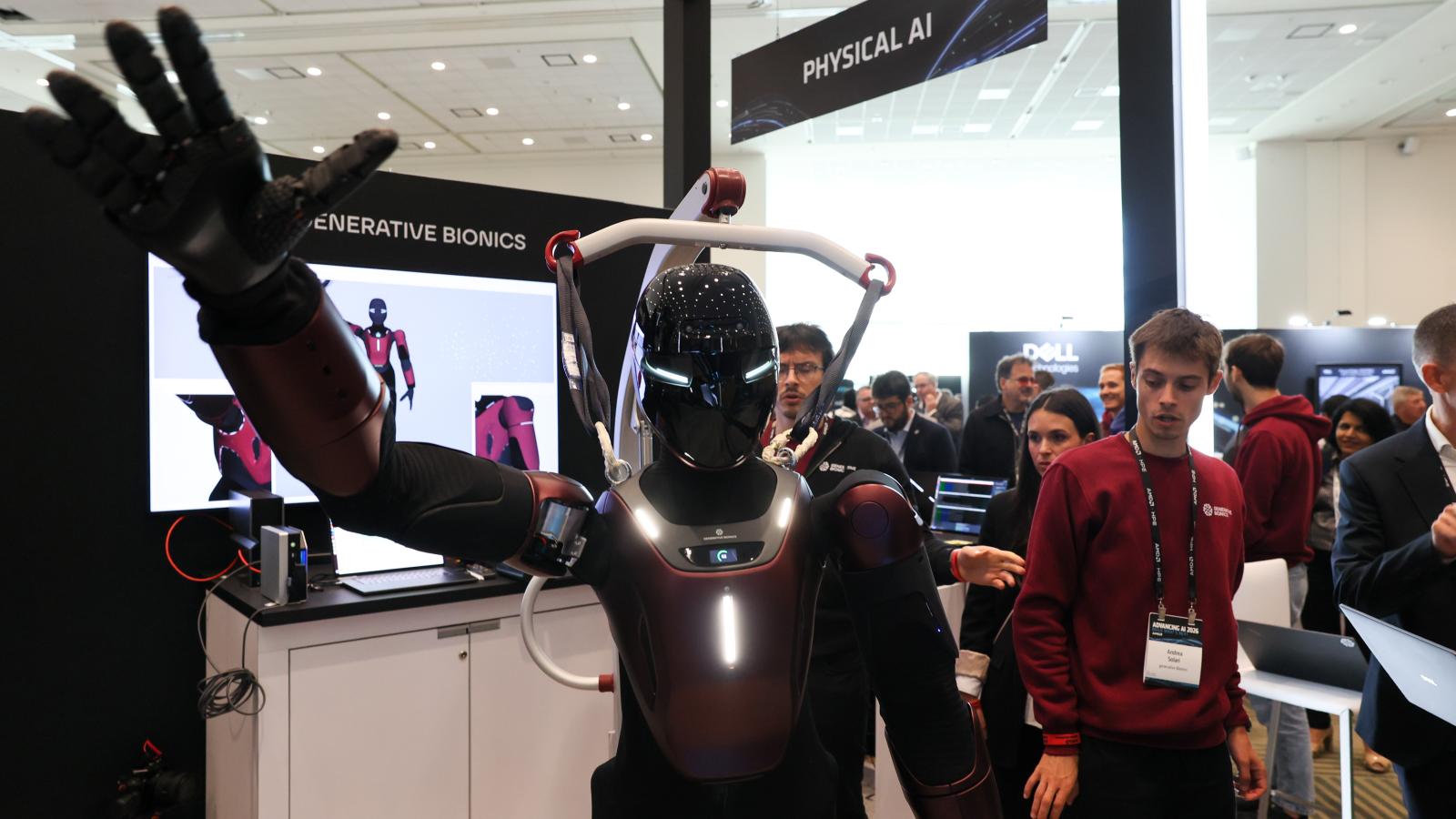
AI for Science (AI4S) is precisely the strategic core of this shift. Artificial intelligence is moving beyond information processing and content generation to deeply engage in materials science, biomedical engineering, chemical synthesis, and new energy development. Models must integrate physical equations, boundary conditions, causal relationships, and empirical data, forming closed-loop cycles between hypothesis generation, logical inference, experimental operations, and error correction. This marks a shift in competition: from language generation to knowledge production, and from mere software applications to deep restructuring of research and manufacturing systems.
The global geopolitical competition landscape in AI is also evolving accordingly. While the United States maintains advantages in high-end chip design, cloud infrastructure, and venture capital, establishing technological standards and scale investment leadership, it simultaneously faces immense pressure for capital recovery. Mainland China continues to guide technology toward scientific research, manufacturing, energy, and engineering systems, accumulating specialized data and system integration capabilities through rich industrial scenarios. The competition between the two has shifted from software model rankings to a comprehensive contest of scientific breakthroughs, engineering practices, and industrial organizational capabilities.
Regional technology strategies must not remain limited to hardware exports, server assembly, and data center construction. While basic infrastructure supply can support the global computing supply chain, it is insufficient to establish industrial leadership in the AI era. Tacit knowledge and engineering validation processes accumulated in fields such as materials science, precision equipment, advanced manufacturing, and energy management are the true foundation for developing specialized industrial intelligence systems.
Regions must also carefully confront the capital-intensive battle over general-purpose large models. Silicon Valley giants possess vast capital, cloud resources, and global data—conditions that other markets lack. Blindly following Silicon Valley’s large-model path not only makes it difficult to gain competitive advantages but also deepens technological and resource dependency. A rational strategic positioning lies in combining existing engineering experience and scientific research foundations to develop industrial intelligence systems with physical constraints, domain-specific ontologies, and experimental validation mechanisms.
The emergence of the AI bubble signals the end of the extensive growth model dominated by computing power, capital, and model scale. The only path to industrial rebirth is for technology to return to the physical world, scientific research, and real production environments. Only by deeply rooting itself in scientific breakthroughs, engineering practices, and industrial operations can artificial intelligence truly transform from a speculative topic in financial markets into a substantive force driving industrial upgrading and long-term economic development.
*Author: Retired professor of science and technology management, contributor to emerging industry commentary
FACT BOX
- Source: PR Times
- Category: News
- Products / services: AI for Science