In August 2001, President Kim Dae-jung of South Korea apologized to Vietnamese President Tran Duc Luong, stating: 'We participated in an unfortunate war and unintentionally caused suffering to the Vietnamese people. I feel deeply sorry and wish to express my condolences.' Additionally, the South Korean government, on humanitarian grounds, constructed schools and medical facilities in villages in five central provinces where South Korean troops were stationed and civilian massacres had been reported. Regarding the nature of the war, writings by officials from the Ministry of Foreign Affairs and researchers from the Ministry of National Defense's affiliated institutes have indicated that while the war was seen as an anti-communist holy war for Koreans, it was recognized as a national liberation war for the Vietnamese—though these are not official government statements.
From 2003 to 2004, the National History Teachers’ Association launched the 'Vietnam Project,' using the Vietnam War as a lens to re-examine modern Korean history and promote historical education oriented toward reconciliation and peace. This reconciliation effort continued under President Roh Moo-hyun’s administration, and in 2005, veterans’ associations from both countries met in Seoul at South Korea’s invitation, opening the door to dialogue. This shift can be attributed to the combined effect of civil society activism and the leadership of the Kim Dae-jung and Roh Moo-hyun governments, which emerged from South Korea’s democratization.
In December 2005, the 'Committee for the Realization of Truth and Reconciliation in the Republic of Korea' was established as a government body, tasked with uncovering the truth behind civilian massacres during the Korean War—an outcome of governmental leadership. Although South Korean civic groups’ truth-seeking and apology movements, along with government humanitarian support and apologies, remain incomplete, they were initiated spontaneously, even without requests from Vietnam, leaving a strong impression on the Vietnamese people.
Vietnam, long immersed in a victorious narrative, had neglected the pain and loss caused by war. These South Korean actions reportedly became a catalyst for Vietnam to reflect on how to understand war-related suffering. For some Japanese intellectuals, it also prompted self-reflection on why Japan has failed to achieve historical reconciliation regarding colonial rule and aggressive wars. Of course, efforts by Japanese civil groups like the Japan Teachers’ Union to reflect on imperial Japan’s state violence against Korea have also contributed to South Koreans’ self-examination.
In contrast, China and Vietnam have yet to see spontaneous civic movements aimed at reflecting on their own state violence or promoting historical dialogue and reconciliation. Under one-party rule, the Communist Party’s victory-centric historical narrative, intertwined with patriotism, restricts self-reflection and suppresses freedom of assembly, association, and speech. Both China and Vietnam sent troops during the Korean and Vietnam Wars, viewing them as just resistance wars against U.S. aggression. This was confirmed in a speech by Vice President Xi Jinping at the 50th anniversary commemoration of the Korean War in 2010.
After the Soviet Union’s collapse, relevant documents from Moscow were made public, clearly revealing that the Korean War was an aggressive war initiated by Kim Il-sung with Stalin’s support. Yet China continues to ignore this evidence. While the Vietnam War was indeed a national liberation war for the Vietnamese, and China’s support had legitimacy, the Korean War was an internal conflict between the two Korean governments and should be clearly distinguished from the Vietnam War. Moreover, during the Vietnam War, Vietnam used border areas of Myanmar and Laos as its battlefield and even invaded Myanmar after the war to establish a pro-Vietnamese regime. Military action is only justified in defensive wars against aggression. Vietnamese veterans’ associations recognize this distinction, limiting membership to those who participated in resistance wars.
Ultimately, for China and Vietnam to reflect on state violence and pursue historical reconciliation, it must begin with the growth of autonomous civic movements. Only through such accumulated efforts can national leadership change.
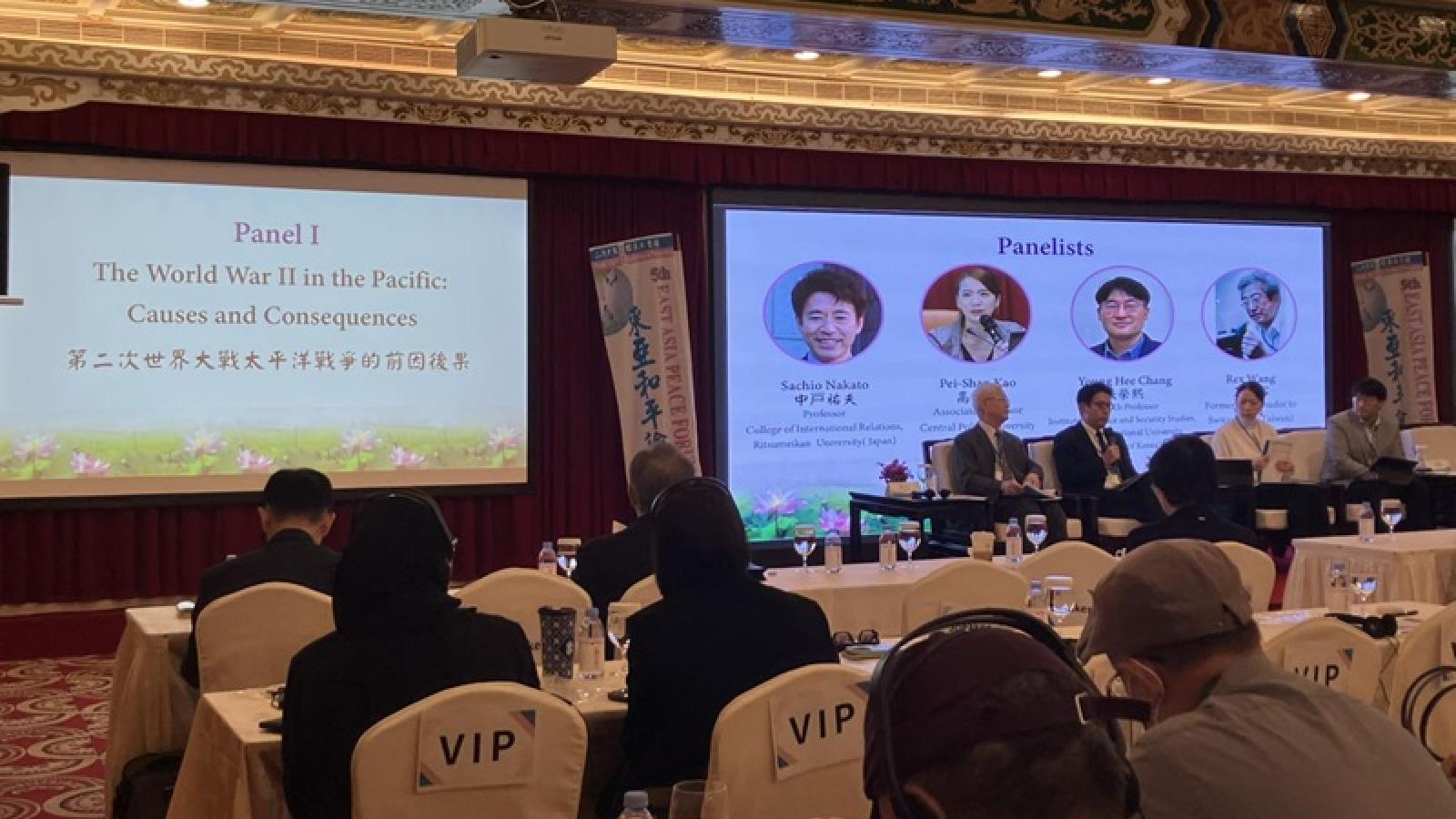
UNESCO committees, which operate according to universal values and standards, could serve as mediators for historical dialogue. However, Japan’s and China’s committees are affiliated with their foreign ministries, resulting in very low autonomy. In contrast, South Korea’s independent committee has hosted the 'International Forum on East Asian Historical Reconciliation' annually since 2007. In August 2010, it held broad discussions in Hanoi on East Asian historical reconciliation, including perceptions of the Vietnam War. These efforts are only beginning, and it is hoped that related countries’ UN bodies will gradually move toward historical reconciliation.
The modern history work 'Modern History of the Three East Asian Nations' (published simultaneously in 2005 by Korea, China, and Japan), co-authored by scholars and teachers from the three countries, marked a milestone in historical dialogue toward reconciliation. This book emerged from the 'Forum on Historical Perception and East Asian Peace,' established in August 2001 by civil groups from Japan, China, and South Korea following the controversy over the Fusosha textbook. Its focus was on concretely describing Japan’s aggression and domination to counter right-wing historical distortions. The significance of this book varies by country: for Japan, the perpetrator nation, it carries strong self-critical meaning, while for victim nations South Korea and China, its significance is limited. Notably, Chinese participants in the peace forum lacked counterparts to South Korean and Japanese civil groups, with only the Institute for Research on the War of Resistance Against Japan at the Chinese Academy of Social Sciences participating as a state policy research body.
Despite these constraints, scholars and teachers from the three countries continued historical dialogue and co-authored 'Transcending Borders: Modern East Asian History (Volumes 1 and 2),' published simultaneously in 2012. The first volume somewhat overcomes the limitations of the 2005 edition, but four and three of its eight chapters are titled 'Hot War' and 'Cold War,' respectively, centering the narrative on war. Meanwhile, the responsibility for aggression, war attributes, and domination is treated rather vaguely.
Criticizing other nations’ state violence is easy, but applying the same standard to one’s own country is difficult. Achieving historical reconciliation requires confronting the myth of a binary view that positions one’s own country as victim and others as perpetrators, as well as the tendency to criticize others while turning a blind eye to one’s own nation, and striving to overcome it. For historical reconciliation, the most important task is fostering domestic peace through self-competition and self-examination of one’s own modern history.
A historical consciousness and education based on a victory-centric view lacking introspection easily becomes a seed threatening peace. Recently, in South Korea, leadership promoting self-reflection has rapidly declined, and critical, reflective views on modern Korean history are now being denounced as 'masochistic historical views.' From the perspective of East Asian peace, this trend is deeply concerning. This is why we must repeatedly remember President Woodrow Wilson’s warning: 'The greatest enemy of society is the university that does not use the past as a standard for judgment and does not strive to connect students’ thinking with past ideas. Such a university is merely a tool for destroying society.'
FACT BOX
- Source: PR Times
- Category: News