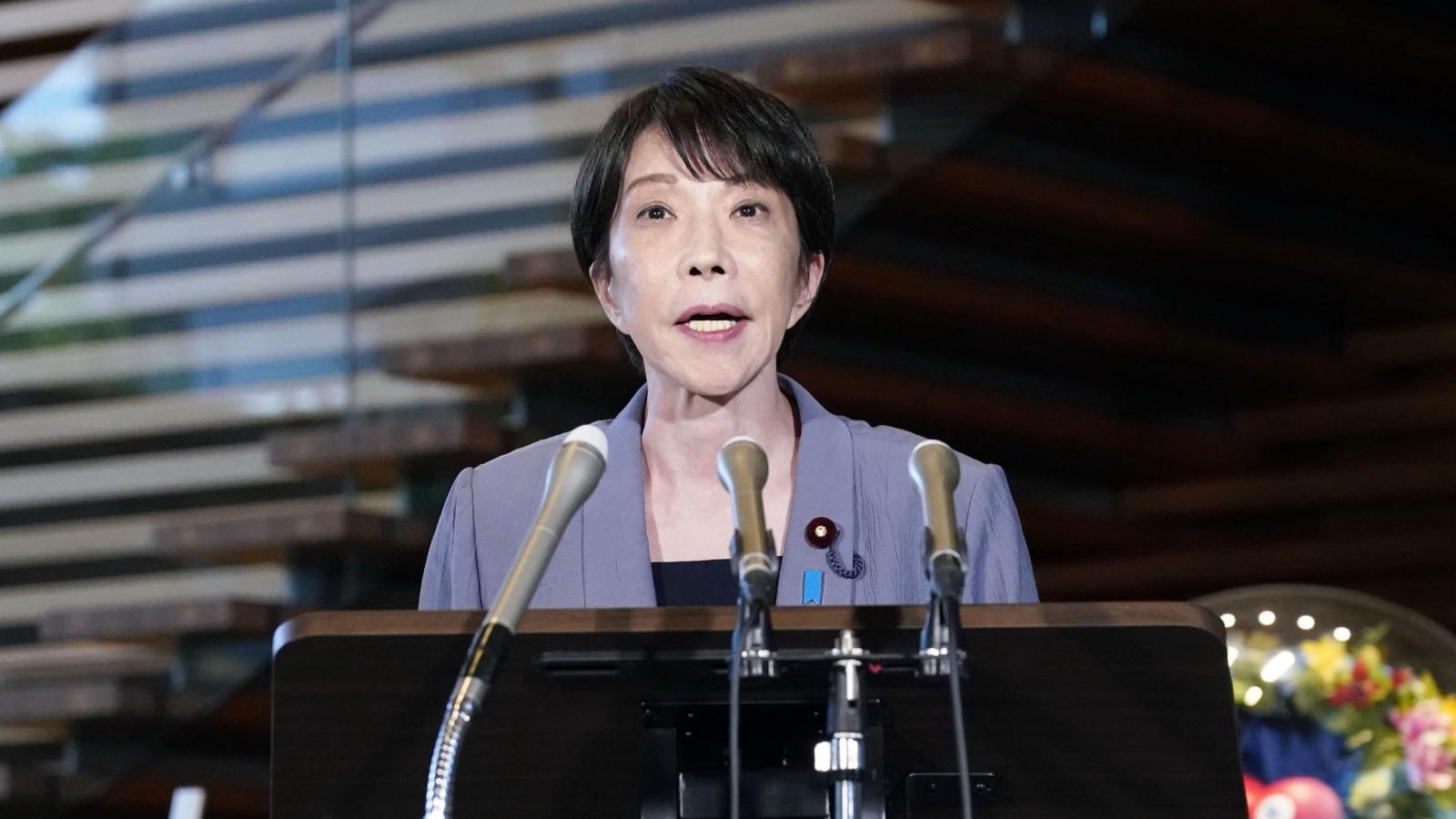
On the 81st anniversary of the end of World War II, Japanese Prime Minister Koike did not personally visit Yasukuni Shrine today (the 15th), opting instead to offer a self-funded 'tamagushi-ryō'—a monetary offering for rituals. However, Japan's Defense Minister Shunichi Suzuki and LDP Secretary-General Shunichi Suzuki still visited the shrine. Former legislator Kuo Yi stated that Koike adopted a compromise under diplomatic and economic pressure, highlighting four key considerations involving China, Russia, the United States, and the Korean Peninsula.
August 15 marks 81 years since Japan's surrender in WWII. Yasukuni Shrine enshrines approximately 2.5 million war dead, including 14 Class-A war criminals. Visits or ritual offerings by Japanese politicians have long drawn protests from China and South Korea. Before becoming Prime Minister, Koike visited the shrine multiple times, but since taking office, she has refrained from personal visits, instead expressing her respect through offerings or ritual fees.
Why did Koike choose to 'send money but not go in person'? Kuo Yi outlined four key considerations.
Kuo Yi wrote on Facebook: 'Koike didn't go personally, but she sent the tamagushi-ryō—that is, the ritual offering.' He believes that while Koike may personally wish to visit Yasukuni, she ultimately chose the compromise of 'not going, but sending the offering' to maintain support from conservative domestic factions while avoiding further damage to foreign relations.
First, China. Kuo Yi believes Koike does not want to further provoke Beijing—not only to avoid expanded Chinese countermeasures but also considering the upcoming APEC Economic Leaders' Meeting in Shenzhen and international events like the Asian Games in Aichi and Nagoya.
Second, Russia. Russian President Putin recently visited Etorofu Island, which Russia controls but Japan claims sovereignty over, sparking strong protests from Japan. Kuo Yi argues that amid rising tensions over the Northern Territories dispute, Koike must avoid adding further diplomatic and security risks.
Third, the United States. Kuo Yi notes that the Class-A war criminals enshrined at Yasukuni were involved in the Pearl Harbor attack and the Pacific War, making the U.S. sensitive to Japan's wartime history. A personal visit by Koike in her official capacity could provoke dissatisfaction in Washington.
Fourth, South and North Korea. Kuo Yi points out that Japan's 35-year colonization of the Korean Peninsula makes the Yasukuni issue highly sensitive in both Koreas, so Koike must also consider potential diplomatic backlash.
Kuo Yi also cites Japan's economic situation as another practical reason Koike did not visit. After Japan and the U.S. jointly intervened in the currency market, the yen briefly rose to around 155 per dollar but has recently fallen back to around 159, nearing the 160-yen threshold again. In July, Japanese corporate bankruptcies exceeded 1,000 cases, indicating ongoing pressure from rising costs and weak domestic demand.
Kuo Yi believes Japan is facing pressure from both exchange rate volatility and business operations, stating, 'This is not the time to introduce unpredictable variables,' warning that the economic situation could worsen otherwise. However, Koike has not publicly stated that these four factors were her reasons for not visiting—the analysis is Kuo Yi's personal assessment.
More exclusive reports from Feng Media: · Just how cheap is the yen? A curry rice dish reveals the harsh truth—disconnect between forex rates and public perception · TSMC and Sony jointly invest 150 billion yen in new company! Focused on developing 'this product'—Japanese government likely to provide financial support · Japanese izakayas facing wave of bankruptcies! Soaring costs and the disappearance of after-work drinking are crushing small restaurants—foreign tourists become the last lifeline
FACT BOX
- Source: PR Times
- Category: News