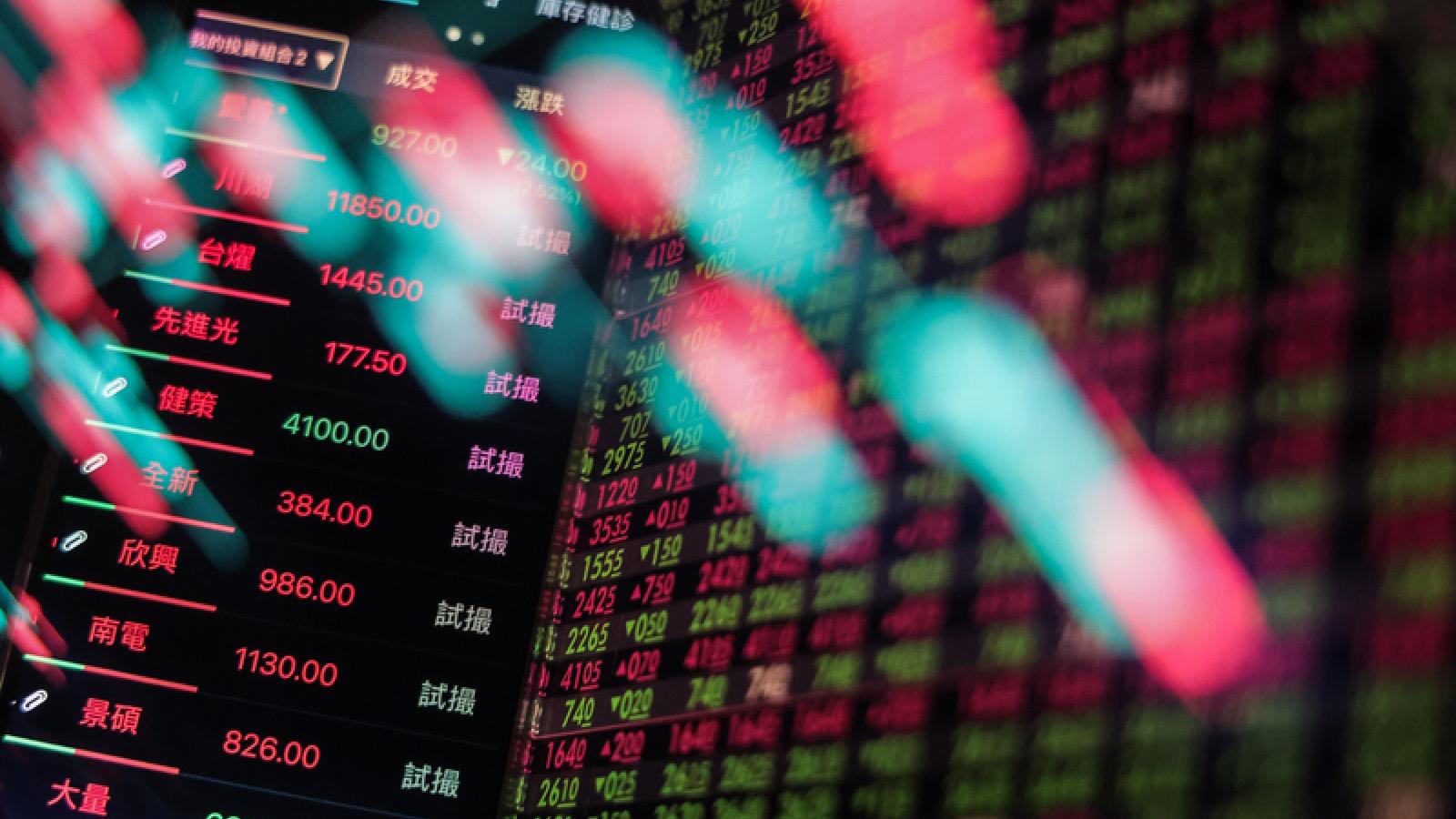
In July, foreign investors carried out massive sell-offs in Taiwan's stock market, resulting in a significant capital outflow described by some as a 'mass exodus.' This move was driven by escalating U.S.-China tensions and growing concerns over a global economic slowdown, prompting foreign capital to retreat from emerging markets. However, the situation shifted dramatically in August. Foreign investors resumed aggressive buying of Taiwanese stocks, causing a sudden reversal from net selling to net buying.
Regarding this abrupt shift, renowned Taiwanese economic commentator Chen Feng-hsin (Feng-hsin Chen) warns, 'This is not merely a rebound. It's a sign that a 'hidden capital tsunami' is approaching Taiwan.' The 'hidden capital' she refers to consists of large-scale institutional investment funds that are not yet visible in official statistics but are already positioned and waiting for the right moment to enter the market. If these funds flow in en masse, they could significantly impact not only Taiwan's capital markets but also its foreign exchange rates.
Particular attention is being paid to the New Taiwan Dollar (NTD) exchange rate. Chen points out, 'If foreign buying resumes alongside the influx of hidden capital, the NTD could appreciate sharply in a short period.' Indeed, data from the Taiwan Stock Exchange in August shows foreign net purchases reaching several billion U.S. dollars compared to the previous month, indicating a rapid improvement in market sentiment.
While NTD appreciation could help suppress inflation by lowering import costs, it may also pressure the earnings of Taiwan's export-oriented industries, particularly in semiconductors and electronic components—the backbone of its economy. The impact of exchange rate fluctuations on corporate performance is substantial, making the central bank's future response a key focus.
Chen further states, 'With Taiwan's trade surplus continuing and confidence in its technological capabilities rising, now is the time for global investors to reassess Taiwan's weight in their portfolios.' She argues that Taiwan's strategic value is being re-recognized amid global supply chain restructuring, forming the foundation for capital inflows.
Market observers note that expectations of a slowdown in the U.S. Federal Reserve's rate hikes are also facilitating capital repatriation to emerging markets. Among these, Taiwan—despite political risks—is seen as a relatively safe advanced emerging market due to its economic stability and technological prowess.
Whether this 'hidden capital tsunami' will fully materialize depends on U.S.-China relations, China's economic trajectory, and Taiwan's own monetary policies. Nevertheless, the foreign investors' sharp reversal in August undoubtedly signals a restoration of confidence in Taiwan's economy.
In conclusion, while short-term market volatility persists, Taiwan's structural strengths—persistent trade surplus, world-class semiconductor industry, and skilled workforce—remain intact and continue to serve as a foundation for long-term capital inflows. As Chen Feng-hsin suggests, if the 'hidden capital' surfaces, a significant appreciation of the New Taiwan Dollar may be unavoidable.
FACT BOX
- Source: PR Times
- Category: News