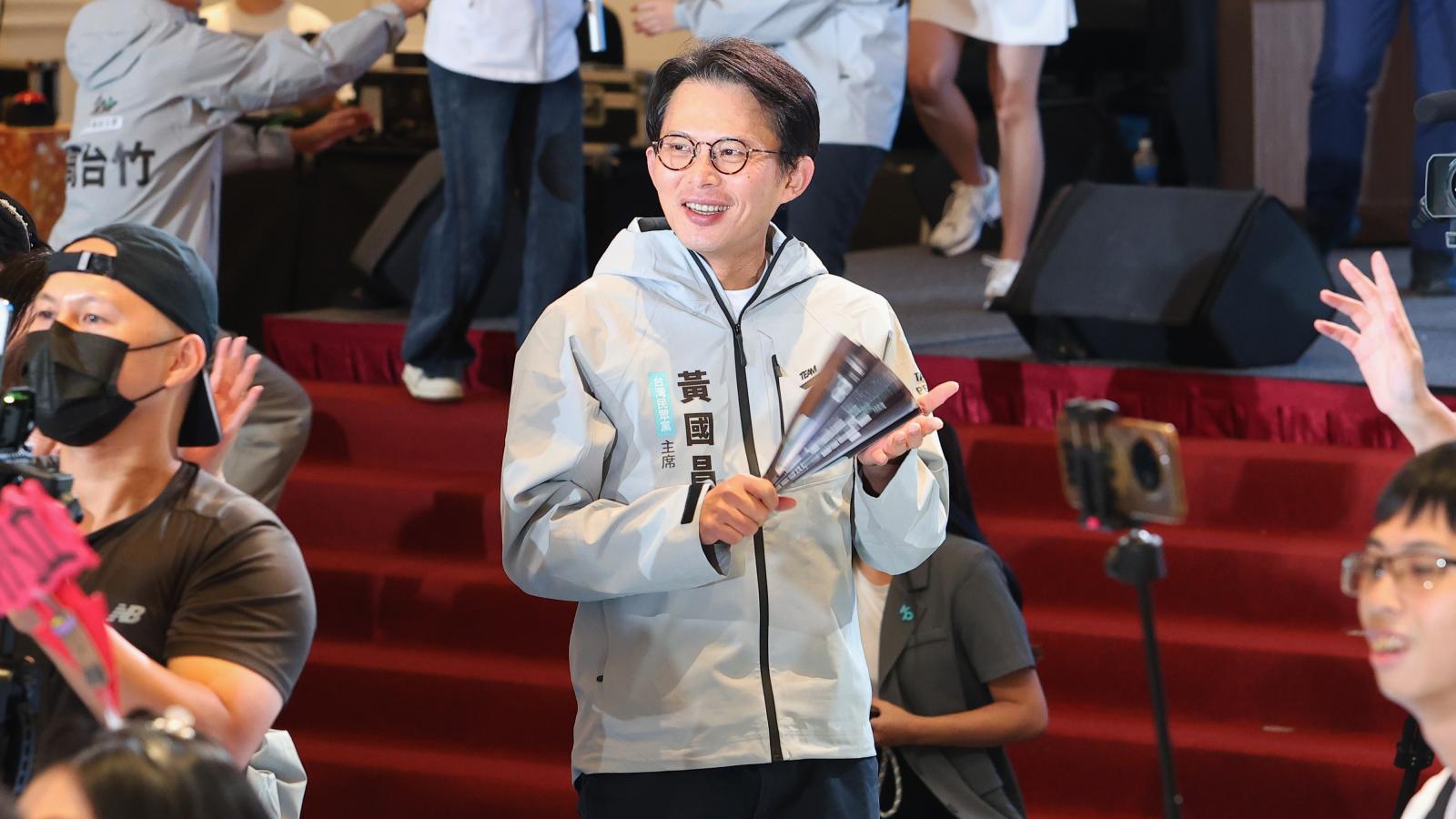
The Legislative Yuan voted on multiple referendum proposals, and the Taiwan People's Party's (TPP) push for a referendum on euthanasia legalization failed to gain support from the Kuomintang (KMT), ultimately being rejected with 7 votes in favor and 51 opposed. Huang Kuo-chang, chairman of the TPP, stated on the 15th that the TPP and the KMT are different parties with distinct policy and value orientations, and the KMT should be accountable to all voters for its voting decision.
Huang Kuo-chang attended a parent-child event in Guishan District, Taoyuan City, in the afternoon and responded to media inquiries regarding the referendum vote and disputes over the central government's total budget. He emphasized that domestic transfer voting and euthanasia are important public policy issues championed by the TPP and should be decided by the people. The KMT's lack of support reflects a concrete manifestation of differing values between the two parties.
Why did the euthanasia referendum fail? On the 14th, the Legislative Yuan reviewed four referendum proposals. Three—dedicated use of traffic fine revenues, corporal punishment (flogging), and abolishing the nuclear-free homeland policy—passed. However, the euthanasia legalization referendum failed due to the KMT not participating in the vote and the Democratic Progressive Party (DPP) casting opposing votes. Meanwhile, the TPP's proposed referendum on domestic transfer voting was not included in the day's agenda.
Huang Kuo-chang stated that the voting behavior of each party caucus reflects the value differences among the three major parties in the current legislature. He criticized the DPP for opposing everything and forgetting the democratic value of referendums. Regarding the KMT's lack of support for domestic transfer voting and euthanasia referendums, he bluntly stated: 'The KMT must face its own responsibility.'
Huang pointed out that domestic transfer voting and euthanasia are issues of concern to many young and moderate voters, and the KMT should explain its stance to all voters rather than being accountable to the TPP. He emphasized that this vote also highlights the TPP as an independent party with agency, and he believes voters will use each party's voting records as a basis for judgment in future elections.
Regarding the delay in the total budget review, Huang refuted: 'Who caused the delay in the total budget review? Why did it happen? The DPP must not reverse cause and effect or distort facts.' He argued that the Legislative Yuan had already passed laws raising retirement benefits for police and firefighters and increasing military salaries, but the Executive Yuan did not allocate the necessary funds in the total budget. The opposition parties only began budget review after cross-party coordination.
On the same day, the Legislative Yuan passed the 2026 central government total budget in its third reading, reducing expenditures by NT$48 billion. Subsequently, the Executive Yuan listed seven 'irrational cuts and freezes,' warning that they could impact the operations of certain agencies, policy promotion, disaster inspections, and the rights of frontline personnel.
Huang stated that the proportion of budget cuts was not high and that the funds required for government operations and policy implementation were not severely affected as claimed by the ruling party. He also announced that on the 20th, he would accompany representatives of retired police and firefighters to the Executive Yuan to demand an explanation from Premier Cho Jung-tai regarding the handling of retirement benefit funding.
FACT BOX
- Source: PR Times
- Category: News