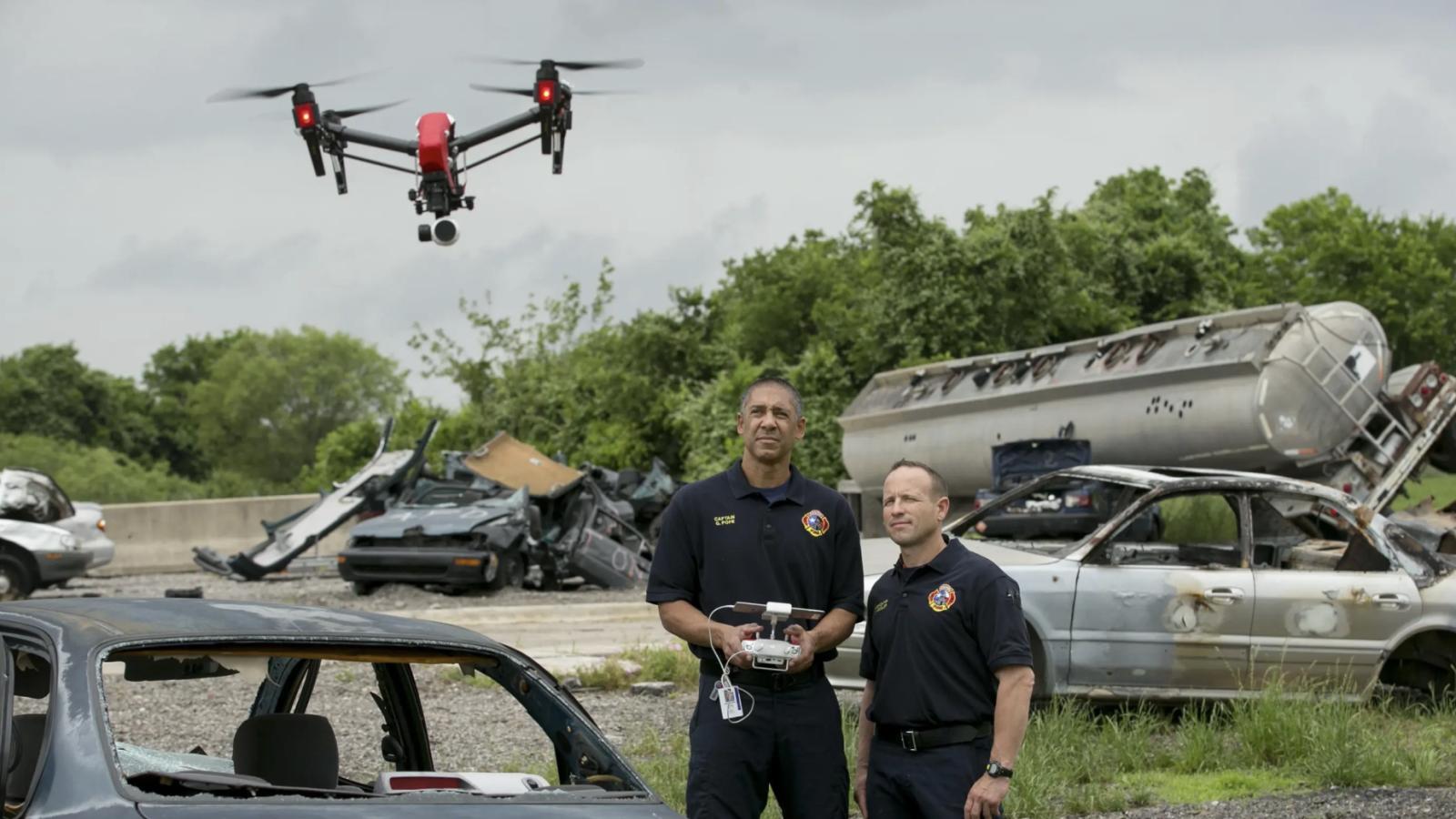
On August 13, Trump announced tariffs on imported drones and components, with rates as high as 100%, to reduce America's 'excessive dependence' on foreign drones, potentially impacting China's drone industry. Additionally, the White House released a report accusing over 40 countries of helping China evade U.S. tariffs through transshipment, with estimated trade volumes between $40 billion and $303 billion.
U.S. President Trump on Thursday (August 13) signed a notice to impose ad valorem duties on imported drones and their components to reduce America's 'excessive dependence' on foreign drone supplies. The White House stated on Thursday that drones of certain sizes or specific uses involving national security sensitivity would be subject to a maximum 100% tariff; other drones would be subject to lower rates, with small drones not used for national security purposes subject to a 25% tariff. Drones and components from the EU, Japan, Liechtenstein, South Korea, Switzerland, and Taiwan would be subject to a 15% tariff, while UK drones would be subject to a 10% tariff.
Some tariffs will take effect 21 days after the notice is issued; tariffs on drones not in highly sensitive categories and some components will take effect after 180 days. The White House also stated that if the Pentagon approves the exemption of specific products from the FCC's 'restricted list' within 20 days of signing, the tariffs on these products will also take effect 180 days after the notice is signed.
According to the notice signed by Trump, U.S. Commerce Secretary Lutnick (Howard Lutnick) investigated the impact of imported unmanned aerial systems or drones on the U.S. and determined that foreign-made drones have a 'very high' market share in the U.S., leading to America's 'excessive dependence' on foreign drones and their components.
Lutnick determined that some foreign entities' production of drones and components 'pose security and security risks,' and that U.S. domestic industry capacity is insufficient to meet national security needs.
Unlike Trump's tariffs, which were ruled illegal by the U.S. Supreme Court in February, this drone tariff is mainly proposed under Section 232 of the 1962 Trade Expansion Act, which allows the government to impose tariffs or other trade restrictions on specific imported goods after investigation for national security reasons. Trump has previously used Section 232 to impose tariffs on steel, semi-finished copper, automobiles, and components.
Despite facing legal disputes and criticism, Trump still views tariffs as a core pillar of his diplomatic and trade policies. The Russia-Ukraine war has highlighted the military effectiveness of drones, which have become an important tool for both sides to control the battlefield and territory, seen as opening a new era of 'hybrid warfare,' making the U.S. more focused on building a domestic drone industry.
Bloomberg analysis suggests this measure could have a significant impact on China's drone market. China is the world's largest manufacturer of unmanned aircraft. DJI, headquartered in Shenzhen, accounted for approximately 70% of the U.S. commercial drone market last year.
Before Trump's scheduled meeting with Chinese President Xi Jinping in late September, this move could further increase pressure on Beijing. This also continues Washington's efforts to limit China's dominance in advanced technology sectors. The FCC has already restricted the import of some foreign-made drones, including DJI's new models; recently, it has also banned the import of some foreign-made robots and power inverters, prompting a Chinese Ministry of Commerce countermeasure.
The White House also released a report this week titled 'The Great Transshipment Scam,' accusing Canada, Mexico, Japan, and over 40 other countries of helping China evade U.S. tariffs by transshipping goods to countries with lower U.S. import tariffs. White House Trade and Manufacturing Policy Office Director Navarro (Peter Navarro) stated that since Trump first imposed tariffs on China in 2018, China has adopted 'extremely complex' methods of transshipment through more than 40 countries to 'launder' the origin. Trump's global tariffs last year created tax rate differences between different countries, further incentivizing the 'rearrangement of goods flow through third countries.'
The White House stated in the report that the trade volume involved in these countries and the EU in evading tariffs reached $600 billion. The report also cited other U.S. government and private sector studies, estimating the transshipment trade volume involved at between $40 billion and $303 billion.
The White House also pointed out that other countries subject to U.S. tariff increases, such as India and Vietnam, are also preparing to emulate China's transshipment model. In response, the U.S. Trade Representative (USTR) has already included provisions to reduce transshipment in trade agreements under negotiation with multiple countries. The USTR is still formulating the necessary 'rules of origin' to determine the actual manufacturing location of goods and thus determine the applicable tariff rates.
Navarro stated that the U.S. Customs and Border Protection (CBP) has begun using an AI system called 'Detective Border' to more accurately determine the composition of export goods, ensuring that goods are correctly labeled during tariff declarations.
This report was released about six weeks before Xi Jinping's scheduled visit to Washington. Xi Jinping hosted Trump in Beijing in May and is expected to return to the U.S. in late September. Although the two countries' leaders reached a one-year ceasefire agreement in Busan, South Korea, in October last year, Sino-U.S. trade tensions continue.
DW Chinese has Instagram! Search for dw.chinese to see more in-depth and easy-to-understand image and video reports. © 2026 Deutsche Welle. All rights reserved. This content is protected by copyright law. Unauthorized use will result in legal action and criminal prosecution.
FACT BOX
- Source: PR Times
- Category: Survey