The Wall Street Journal (WSJ) reported that U.S. Commerce Secretary Howard Lutnick has formally issued a warning to Apple, urging the tech giant not to procure memory chips from Chinese memory manufacturers as it seeks alternative supply options amid a severe global memory chip shortage.
In fact, over the past several months, Apple has repeatedly used media outlets to signal its lobbying efforts, attempting to persuade the Trump administration to grant approval for the company to source memory from China's two major memory giants: ChangXin Memory Technologies (CXMT) and Yangtze Memory Technology (YMTC). However, such a move would inevitably trigger strong bipartisan backlash in Congress.
Both Chinese firms have already been blacklisted by the Pentagon. Yangtze Memory is currently listed on the U.S. Department of Commerce's 'Entity List,' and prior to that, the U.S. Department of Defense (the Pentagon) had already designated both companies—Yangtze Memory and ChangXin Memory—as 'Chinese military companies.'
Behind these sanctions lies concern that U.S. chipmakers could face unfair competition due to massive Chinese government subsidies enjoyed by their rivals. Another core issue involves concerns over component customization and technology leakage.
Although many iPhone components are custom-designed, Apple's Chief Operating Officer Sabih Khan admitted in an interview that memory components 'do not require much customization,' meaning Apple could technically use off-the-shelf, generic Chinese memory chips directly.
However, if Apple requires customized memory, it would need to share product technical specifications with ChangXin or Yangtze Memory. Under current U.S. export control regulations, this is strictly prohibited and would require Apple to apply for and obtain a special license from the Department of Commerce.
Lutnick Warns Cook in Person During Houston Factory Visit
Apple CEO Tim Cook previously stated publicly during an earnings call that Apple is 'evaluating all supply options.' Foreign media reports suggest Apple has already begun testing memory chips from ChangXin Memory and is holding potential cooperation talks with Yangtze Memory. These persistent rumors prompted the U.S. Senate to take action, forming a bipartisan group to jointly pressure Apple to abandon this alternative procurement plan.
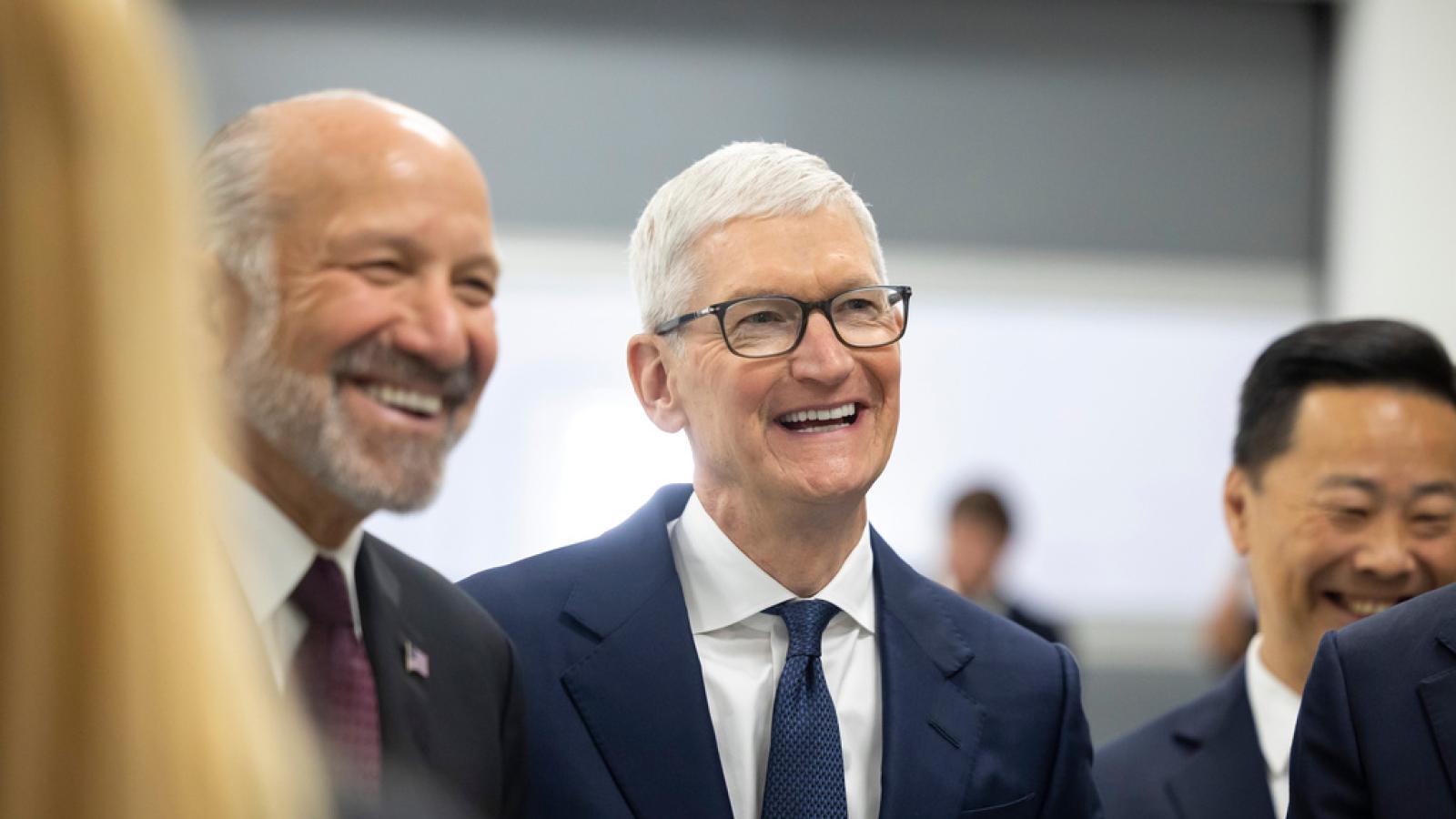
Apple has established an 'Advanced Manufacturing Center' in Houston, Texas, responsible for producing products such as the Mac mini. (AP)
Apple has established an 'Advanced Manufacturing Center' in Houston, Texas, responsible for producing products such as the Mac mini. (AP)
Now, even Commerce Secretary Lutnick has personally stepped in, clearly expressing the Trump administration's opposition. According to reports, Lutnick stated to the media after concluding his visit to Apple's new manufacturing center in Houston, Texas, that the Trump administration absolutely does not support this approach. Alternative solutions must be found to address memory shortages, but 'great American companies' must not be allowed to use Chinese memory.
Lutnick emphasized that he had conveyed the White House's red line to Cook in a very clear and uncompromising manner.
FACT BOX
- Source: PR Times
- Category: News
- Products / services: iPhone / Mac mini