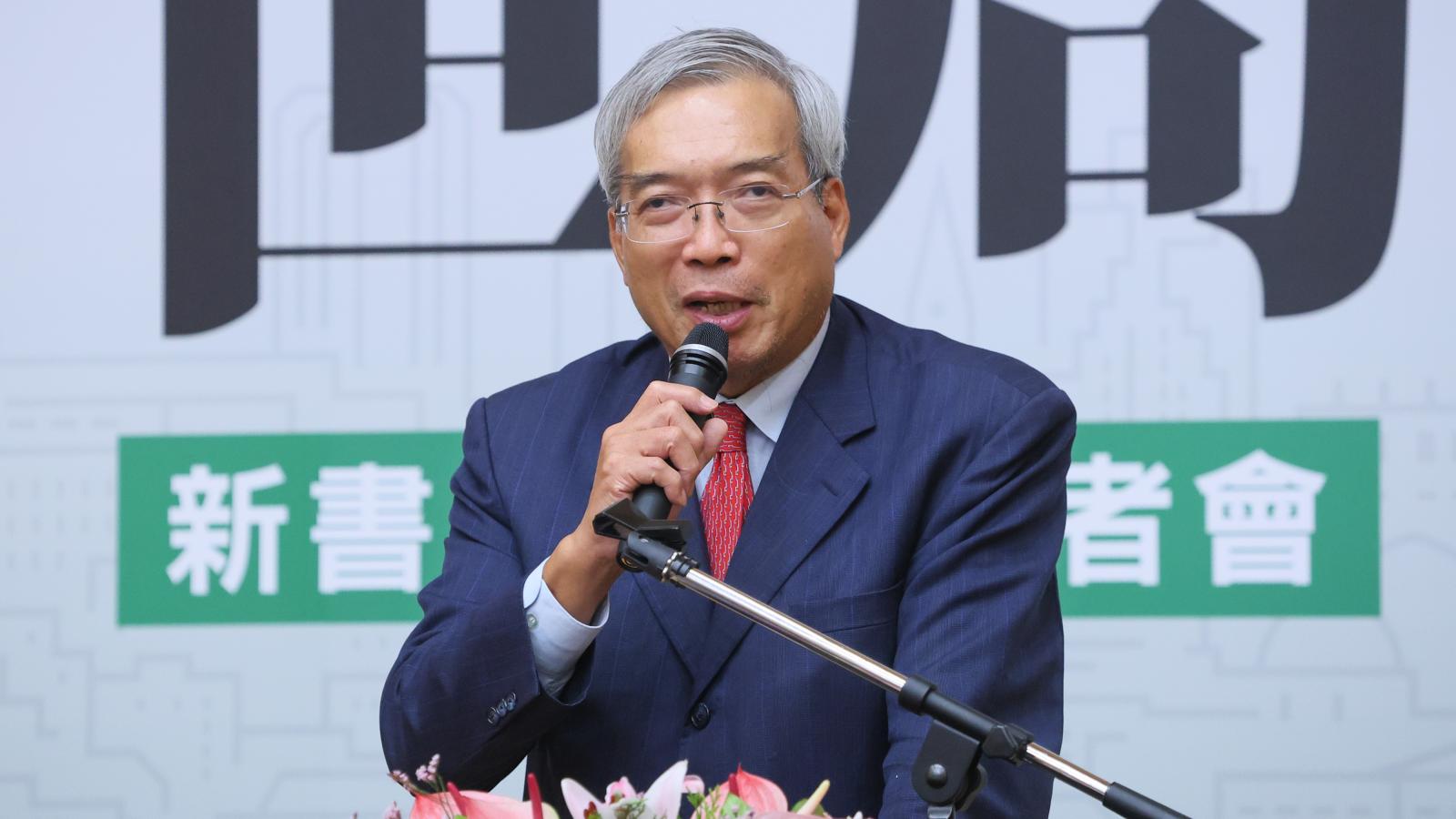
The foreign media outlet The Economist has long described Taiwan as 'the most dangerous place in the world.' Hsieh Jin-ho, chairman of Wealth & Trust Media, responds directly, stating that while this fear-based narrative has persisted for years and many accept it, 'in my view, North and South Korea are separated only by the 38th parallel, and North Korea has already dug four underground tunnels—tanks can cross over in an instant!'
In a Facebook post, Hsieh notes that former Japanese Prime Minister Shinzo Abe's statement 'When Taiwan is in trouble, Japan is in trouble' has become widely accepted. However, he often tells his Japanese friends, 'When Japan is in trouble, Taiwan isn't necessarily affected!' Why? He argues that cross-strait relations lack deep-seated hatred—only a sovereignty dispute. China claims Taiwan is an inseparable part of its territory, while Taiwan asserts it is a sovereign independent nation. In contrast, Japan and China carry a century-long blood feud, and even today, Chinese TV dramas continue to broadcast anti-Japanese war stories.
Hsieh points out that the barrier between the two Koreas is more fragile than that across the Taiwan Strait. He emphasizes that the 173-kilometer-wide Taiwan Strait is a more reliable barrier than the 38th parallel. Over recent years, to experience this dividing line firsthand, Hsieh visited areas around the border—viewing South Korea from Panmunjom in Pyongyang, and looking toward Panmunjom from the DMZ's Imjingak Pavilion in Seoul. He also paid respects at the Kumsusan Palace of the Sun in North Korea's Mount Kumgang, where the remains of Kim Il-sung and Kim Jong-il lie.
Hsieh analyzes that the 38th parallel divides two worlds. From the Korean War in 1952 to today, the economic divergence between North and South Korea has become enormous. He compares their economies: South Korea covers 100,200 square kilometers; North Korea, 120,500—roughly comparable. South Korea has 51.7 million people; North Korea, between 26 and 27 million—half as many. Yet, South Korea's GDP totals $1.93 trillion, ranking 15th globally, while North Korea's is only $16.5 billion, ranking 150th. Despite being of the same ethnic group, differing systems have led to vastly different fates.
What does North Korea have left besides nuclear weapons? Hsieh recounts visiting a North Korean cosmetics factory where, instead of showcasing products, the company's showroom prominently featured a glass-encased sofa, repeatedly emphasizing, 'This is the chair where our great comrade Kim Jong-un once sat!' Hsieh states bluntly that North Korea's economy is lackluster, with a staggering 98.2% trade dependency on China. The most common topic between North Korean leader Kim Jong-un and Chinese President Xi Jinping, he quips, is 'humans can live up to 150 years!'
'Political systems determine the fate of a nation and its people. After 75 years of institutional experimentation, the gap between North and South Korea has only widened. Today, North Korea possesses only nuclear weapons and loud rhetoric, wielding little influence on the global economic stage!'
FACT BOX
- Source: PR Times
- Category: News
- Organizations: The Economist / Wealth & Trust Media