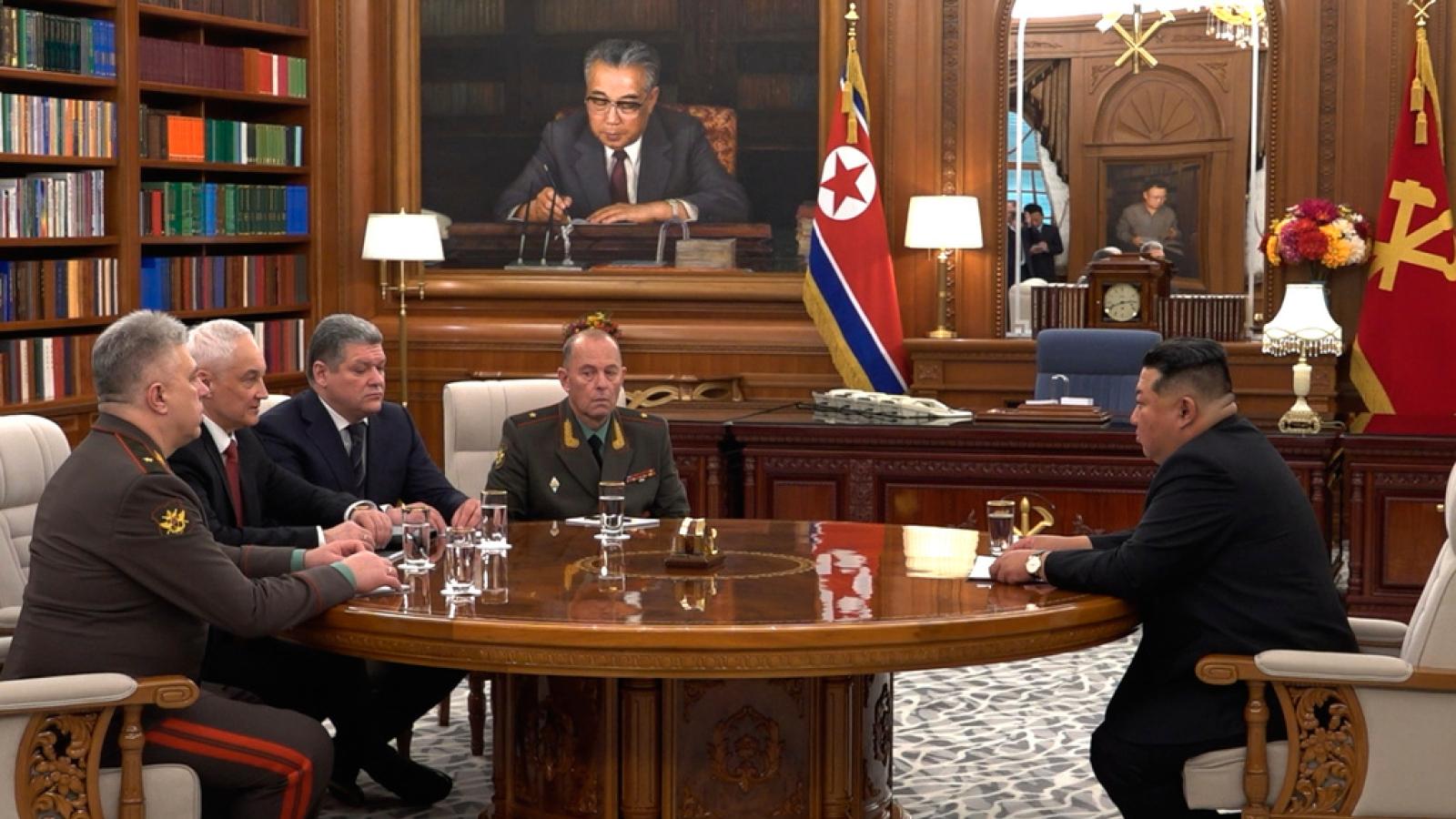
Military support to Russia has brought additional income to the Pyongyang regime, further consolidating Kim Jong-un's power. For many years, satellite images showed only scattered lights across North Korea at night. However, since 2020, the illuminated areas in central Pyongyang have more than doubled. NK News suggests this indicates the Pyongyang regime has prioritized new street and residential lighting in the city center to showcase its achievements. North Korean leader Kim Jong-un announced in 2021 that 50,000 new housing units would be built in the capital. In the newly developed Mars District, two 40-story residential towers were constructed, resembling the country's Mars intercontinental ballistic missile. Individuals who have visited Pyongyang repeatedly say the city appears more modernized. Numerous imported cars—including Chinese electric vehicles—are now seen; smartphones come equipped with QR code payment apps; ride-hailing for taxis is available; and Western-brand fashion and cosmetics are displayed in shopping malls. On the east coast, in 2025, Kim Jong-un inaugurated the five-kilometer-long Wonsan-Kalma seaside resort, capable of accommodating 20,000 guests. The 'Profits' of War The source of these funds is believed to be primarily high revenues from the Russia-Ukraine war. According to a March report by South Korea's Institute for National Security Strategy (INSS), North Korea has earned between $7.7 billion and $14.4 billion by supplying ammunition to Moscow and dispatching troops. Bloomberg's economic research arm estimates that military support to Russia has brought Pyongyang over $14 billion in revenue. In addition, trade with China, overseas North Korean laborers, export trade, and cybercrime have generated nearly another $8 billion in income. In February 2025, North Korean hackers stole $1.5 billion worth of Ethereum. In comparison, North Korea's gross national product the previous year was $27 billion. Kim Jong-un's role as a supporter of Russia has increased his political and military leverage. The country has built two 5,000-ton destroyers. The dictator's status has reached its highest level in 15 years. In early 2021, during the COVID-19 pandemic, Kim Jong-un tearfully admitted at a Workers' Party congress that nearly all economic sectors had failed to meet their targets. Five years later, at the next party congress, he triumphantly declared: 'Everything has fundamentally changed.' Are Soldiers 'Earning Money'? According to Ukrainian estimates, North Korea supplied half of the ammunition needed by Russian forces on the front lines between 2024 and 2025, in addition to self-propelled artillery, multiple rocket launchers, and ballistic missiles. Ukraine claims North Korea is currently planning to send a 90-soldier missile unit to Russia, including six launchers and up to 120 missiles, to fight against Ukraine. Already, between 16,000 and 22,000 North Korean soldiers have assisted Russia in repelling Ukrainian forces in the border province of Kursk, and later in mine-clearing operations. Ukrainian President Zelenskyy stated that Kim Jong-un also intends to send an additional 30,000 to 50,000 soldiers to Russia. According to a report by South Korea's Institute for National Security Strategy, each soldier earns Kim Jong-un $2,800, each officer $3,000, and each fatality brings in $6,000 to $10,000. Trade between Russia and North Korea is primarily conducted through barter: Pyongyang provides ammunition, weapons, and soldiers, while Moscow supplies crude oil and petroleum products, food, and military equipment—including air defense systems, drones, missiles, and submarine manufacturing technology. Experts say that improvements in North Korea's domestic economy have not benefited the general population. Food prices have risen, and the North Korean won has depreciated. In early 2024, Kim Jong-un announced the rollout of the '20X10' development plan outside Pyongyang. The plan aims to build modern factories in 20 cities or regions each year. After 10 years, this would result in 200 regional industrial projects. However, Andrei Lankov, a North Korea expert at Seoul National University, believes most of these plans will fail. He argues that the necessary infrastructure is lacking, and managing factories under a planned economy is unsuitable for small and medium-sized enterprises. DW Chinese has an Instagram! Search dw.chinese for more in-depth图文 and video reports. © 2026 Deutsche Welle. All content is protected by copyright. Unauthorized use without special permission from DW will result in compensation claims and criminal prosecution. Russian foreign minister visits North Korea, meets Kim Jong-un, says North Korea 'firmly supports' invasion of Ukraine
FACT BOX
- Source: PR Times
- Category: News