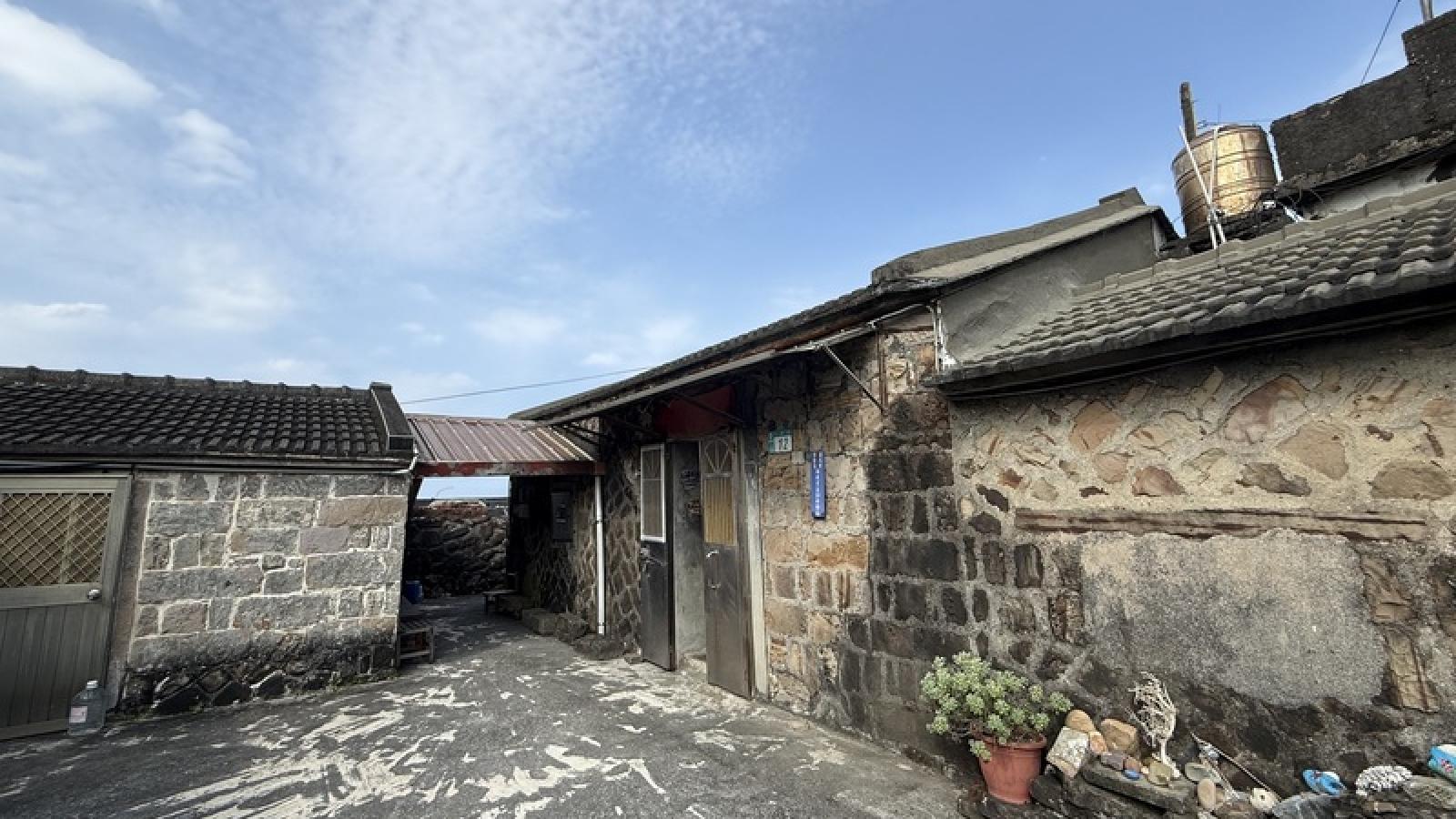
After nearly seven years of cultural heritage disputes, Magang's stone houses have finally gained an opportunity to re-examine their cultural value. In 2019, New Taipei City designated No. 11 and No. 12 on Magang Street as historic buildings. However, subsequent administrative litigation was affected by judicial rulings, and after the court's final decision in 2026, the cultural heritage review process has restarted. This turning point is commendable, but more important than asking "how many buildings were saved" is the deeper question: what are we actually preserving?
If Magang's true value lies not merely in two stone houses, but in the collective context of stone structures, coastal environment, residents' lives, local industries, and historical memory, then is preserving two houses really the end of the issue? This is not to deny the significance of preserving Nos. 11 and 12. On the contrary, precisely because the re-evaluation has brought Magang's cultural value back into the public eye, Taiwan should now reflect: when cultural heritage conflicts with local development, must we still choose only between "preservation" and "development"?
If the answer remains binary, the problem extends beyond Magang—it reflects Taiwan's governance mindset. Mature cultural governance is not just about deciding "which places cannot change," but also answering "which can change, how they should change, and who bears the cost of change."
UNESCO's 2011 concept of the "Historic Urban Landscape" (HUL) is precisely a correction to this binary approach. Cultural heritage should not be understood merely as a few frozen old buildings, but as part of a spatial context shaped by natural environment, built environment, local communities, lived practices, and economic activities. UNESCO also explicitly emphasizes that cultural heritage preservation should be integrated with urban development, land planning, and community participation.
This concept is especially worth considering for Magang.
What Magang cannot replicate is not just the stone houses themselves, but the local knowledge of "how people coexist with the sea": how to use local materials, how to build stone walls to resist northeasterly monsoons and waves, how to create living spaces, and how to develop a unique lifestyle within the coastal environment. Architecture, therefore, is not just a house, but material evidence of long-term human-environment interaction.
Official data from New Taipei City also indicates that the cultural value of Magang Street Nos. 11 and 12 lies in early residents' practices of using local stone, constructing stone houses, and building thick seawalls to resist waves. This implies that what Magang truly needs to preserve has never been just the exterior of two buildings, but the human-land relationship embedded within them.
Thus, while preserving two stone houses is commendable, it also reminds us: if preservation stops at "which house to leave," we may still fail to answer "why this settlement deserves to remain." A single old house can be preserved, but the settlement may lose its original living context; stone walls can remain, but if the surrounding environment, coastal landscape, and residents' lifestyles gradually change, what remains may become lifeless exhibits. This is precisely where Taiwan's cultural heritage system needs breakthrough.
Taiwan is not without tools for heritage preservation.
The Cultural Heritage Preservation Act already provides various institutional options such as historic buildings, historic building clusters, and cultural landscapes. The problem lies in whether these tools can transcend individual heritage cases and truly integrate with national land planning, coastal environment, local industries, and community governance.
Because for residents, culture, land, environment, industry, and housing are never five separate policy issues—they are one and the same lived reality. The government can divide responsibilities, but local communities cannot be fragmented. Cultural authorities care about heritage value, land and national land agencies handle land use, tourism departments focus on visitor flow and industry, and environmental governance bodies prioritize ecology and environmental carrying capacity. Yet residents face the same land, the same settlement, and the same life every day.
When culture exists only within heritage review procedures and development only within land use plans, conflict is inevitable. In the end, the government may not lack preservation intent, but lacks a governance framework capable of simultaneously addressing cultural value, residents' lives, environmental carrying capacity, and local economy. This is the systemic issue truly exposed by Magang.
Rather than continuing to debate between "preservation" and "development," Magang should be seen as an opportunity for institutional innovation.
First, we should move from "case-by-case preservation" to "holistic historical environment governance." Preserving two historic buildings can be a starting point, but it must not become the endpoint of governance scale. If Magang's cultural value stems from the integrated relationship between stone houses, coastal scenery, and living context, the government should re-examine the cultural value of the settlement and its surroundings, and when necessary, implement preservation and management at a broader scale—such as the entire settlement or cultural landscape. The listing of two houses can be a starting point, but not the endpoint of governance scale.
Second, a genuine cross-sectoral governance mechanism should be established. For Magang to become a case where cultural preservation and local development coexist, it cannot be handled solely by cultural authorities. Cultural heritage, national land planning, coastal environment, ecological conservation, tourism development, and local revitalization should all be discussed within the same spatial framework. Of course, this does not mean turning Magang into another tourism development project. Cultural routes, local branding, or tourism development can be discussed, but the premise should be local culture and environmental carrying capacity—not first deciding how many tourists to attract and then searching backward for cultural narratives. Culture is not packaging for tourism; culture itself must be the foundation that local development respects.
Third, and most importantly, residents must become co-decision-makers in cultural governance, not passive recipients after policies are finalized. A place's history is not only researched by experts—it is also lived daily by residents. Those who truly know how a house is used, how a road formed, how a coastline is utilized, and which memories still exist are often the people living there.
Therefore, if we aim to promote more comprehensive preservation of Magang, we should address residents' most practical concerns: old house repairs, housing rights, industrial activities, public facilities, tourism carrying capacity, and youth return. But cultural governance must not turn the word "residents" into a blanket immunity against all change. Residents have rights to life and development, and landowners have legitimate rights. The government must explain the public necessity of preservation and clarify how public resources will support preservation and reduce residents' burdens after restricting private rights. If cultural preservation only demands restrictions from residents without enabling them to share in the public resources and development opportunities it brings, it will ultimately fail to form truly sustainable cultural governance. This is the biggest difference between "cultural governance" and traditional "cultural heritage preservation."
Cultural heritage preservation has never been about rejecting development, but about rethinking what kind of development is worth pursuing.
A historic settlement forms through long-term natural evolution and communal living, and its value cannot be replicated through short-term investment. Today, we can build a new building, but we cannot recreate a century-old human-environment relationship; we can rebuild a road, but we cannot recreate the lived memories accumulated over generations in a settlement. This is why, as global cultural heritage governance gradually shifts from preserving individual buildings to managing holistic historical environments, Taiwan should also rethink its cultural policies. UNESCO's Historic Urban Landscape concept itself places cultural preservation, local communities, natural environment, and socio-economic development within the same governance framework.
Thus, Magang is not merely a cultural heritage case in New Taipei City, nor just a local conflict between residents and development. What it truly tests is whether Taiwan can shift from "land development governance" to "cultural governance." So-called cultural governance does not mean freezing all old buildings or rejecting all development; rather, before change occurs, it means identifying what is truly irreplaceable about a place, deciding what can change, what should be preserved, and ensuring residents have genuine voice in the process.
The New Taipei Heritage Day event "Walk Magang" will visit Magang stone houses at Taiwan's easternmost point, featuring LEGO DIY workshops to build palm-sized models. (Provided by New Taipei City Cultural Affairs Bureau)
Magang's return to the cultural heritage review process is a commendable beginning. But what Taiwan truly needs to preserve may not be the two stone houses themselves, but a governance system capable of understanding the entire settlement, respecting residents' lives, considering environmental carrying capacity, and enabling sustainable local development. If we fail to do so, preserving two historic buildings remains only a case-by-case victory; if we succeed, Magang could become the starting point for Taiwan's transformation toward cultural governance.
A mature society leaves behind not just roads, buildings, and land use outcomes, but also the history, humanity, and lived memories accumulated over time—things that can never be recreated. The end goal of preservation is not to stop change, but to ensure that even amid change, a place knows what it must never lose.
*Author: Lin Jen-pin, Founder of Taiwan Sustainable Governance Forum, Associate Professor at Chinese Culture University
FACT BOX
- Source: PR Times
- Category: News