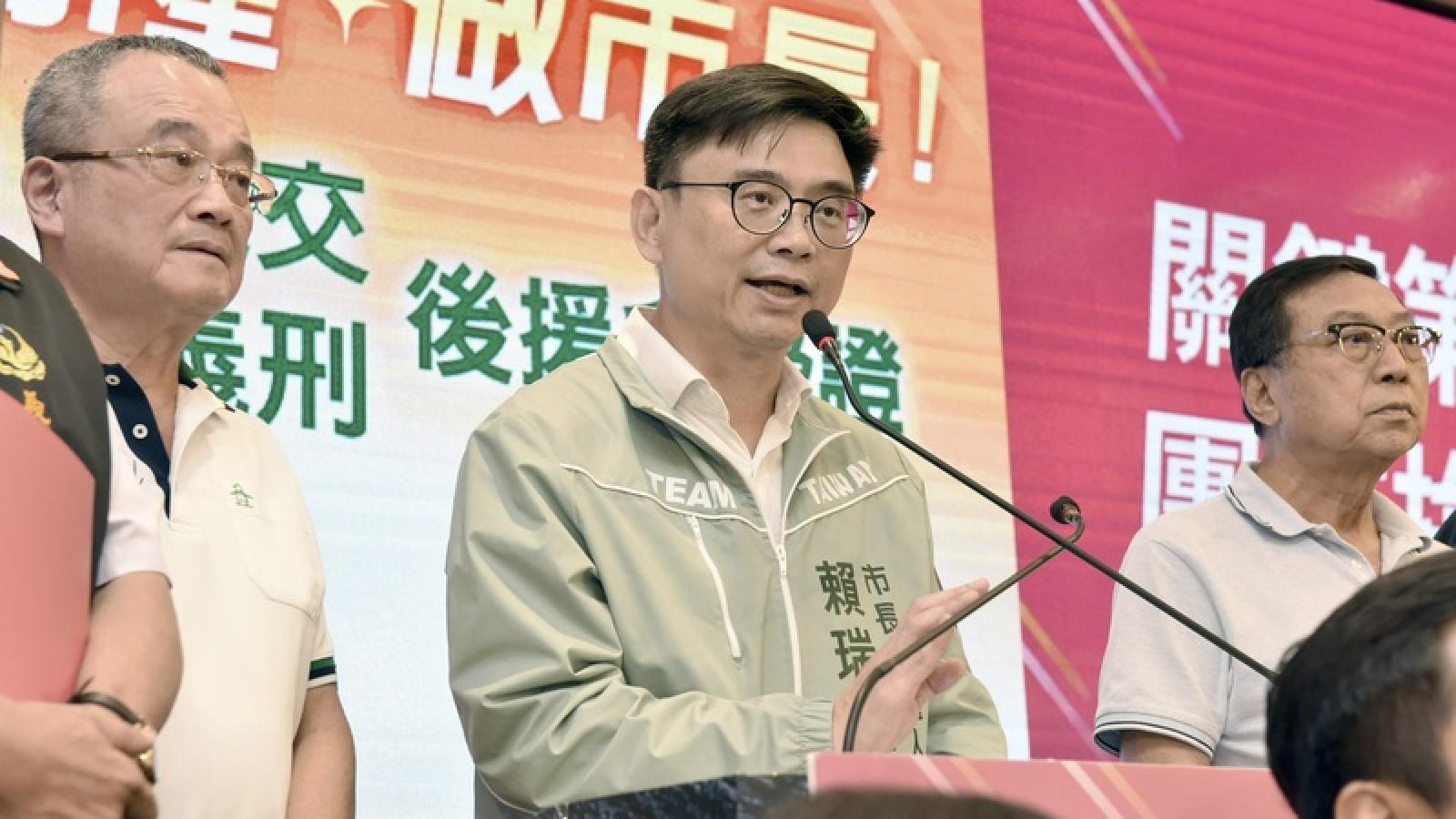
Recently, President Lai Ching-te visited Kaohsiung to support election campaigns, once again raising the issue of 'resisting China to safeguard Taiwan' and Chinese interference in elections. As the political race in Kaohsiung heats up, political debates have naturally become a focal point. However, a more pressing concern than who will retain control of Kaohsiung is whether the city can retain its young people.
A recent commentary published in the United Daily News analyzed the potential political risks Kaohsiung faces from an electoral perspective, also touching on issues such as population decline, youth migration northward (known as 'north漂'), low wages, industrial transformation, and environmental governance. While these phenomena warrant reevaluation, I believe Kaohsiung's true crisis is not whether it will lose the next election, but the deeper issue of urban competitiveness revealed by its ongoing population loss.
Kaohsiung was once a major industrial city in Taiwan and the economic core of southern Taiwan. Today, urban infrastructure has become increasingly comprehensive, with metro systems, light rail, pop music venues, and other major developments taking shape. More importantly, TSMC's (Taiwan Semiconductor Manufacturing Company) investment in Kaohsiung has begun to foster a new cluster of semiconductor industries and supply chains. In theory, these developments should boost employment opportunities and the city's attractiveness.
Yet, population growth has not significantly rebounded. Population is the most honest ballot a city receives. The latest household registration data shows that as of June 2026, Taiwan's population stood at 23,243,565, a decrease of 103,176 compared to the previous year. While Taiwan as a whole faces aging and declining birth rates, population trends differ across cities. While areas like Taoyuan and Hsinchu County continue to grow, Kaohsiung continues to experience population outflow. Therefore, Kaohsiung cannot simply attribute its population decline to 'Taiwan's overall low birthrate.' A city's ability to attract and retain young people reflects its governance effectiveness and industrial competitiveness.
The most critical issue remains youth. University graduates leave their hometowns, and even after years of work, many choose not to return, instead viewing other cities as their true home bases—this is the long-standing 'north漂' phenomenon in Kaohsiung. Despite having numerous universities and a large youth population base, why do young people still seek jobs in Taipei, Hsinchu, or Taichung after graduation? The issue is not just about wages, but whether the industrial structure can provide diverse, growth-oriented career opportunities.
Kaohsiung's past was dominated by heavy and chemical industries, but today it is striving to transition toward semiconductors, technology, and emerging industries—an undoubtedly correct direction. However, industrial transformation cannot be measured solely by investment amounts; it must be evaluated by how well these investments translate into job opportunities, wage growth, and talent return for local residents.
TSMC's investment in advanced-process wafer fabs in Kaohsiung has drawn high expectations due to its scale. However, if most high-level talent comes from top universities like NTU, NTHU, and NCTU, and local youth do not feel tangible wage improvements, this is a signal the city government must seriously address. True urban transformation is not achieved merely by 'a major company arriving,' but by whether Kaohsiung's youth can stay and build their lives there.
If the high-tech industry invests hundreds of billions, or even trillions in the future, in Kaohsiung, but local youth still feel compelled to move north for work, we must ask: How much human capital has actually been created for Kaohsiung? This is the most critical challenge for Kaohsiung in the next decade.
Kaohsiung mayoral candidate Ko Chih-en, during a dialogue with farmers, proposed a 'Five-Strong Agriculture Strategy,' aiming to integrate production, branding, distribution, consumption, and local development into a seamless agricultural value chain for Kaohsiung's agricultural products. (Provided by Ko Chih-en's office)
What Kaohsiung needs is not more attractive urban slogans, but a comprehensive 'talent retention policy.' From universities and vocational training to industry-academia collaboration and corporate hiring, and from youth wages and housing affordability to childcare, transportation, and quality of life, a complete urban ecosystem must be established. More importantly, Kaohsiung must not rely solely on a few large tech firms. Growth opportunities should exist across tech, traditional industries, services, cultural and creative sectors, tourism, marine economy, and startups. Young people should not face only two choices: 'join the tech industry' or 'leave Kaohsiung.'
A city's true internationalization is not measured by the number of skyscrapers, concerts, or international events, but by whether international talent wants to come and whether Kaohsiung's youth want to stay. Therefore, what Kaohsiung needs most now is not to proclaim another 'Golden Decade,' but to answer a fundamental question: What will make young people want to stay in Kaohsiung over the next decade?
This question transcends partisan politics. It won't be automatically solved by whether Ko Chih-en or Lai Jui-long wins. It is a shared urban challenge for all of Kaohsiung's politicians, businesses, and citizens. Elections will eventually pass, but the city must continue to live. If Kaohsiung's population continues to decline and youth keep migrating north, no amount of major infrastructure or political slogans can hide the fact that the city's appeal is waning.
What Kaohsiung truly needs to 'defend' is not an election, but its own young people. Retaining youth is Kaohsiung's real urban competitiveness. Without them, even the most impressive urban developments may leave behind only an aging city.
FACT BOX
- Source: PR Times
- Category: News