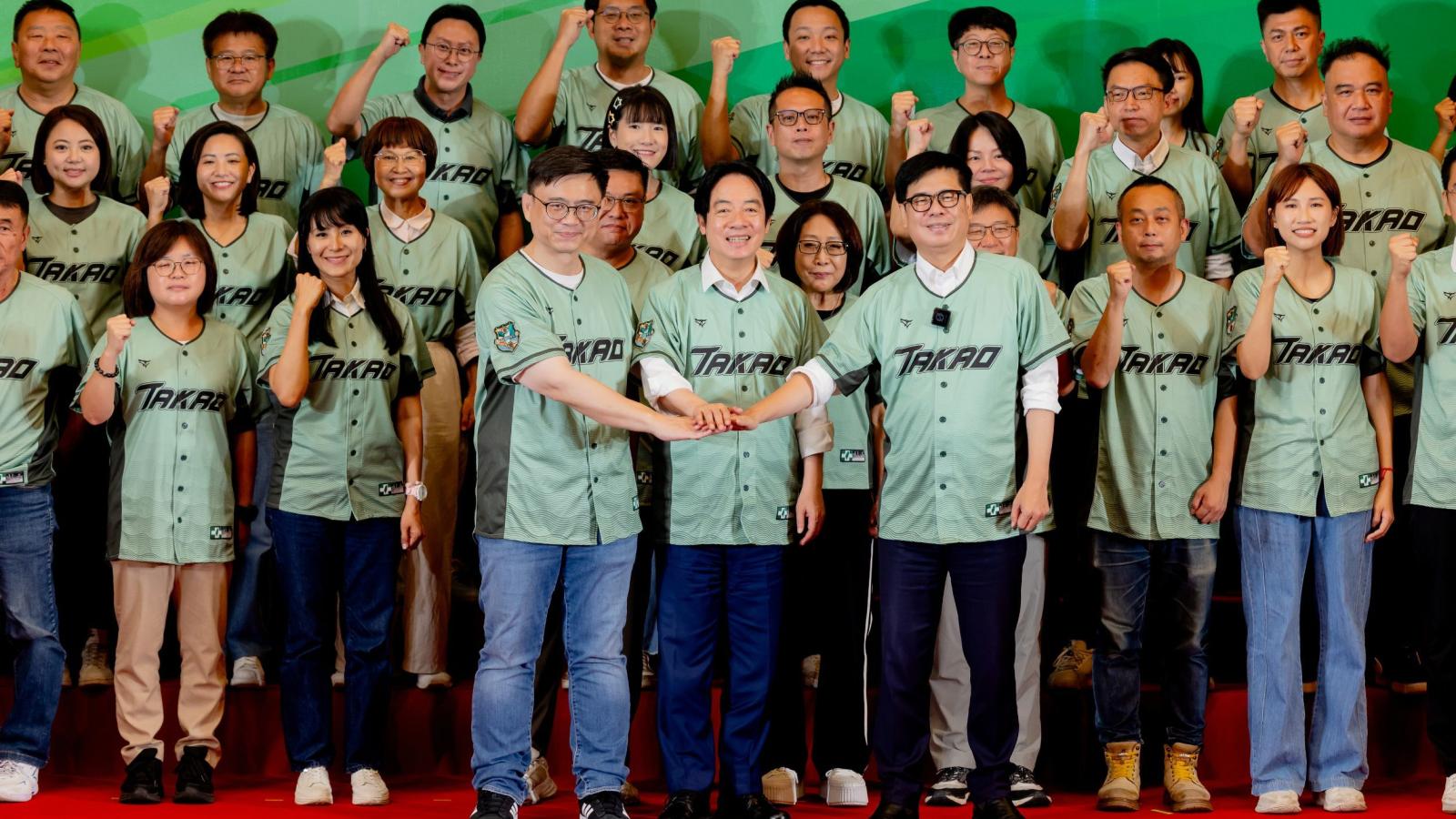
Taiwan's election culture features a distinctive collective behavior: when candidates face unfavorable polls in the final week before voting, they often launch widespread campaigns with banners and flyers emblazoned with the word 'rescue,' signaling electoral distress and urging core supporters to vote and mobilize family and friends. What was once a minor electoral custom has now escalated to the presidential level, with 'rescue' and 'emergency' rhetoric emerging in Kaohsiung—a region the Green Camp considers an unshakable stronghold—over 100 days before the election. This is an election spectacle never before seen.
President Lai Qingde, also chair of the DPP, recently held a party action meeting in Kaohsiung. Rather than addressing food safety—a pressing public concern—he focused on national security, alleging Chinese Communist Party interference in Taiwan's elections. He highlighted how high-tech industries generate profits but avoided discussing how to reverse the crisis of traditional and petrochemical plant closures in Kaohsiung. Most shockingly, he dismissed recent polls showing DPP mayoral candidate Lai Jui-long leading by just over 1% as 'fake polls.' This focus on 'polls' rather than 'livelihoods' has drawn public scrutiny.
President Lai claimed the outcome of the 'Beidaihe Conference' would place immense pressure on Kaohsiung. Yet, over 90% of Kaohsiung’s 2.7 million residents likely have no idea where Beidaihe is. Moreover, if the CCP truly intended to interfere, it would logically target counties where the Blue Camp is at risk of losing—or even where the Green Camp has no chance of winning—rather than Kaohsiung, where the Green Camp claims a lead of over 10%. This reasoning defies logic.
Furthermore, President Lai’s definitive statement that 'Lai Jui-long leads by less than 1%' is a 'fake poll' could be legally problematic if made close to election day. Polling methodologies vary, and results are inherently subjective—'believers will believe'—with actual votes being the final arbiter. To label a poll 'fake,' President Lai must provide affirmative evidence of procedural fraud or manipulation. Otherwise, if this statement was made during the official campaign period after candidate registration, it may violate Article 104 of Taiwan’s Election and Recall Act, which prohibits actions intended to prevent a candidate from being elected—a serious legal risk.
Despite the inconsistency in President Lai’s statements, they reveal a crucial electoral insight: the Green Camp likely recognizes that opponent Ko Chih-en’s campaign is gaining momentum, seriously threatening the DPP’s continued governance in Kaohsiung. Otherwise, there would be no need to link a supposedly stable mayoral race to Chinese election interference, nor for the president to waste time discussing a local election presumed to be already decided—thereby inadvertently boosting opponent Ko Chih-en’s visibility.
This backfiring strategy—intending to warn of interference but instead amplifying the opponent’s profile—means 'Big Lai' may have 'missed the mark' in supporting 'Little Lai.' The election narrative has already entered a bizarre phase of 'national emergency' and 'presidential-level rescue' over 100 days before voting.
The old saying goes, 'The emperor isn’t worried, but the officials are frantic.' Now, we see 'the mayoral candidate isn’t worried, but the president is frantic'—'Little Lai is driving Big Lai crazy.' The Kaohsiung election situation appears to be truly desperate!
*Author is a freelance writer
FACT BOX
- Source: PR Times
- Category: News