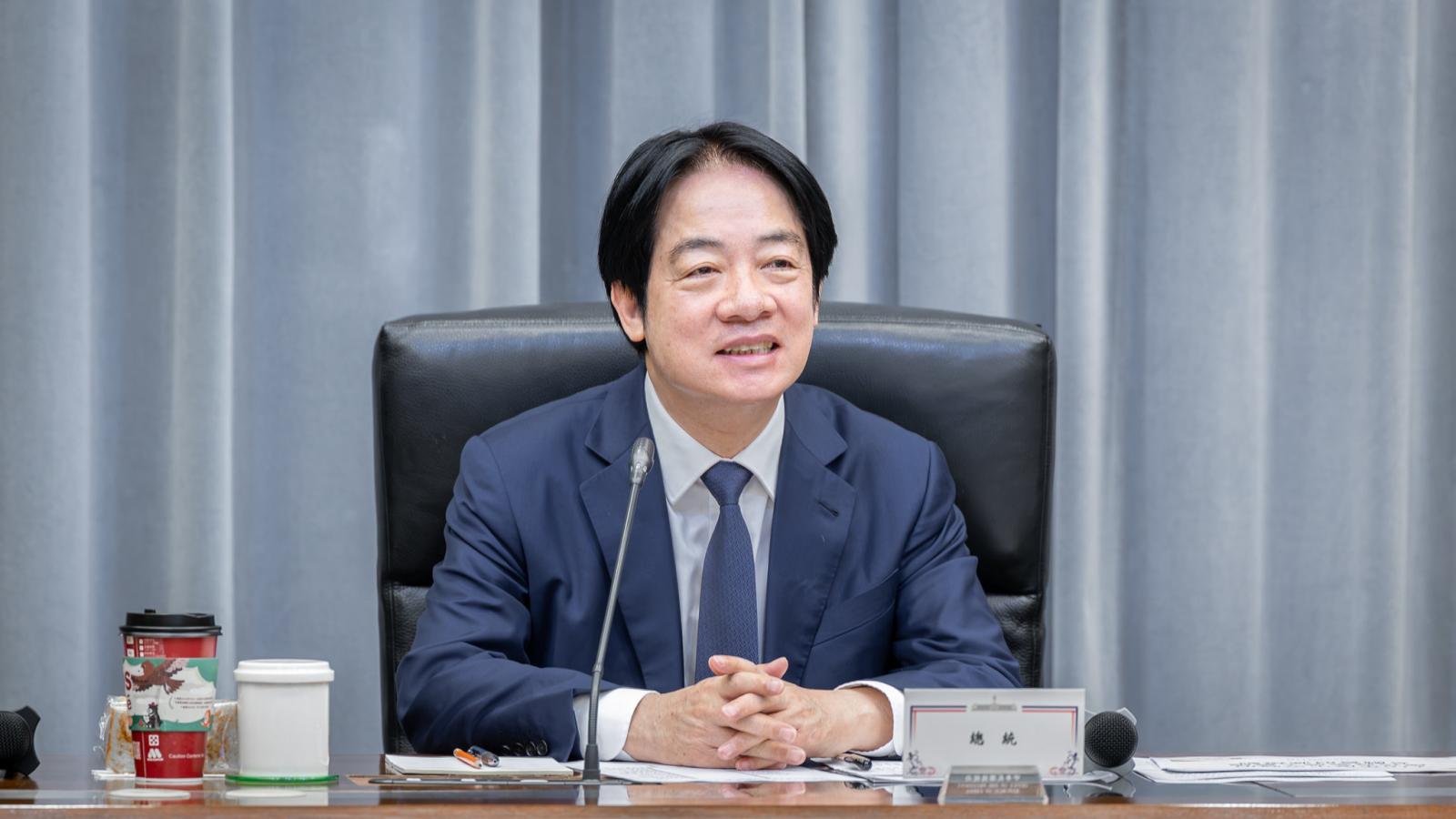
King Wen’s anger brought peace to the world; Han Kuo-yu’s anger may not have caused total defeat in the legislature, but it certainly didn’t earn much 'legislative dignity.' Last Friday, the Legislative Yuan passed the central government’s budget in its third reading. Despite Premier Cho’s four-month salary freeze causing minor embarrassment for Cho Jung-tai, the overall budget passed at nearly three trillion after a total cut of $48 billion. Just three days later, the presidential office and executive branch announced they would neither endorse nor promulgate the amendments to the Cable Television Act and the Children and Youth Growth and Future Account Act passed by the legislature—bypassing even the reconsideration process. In short, these bills will not be implemented. This brings the total number of such 'triple-no' bills under the DPP administration to seven.
While the legislature had just passed this year’s budget, the executive branch immediately declared it would not endorse or enforce two bills. At the same time, the presidential office, after reviewing the executive branch’s report on next year’s budget, announced an additional $235.7 billion to be included, enabling a universal cash disbursement of $10,000 per person next year. This amount exceeds the initial estimated budget of over $210 billion for the 'Future Account' program, which the executive branch had previously rejected. Moreover, the presidential and executive offices have no intention of letting the opposition claim credit for this policy. Beyond the cash handout, they added $373 billion for a '0-to-18 Growth Allowance'—requiring no legislation (thus bypassing the legislature), no parental account setup, and direct cash distribution. This budget exceeds the Blue-White coalition’s proposed 'Future Account' by $160 billion, proving that 'government finances' are not the issue.
The only real issue is this: 'Green can’t do it!' As Taiwan People’s Party Chairperson Huang Kuo-chang put it: 'Lai Ching-te believes only he can distribute money.' He decides what funds to spend and what to hand out, leaving no room for legislative input. In fact, the more the legislature demands, the more he refuses, asserting his 'presidential authority.' For example, the two cash policies—universal $10,000 disbursement and the minor growth allowance—total over $600 billion. Yet the $3.35 billion budget for adjusting military, police, and firefighter salaries, delayed from last year to this year, remains unallocated in next year’s budget, with the excuse being 'awaiting negotiations with the legislature in October.'
$3.35 billion is merely 0.5% of the two cash policies. Compare this to defense procurement, which exceeds a trillion even after cuts across special and annual budgets. Simply put, with a new fiscal budget of nearly $3.9 trillion—approaching $4 trillion—how can there be no room for $3.35 billion to improve the welfare of military, police, and firefighters? Military personnel aside, police and firefighters are frontline forces in national mobilization. Does Lai’s 'national resilience' mean prioritizing weapons over people? President Lai, who holds the power over military and police appointments, surely understands the importance of 'winning hearts and minds.' Yet his concern is not policy but credit: proposals cannot originate from the opposition. Even if the Blue-White coalition proposes something, the credit must go to the DPP government. For instance, when the opposition proposed the 'Future Account,' the Lai administration countered with a 'Growth Allowance' requiring no accounts—direct cash. If the DPP didn’t lead in cash distribution, it must at least claim the final victory.
Is universal cash disbursement 'vote-buying'? This year’s purchase may not work next year.
Are cash policies good? Since Lee Teng-hui’s era introduced the 'elderly farmer allowance,' opinions have been divided. Most scholars and experts remain critical, yet ordinary citizens stay silent—after all, who wouldn’t welcome free money? Over the past decade, government budgets have skyrocketed from $2 trillion to nearly $4 trillion. With officials and their allies feasting on this expanding pie, talking about 'fiscal discipline' now sounds less like academic rigor and more like foolishness.
This budget, including $600 billion in cash policies, will be delivered to the Legislative Yuan this Thursday. Attaching $600 billion to a $4 trillion budget is a bold move. But if the legislature truly wants to resist, it can, for example, approve only emerging policy expenditures first and delay the rest. If the Executive Yuan cannot implement the cash policies, the DPP will have to bear the consequences. As for whether cash disbursement counts as 'election vote-buying'? It both does and doesn’t. With local elections four months away, announcing a cash handout now won’t result in disbursement until next year—so it’s not immediate vote-buying. But next year is a critical pre-presidential election year, making this both 'policy vote-buying' and 'cash vote-buying.' The only question is: will this strategy actually work?
No sooner was the $10,000 cash policy announced than a wave of 'double-standard quotes' resurfaced—classic lines from last year’s 'mass recall' campaign:
Lai Ching-te: 'You probably don’t need this $10,000—it’ll be gone after buying groceries.' Cho Jung-tai: 'Distributing $10,000 to the public might only buy a refrigerator or a remote-control airplane—of no benefit to national development.' Shen Po-yang: 'One million per person? That’s a Communist Party tactic—first impoverish Taiwan, then unify it.' Su Chiao-hui: 'Legislative chaos! What should pass doesn’t, while what shouldn’t pass keeps surfacing.' Wu Szu-yao: 'Spending our money to save his recall campaign.' 'Using national resources for policy vote-buying—the largest, most absurd form of pre-election bribery in history.' …
Shen Po-yang: Universal disbursement is a Communist tactic; 'making Taipei rise' is also Beijing’s move.
Lai and Cho’s self-contradictions are embarrassing enough, but even more awkward are Shen Po-yang and Su Chiao-hui, who are currently campaigning. Their responses are classic:
Shen Po-yang: 'I’ve always had one standard: if it’s from AI dividends and doesn’t involve debt, of course it’s acceptable.' Su Chiao-hui: 'The Executive Yuan proactively proposed it, and it’s included in the annual budget—not an unauthorized legislative proposal without executive consent—so it’s constitutional and legal.'
In other words, 'the ruling party can, but the opposition cannot'; 'the executive can, but the legislature cannot'; 'debt-free spending is acceptable, but debt-based isn’t'… Their arguments aren’t technically wrong—the legislature indeed cannot increase budget amounts during review. But let’s not forget that the 'elderly farmer allowance' has been expanded multiple times through legislative initiatives. Oversight and coordination between the executive and legislature should be a dynamic balance. Rarely in the past has the executive outright refused while the legislature insisted. Now, the relationship between the two branches is so unbalanced that communication and compromise are nearly nonexistent.
Shen Po-yang often speaks incoherently—today’s yes is tomorrow’s no. His problem isn’t just 'one standard: no debt,' but 'one standard: everything is a Communist tactic.' Ironically, he probably doesn’t realize his campaign slogan 'Make Taipei Rise' echoes the mainland’s Spring Festival Gala classic 'Rise Together (Cross-Strait as One Family)'—a perfect example of 'Shen can, but Blue-White cannot.'
Policy debates can shift—such changes are normal for politicians. But Lai Ching-te’s 'change' is stubbornly rooted in opposing the opposition, which is rare. The only consolation is that whether the legislature passes or blocks this budget ultimately doesn’t matter much.
FACT BOX
- Source: PR Times
- Category: News