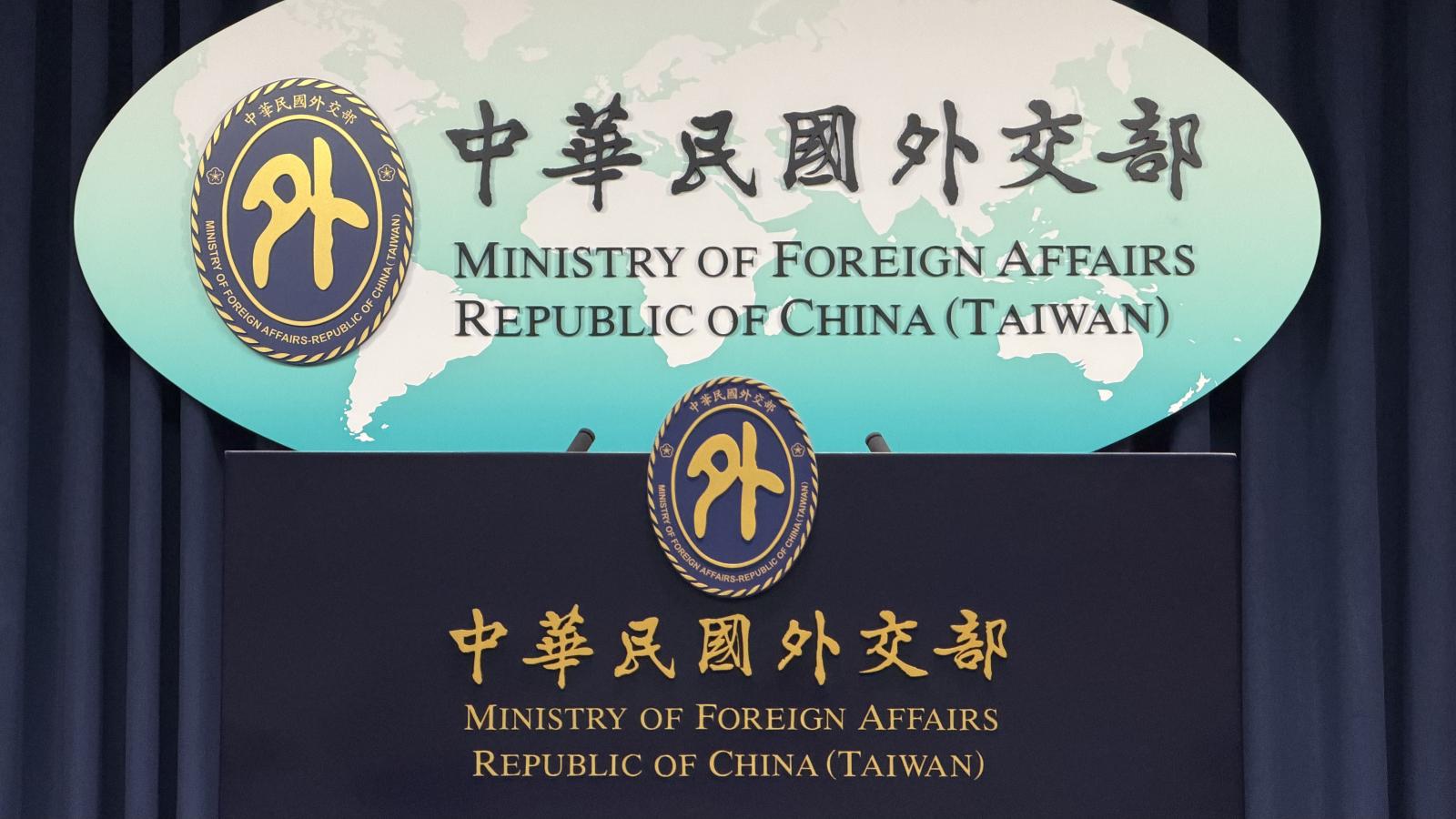
Starting in August, immigration officers at Ugandan airports in East Africa have repeatedly confiscated the passports of Taiwanese nationals, demanding they obtain entry stamps on 'Chinese passports' before their own passports would be returned. Officials claimed this was to enforce Uganda's 'One China Policy.' In response, Taiwan's Ministry of Foreign Affairs (MOFA) recently urged citizens to temporarily avoid travel to Uganda.
However, on the 19th, China's State Council Taiwan Affairs Office claimed that if 'Taiwan compatriots' require assistance, they may contact Chinese embassies or consulates abroad at any time. In response, MOFA spokesperson Hsiao Kuang-wei issued a stern rebuttal on the 20th to Storm Media regarding the Mainland Affairs Council's statement.
China's influence across the African continent continues to grow, and African nations have increasingly adopted unfriendly measures toward Taiwan. In late July, Morocco unexpectedly suspended visa confirmation applications at all its overseas embassies, affecting entry for Taiwan and a few other countries. In early August, Ugandan airport immigration officials first detained the passports of two Taiwanese nationals, initially citing Taiwan's suspension of Ugandan visa issuance due to Ebola outbreak concerns. Later, when detaining the passports of three Taiwanese businessmen and their families, they changed their justification, demanding entry stamps on 'Chinese passports' as a condition for return, claiming it was to enforce the 'One China Policy.'
In response, Taiwan's MOFA announced on July 30 that, based on bilateral reciprocity, it would temporarily suspend visa applications for Moroccan nationals traveling to Taiwan, urging the Moroccan government to recognize and maintain convenience for bilateral travel and commerce. Subsequently, on August 13, MOFA announced that, considering recent incidents, Taiwanese citizens should carefully assess the necessity and potential risks of travel and temporarily avoid going to Uganda. It also urged Uganda to recognize Taiwan's sovereign independence and the internationally acknowledged reality that Taiwan is not subordinate to the People's Republic of China, warning against inappropriate entry restrictions based on political factors that could harm normal bilateral exchanges and interests.
However, on the 19th, Zhu Fenglian, spokesperson for China's State Council Taiwan Affairs Office, claimed that Beijing does not object to unofficial economic and cultural exchanges between Taiwan and foreign countries, but accused the Democratic Progressive Party of exploiting convenient travel arrangements to coerce other nations and openly challenge the 'One China Principle,' ultimately harming the vital interests of 'Taiwan compatriots.' Zhu stated that 'Taiwan compatriots are Chinese citizens,' and that Beijing always prioritizes protecting the legitimate rights and interests of 'Taiwan compatriots' overseas. She added that if 'Taiwan compatriots' need assistance, they can contact Chinese diplomatic missions abroad or call emergency hotlines at any time.
MOFA: China's Political Posturing Cannot Alter Objective Reality
In response, Hsiao Kuang-wei stated on the morning of the 20th to Storm Media that MOFA strongly objects to the Taiwan Affairs Office's remarks that undermine Taiwan's sovereignty regarding the recent entry obstruction incidents in Uganda. Immediately after the incident, MOFA instructed its representative office in Somaliland, which concurrently handles Ugandan affairs, to closely monitor the situation and work closely with the Taiwan Business Association in Uganda to resolve the matter. Through active communication with Ugandan authorities, all four detained Taiwanese passports were returned on August 19 local time.
Hsiao emphasized that MOFA solemnly reiterates: the Republic of China (Taiwan) is a sovereign and independent nation, not subordinate to the People's Republic of China. The Chinese Communist regime has never governed Taiwan for a single day—a fact objectively recognized by the international community. He stated that China's political posturing and attempts to distort Taiwan's sovereignty cannot change this reality and only highlight its authoritarian nature of exerting external pressure. Hsiao also urged all governments to uphold professional and pragmatic principles, eliminate unnecessary political interference, respect Taiwan's legitimate passports and travel documents, and ensure the rights and interests of normal bilateral economic, trade, and people-to-people exchanges.
FACT BOX
- Source: PR Times
- Category: News