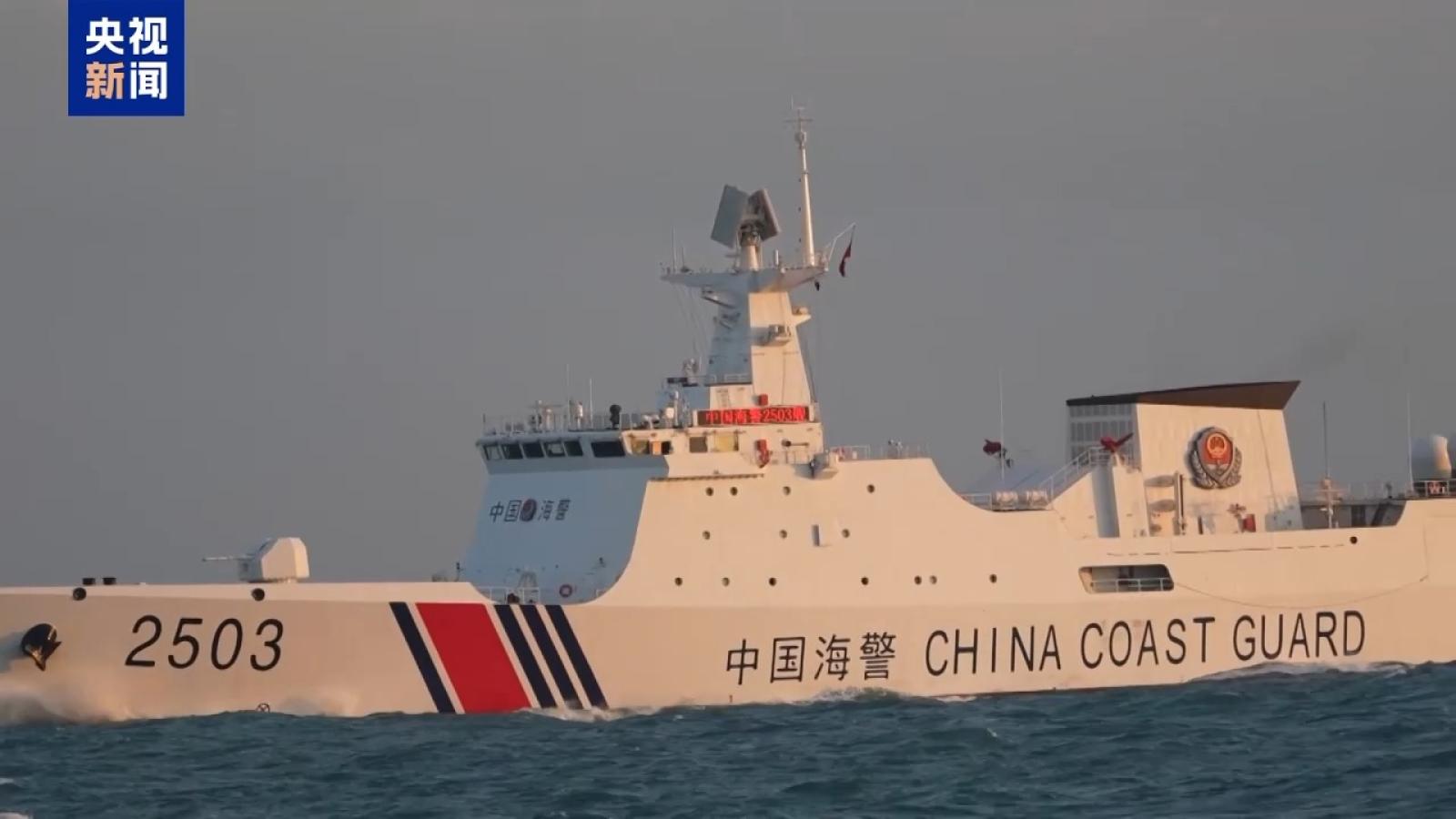
A new study by the Washington-based think tank Asia Maritime Transparency Initiative (AMTI) reveals that China plans to expand its military and law enforcement presence in the Philippine Sea east of Taiwan in response to increasingly close security cooperation between the Philippines and Japan. Bloomberg cited AMTI's latest report, stating that immediately after Japan and the Philippines reached a maritime boundary delimitation agreement in May, Beijing launched 'unprecedented' military and law enforcement operations. These actions include sustained maritime law enforcement patrols, survey missions by coast guard vessels near Taiwan, and radio hails and inquiries directed at nearly 200 commercial ships. AMTI warns in its report that such activities could normalize China's presence in the region and raise concerns that Beijing may be testing tactics to isolate or blockade Taiwan in the future.
AMTI emphasized in its report that based on China's previous responses, these actions are not merely intended to send warnings to Tokyo and Manila. In fact, Beijing aims to fundamentally alter the regional status quo by establishing a semi-permanent military and law enforcement presence in the waters east of Taiwan and openly asserting jurisdictional authority. On August 31, 2024, Chinese and Philippine coast guard vessels collided in the Sabina Reef area of the South China Sea, with both sides releasing footage to accuse each other. These maritime patrols mark an escalation in tensions between China and Japan and the Philippines, employing 'gray zone tactics' long used in South China Sea disputes. Notably, these actions coincide with a period when the Trump administration has softened its stance on Taiwan and when Chinese President Xi Jinping is expected to visit the White House in September.
In response to Beijing's moves, Japan and the Philippines have taken a firm stance, clearly stating that they could be drawn into any armed conflict involving Taiwan. Such statements have naturally drawn Beijing's displeasure. Moreover, the two countries are actively deepening military ties, agreeing to elevate their bilateral relationship and initiate a series of defense dialogues, even considering receiving a batch of second-hand patrol vessels from Japan's Self-Defense Forces.
From June to August, China's maritime law enforcement activities were primarily conducted by two coast guard vessels, concentrated in the waters east of Taiwan—where Japan and the Philippines assert overlapping maritime rights. In contrast, during the five months prior to the Japan-Philippines maritime delimitation announcement, virtually no Chinese coast guard presence was observed in the area.
AMTI warns in its report that China's latest maneuvers in the Philippine Sea indicate Beijing's attempt to establish broad and unprecedented jurisdiction over what it calls its 'near seas.' This pattern of gradually eroding neighboring countries' sovereignty through the normalization of coast guard law enforcement, previously seen in the South China Sea, is now extending to the Pacific waters east of Taiwan, potentially introducing a new variable into East Asia's geopolitical landscape.
FACT BOX
- Source: PR Times
- Category: Survey