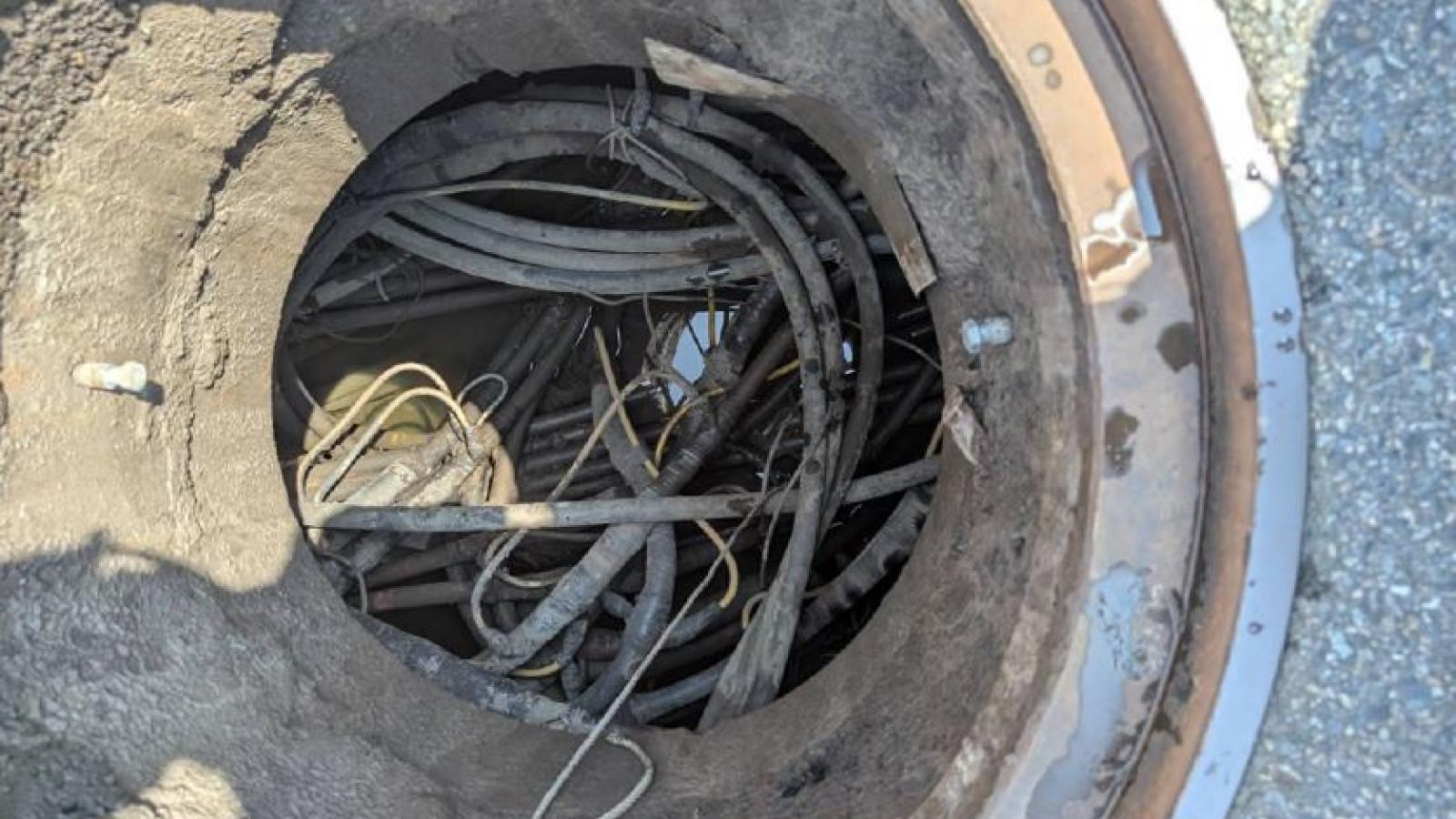
With urban development, early-installed underground power lines are progressively reaching their renewal phase, and regional power supply capacity must also be adjusted in line with evolving electricity demand. Taiwan Power Company (Taipower) has identified 18 administrative districts across six major cities as priority improvement zones and is advancing an underground cable renewal plan to strengthen urban power resilience.
Taipower emphasizes that electricity is a cornerstone of urban competitiveness, and power infrastructure development requires joint support from local governments and all sectors of society to accelerate improvement projects and ensure safe, stable power supply.
Taipower notes that underground cabling was first implemented in Taipei’s Zhongxiao West Road area in the 1960s and gradually expanded nationwide. These early underground cables have now operated for several decades. While Taipower has continuously conducted maintenance and replacements, urban economic growth has significantly increased residential and commercial electricity demand in metropolitan areas. As a result, some lines have exceeded their original design capacity, facing issues such as overheating and failures.
To ensure urban power resilience and maintain high-quality electricity supply for consumers, Taipower has mobilized 10 district offices across the six major cities. Based on key indicators such as equipment age, load growth, and underground space conditions, the company has identified 18 priority improvement districts and is advancing the underground cable renewal plan.
Taipower urges local governments, when promoting urban renewal or launching major new development projects, to reserve space for shared utility tunnels and other electrical facilities during the planning stage. Doing so not only enhances regional backup flexibility but also prepares for future industrial electricity needs. (Image provided by Taipower)
Taipower points out that urban underground spaces must accommodate multiple utilities, including electricity, water, and gas pipelines. During emergency repairs, power lines are often damaged by road or sewer construction, requiring surface excavation and pipeline repair before cable replacement can begin—leading to prolonged power restoration times. Moreover, in some highly congested pipeline areas, capacity constraints have emerged, resulting in situations where “old cables cannot be pulled out for replacement” and “new cables have no space for installation,” greatly increasing the difficulty of line upgrades.
To overcome external disruptions and saturated underground conditions, Taipower adopts a “build-new, replace-old, segmented switching” strategy. New conduits and backup lines are first constructed in sections with sufficient underground space. These backup lines then supply power to saturated areas while old, aging lines are renewed in segments through phased excavation. This approach effectively minimizes power supply disruptions during construction and further enhances distribution system resilience by integrating updated and backup lines.
While Taipower has continuously maintained and replaced early-installed underground cables, urban development has led to a significant increase in residential and commercial electricity demand in metropolitan areas. Consequently, some lines have exceeded their original design capacity, facing issues such as overheating and failures. (Image provided by Taipower)
Taipower stresses that electricity is vital to urban competitiveness and that power grid development is a key enabler of future city growth, requiring collaborative support from local governments and all stakeholders. For underground cable renewal, Taipower seeks deeper collaboration with local authorities to coordinate nighttime or extended construction permits, minimizing traffic impacts. It also calls for cross-agency integration of public works information to prevent repeated road excavations and optimize underground space utilization. When advancing urban renewal or major new developments, Taipower urges planners to reserve space for shared utility tunnels and substations from the outset, enhancing regional backup flexibility and preparing for future industrial electricity needs. Additionally, Taipower calls on users to conduct regular internal wiring inspections and cooperate in the preventive replacement of aging equipment, collectively building a safer, more stable, and resilient urban power grid.
(Taiwan Power Company Advertisement)
FACT BOX
- Source: PR Times
- Category: News