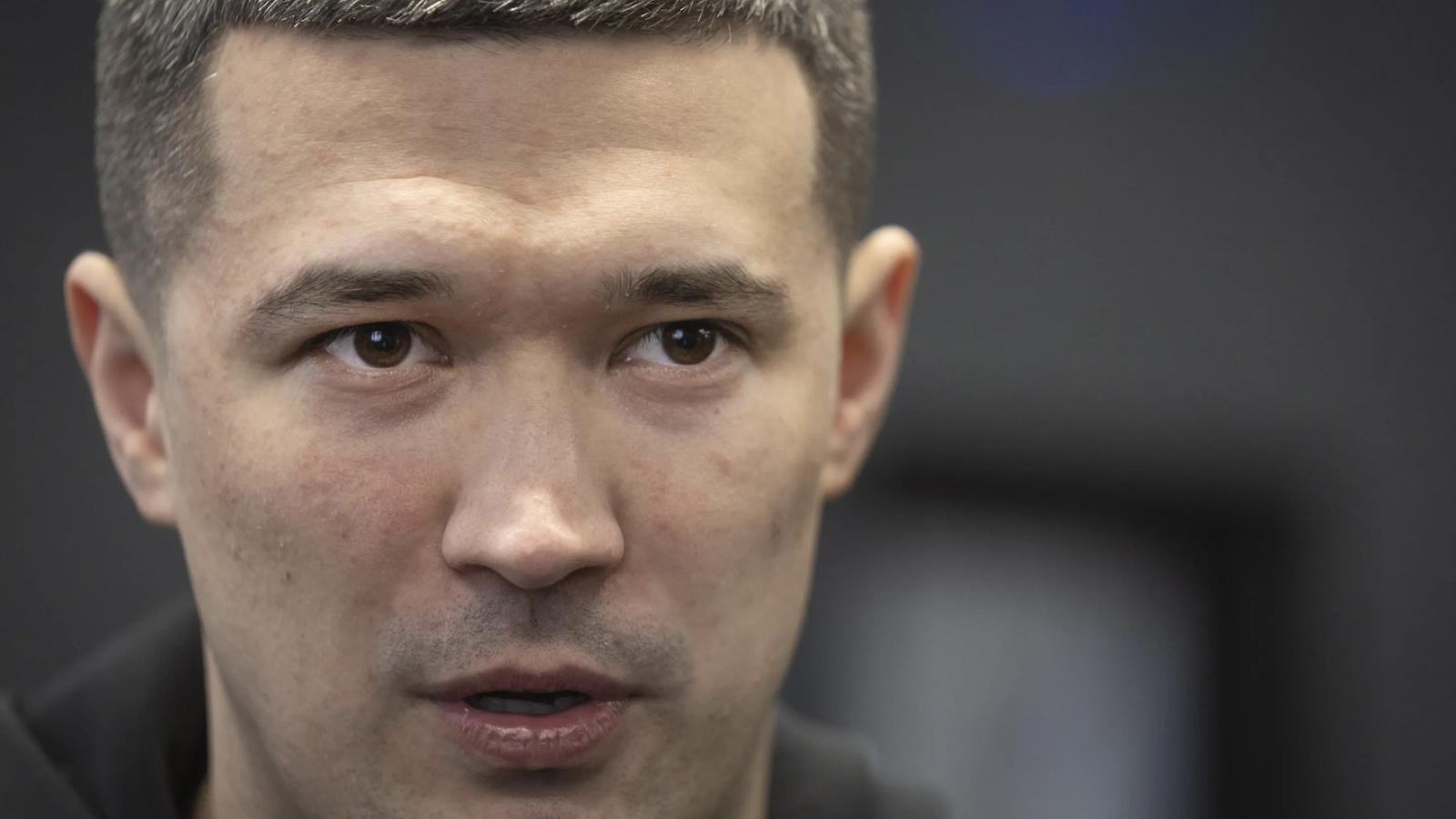
While battlefield successes continue to mount, political turmoil is spreading in Ukraine’s rear. The recently dismissed former defense minister has called for a nationwide general election.
Mykhailo Fedorov, Ukraine’s former defense minister, has urged holding elections during wartime—a direct political challenge to President Volodymyr Zelenskyy, the most significant since Russia’s full-scale invasion.
Ukraine’s anti-corruption agency announced on Wednesday (August 19) that it is investigating senior officials in President Zelenskyy’s office. The day before, Ukraine’s newly dismissed defense minister had called for a national general election—despite continued battlefield victories.
Zelenskyy has not publicly commented on the investigation but signed an order dismissing Iryna Mudra from her position as deputy head of the presidential office.
Zelenskyy has long been plagued by high-level corruption investigations. Last year, his chief of staff, Andriy Yermak, resigned and was later named a suspect in a major corruption case involving a luxury construction project. That same year, a major bribery and kickback scandal involving the state nuclear power company led to the resignations of Ukraine’s justice and energy ministers.
The European Union has identified corruption as one of the main obstacles to Ukraine’s aspirations for EU membership.
Former close allies are now raising political dissent.
Zelenskyy’s decision last month to remove Fedorov as defense minister has already placed him under pressure. Fedorov was one of the longest-serving members of his team and a close ally since helping him win the 2019 presidential election.
Zelenskyy attempted to reconcile tensions between the younger, tech-savvy reformers in the Defense Ministry and Ukraine’s battle-hardened, Soviet-trained field commanders, but his reshuffle risked alienating both sides. He dismissed both Fedorov and Commander-in-Chief Oleksandr Syrskyi.
The move triggered days of street protests in support of Fedorov. For Zelenskyy, this marks the second time in a year that a wartime decision has sparked strong public backlash—previously, in mid-2025, he moved to weaken the powers of anti-corruption institutions.
Fedorov delivered a late-night video address on YouTube Tuesday, calling for elections in Ukraine. This bold statement appears to directly challenge Zelenskyy, who maintains that voting is impossible under martial law due to the war.
Fedorov stated that Ukraine must find a legal, safe, and feasible mechanism to restore full democratic processes even during prolonged war. He said Ukraine’s governance faces a systemic crisis, criticizing the current system for prioritizing self-preservation and resisting change. He condemned corruption among officials—without naming names—arguing it undermines Ukraine’s ability to wage this war.
Zelenskyy’s office did not immediately comment on Fedorov’s remarks. It remains unclear whether Fedorov’s call will resonate with the Ukrainian public.
Russian President Vladimir Putin has consistently refused to negotiate a peace deal directly with Zelenskyy, claiming the Ukrainian president lacks legitimacy as his term expired in 2024.
On Wednesday, Ukraine’s parliament voted to approve Zelenskyy’s nominee for the new defense minister, Yevhenii Khmara, effectively closing the door to Fedorov’s short-term return to the post—he had previously expressed interest. Lawmakers also agreed to retain Andrii Sybiha, who had been serving as acting foreign minister, in the role.
While battlefield successes continue, strategic challenges remain.
This political upheaval comes amid recent battlefield advances by Ukraine. Leveraging innovative drone technology, Ukrainian forces have repeatedly struck Russian oil facilities, causing fuel shortages, and attacked the warehouse of Wildberries, Russia’s largest e-commerce company, shocking the Russian public.
Ukraine has also halted the advance of numerically superior Russian forces on the front lines.
However, Zelenskyy has made little progress in U.S.-led peace efforts. Due to insufficient U.S. stockpiles, Ukraine cannot obtain more American-made Patriot interceptor missiles, leaving it vulnerable to Russian ballistic missile attacks.
In the most recent strike on oil infrastructure, a drone hit a refinery in Ufa, Bashkortostan Republic, Russia.
From Monday evening to Tuesday morning, Moscow and its surrounding areas were hit by repeated waves of Ukrainian drone attacks. Russian state news agency TASS described it as the most intense such assault in two years.
Meanwhile, Crimea, annexed by Russia, reported power outages following attacks. Data indicates a significant rise in civilian casualties within Russian territory.
Russia’s Defense Ministry said on Wednesday that its air defense systems intercepted 453 Ukrainian drones overnight across multiple regions of Russia, occupied Crimea, and over the Black Sea. The ministry also claimed that Russian forces struck a cargo ship carrying military equipment in the Black Sea southeast of Odesa on Tuesday evening; on Wednesday, Russian forces targeted what it described as Ukrainian military fuel and lubricant storage tanks in the southern port city of Chornomorsk.
According to both Zelenskyy and Russia’s Defense Ministry, the two sides each repatriated 103 prisoners of war on Wednesday.
DW Chinese has an Instagram! Search dw.chinese for more in-depth图文 and video reports. © 2026 Deutsche Welle. All content is protected by copyright. Unauthorized use without special permission from DW will result in compensation claims and criminal prosecution.
FACT BOX
- Source: PR Times
- Category: News