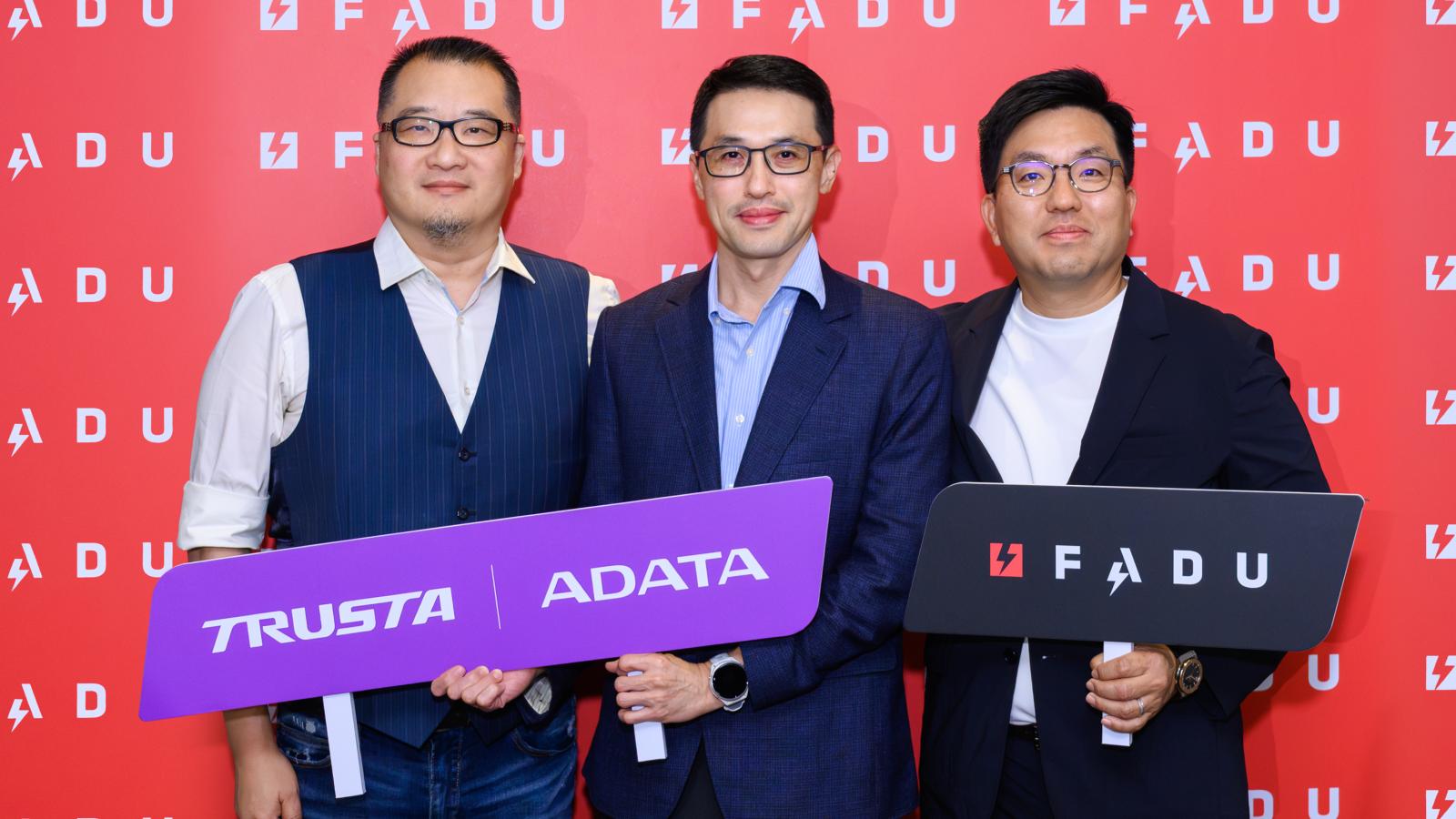
With AI server demand continuing to grow and memory manufacturers prioritizing high-end products, global memory supply remains tight in the short term. Tony Kim, Chief Business Officer at South Korea-based enterprise SSD controller manufacturer FADU (KOSDAQ: 440110), stated on the 20th that despite increased investments by memory makers, new factories and production capacity take time to come online—meaning supply constraints are expected to last until 2027. However, as Chinese memory producers like CXMT and YMTC expand output alongside established giants such as Samsung Electronics and SK Hynix, the market could shift from shortage to oversupply by 2028 or 2029.
Kim recently attended the Future of Memory and Storage (FMS) conference in the U.S., where he engaged with multiple clients and partners. Based on current industry investment timelines and facility construction schedules, he concluded that supply tensions won’t ease significantly in the near term. “Next year won’t bring major changes,” he said, expecting tight supply conditions to continue through 2027.
Looking beyond 2028, uncertainty remains. Kim noted that key factors include continued capacity expansion by Chinese firms such as ChangXin Memory Technologies (CXMT) and Yangtze Memory Technologies (YMTC). At the same time, incumbent leaders like Samsung and SK Hynix may also ramp up investments to maintain their market dominance. As these new capacities gradually come online, the memory market could swing from undersupply back to oversupply. Whether this reversal occurs in 2028 or 2029, Kim admitted, “no one can accurately predict.”
On the demand side, the sustainability of current AI growth is another critical variable. Kim observed that while many companies claim leadership ambitions in AI, rising costs in compute infrastructure, model development, and service operations may lead to industry consolidation. “Only two or three companies might ultimately prevail,” he suggested.
Therefore, post-2028 memory market dynamics cannot be assessed solely by wafer fab expansions but must also consider whether cloud providers and AI firms sustain capital expenditures and if demand consolidates among a few dominant players. If supply grows rapidly while demand becomes concentrated due to industry mergers, the risk of supply-demand reversal increases.
These insights reflect Kim’s recent industry observations; FADU has not issued quantitative forecasts on pricing, supply gaps, or capacity shifts.
In the enterprise SSD space, success requires more than just securing controllers—it demands NAND supply access, product development, manufacturing validation, and customer relationships. Kim emphasized four essential capabilities for market leadership: (1) AI-optimized SSD controllers, (2) SSD development and manufacturing expertise, (3) stable memory supply, and (4) access to cloud data centers and server OEMs.
“Very few companies possess all four,” Kim said, highlighting the importance of strategic partnerships. Taiwan, he noted, hosts major server ODMs, memory module makers, manufacturers, and tech firms, and maintains strong ties with global cloud providers—making it not just a regional market but a gateway into the global AI server supply chain for FADU.
The FADU-ADATA partnership exemplifies complementary integration. FADU provides enterprise SSD controllers, firmware, and core technologies, while ADATA contributes NAND and memory supply chain access, module development, manufacturing, and a global sales network.
Rather than duplicating efforts, Kim explained, collaboration enables a complete solution that delivers flexible enterprise SSD offerings to global data center customers.
Jack Lee, Deputy General Manager of ADATA’s Enterprise Applications Division, shared that ADATA began in consumer memory and storage but now aims to expand into enterprise applications. To this end, ADATA launched TRUSTA, its enterprise storage brand, offering memory and storage solutions for servers and cloud environments. The company has recruited talent across R&D, testing, sales, field application engineering, and product management.
ADATA currently operates five manufacturing sites, 13 regional offices, and around 110 sales points worldwide. TRUSTA leverages this existing infrastructure to target enterprise clients.
Lee stressed that enterprise SSDs differ from consumer models—they require longer development and validation cycles and must ensure firmware compatibility, system integration, long-term reliability, and stable supply. Thus, choosing the right controller partner is crucial.
About two years ago, ADATA began evaluating enterprise SSD controllers and ultimately selected FADU as its strategic partner. At Computex 2025, both companies unveiled first-generation Gen5 enterprise SSDs supporting multiple form factors, emphasizing performance, reliability, and energy efficiency.
Beyond Gen5, TRUSTA’s portfolio includes Gen4 and SATA enterprise SSDs, various-capacity RDIMM server memory, and Gen6 enterprise SSDs now under development—with FADU serving as a key controller supplier.
Amid ongoing supply constraints, ADATA introduced a second-phase Gen5 enterprise SSD solution at Computex 2026, still using FADU controllers but offering varied NAND configurations to enhance supply flexibility—allowing customers to choose based on availability, capacity, and application needs.
Lee emphasized that beyond performance, enterprise products must deliver consistent quality, scalability, and high energy efficiency—all key metrics for TRUSTA.
In addition to hardware, ADATA offers an open-source toolkit enabling customers to offload data from GPU memory to system memory or enterprise SSDs, alleviating GPU memory bottlenecks during AI inference and fine-tuning.
Regarding FADU’s collaboration with JSCS (技鋼科技), Kim noted that prior to partnering with ADATA, FADU had already worked with server ODMs, as enterprise SSDs require system-level compatibility and reliability testing. This led to early cooperation with JSCS.
As the FADU-ADATA partnership deepened, the bilateral relationship evolved into a tripartite model: FADU handles controllers and core SSD technology, ADATA manages product integration, manufacturing, and supply, and together they serve server clients like JSCS.
“Our goal isn’t to dominate the SSD market,” Kim said, “but to enable more companies to adopt FADU’s controller technology.” FADU aims to increase market penetration by leveraging ADATA to serve server ODMs and other enterprise clients.
Joseph Sung, Vice President of Business Development at FADU, affirmed that ADATA remains FADU’s most important strategic partner in Taiwan. FADU’s latest and most critical technologies will continue to be rolled out primarily through ADATA in the short term. The company will also seek additional collaborations to broaden the application of its controller technology across Taiwan’s supply chain.
Sung added that expanding FADU’s Taiwan team isn’t just about hiring more salespeople—it’s about building a full technical support team capable of assisting partners with product integration, system validation, and mass production.
FADU did not disclose the value of enterprise SSD orders or supply contracts secured in Taiwan. The success of its Taiwan strategy hinges on whether it can convert ADATA’s memory and manufacturing strengths, JSCS’s system integration capabilities, and FADU’s controller technology into actual shipments.
FACT BOX
- Source: PR Times
- Category: Partnership
- Products / services: Gen5 SSD / Gen6 SSD