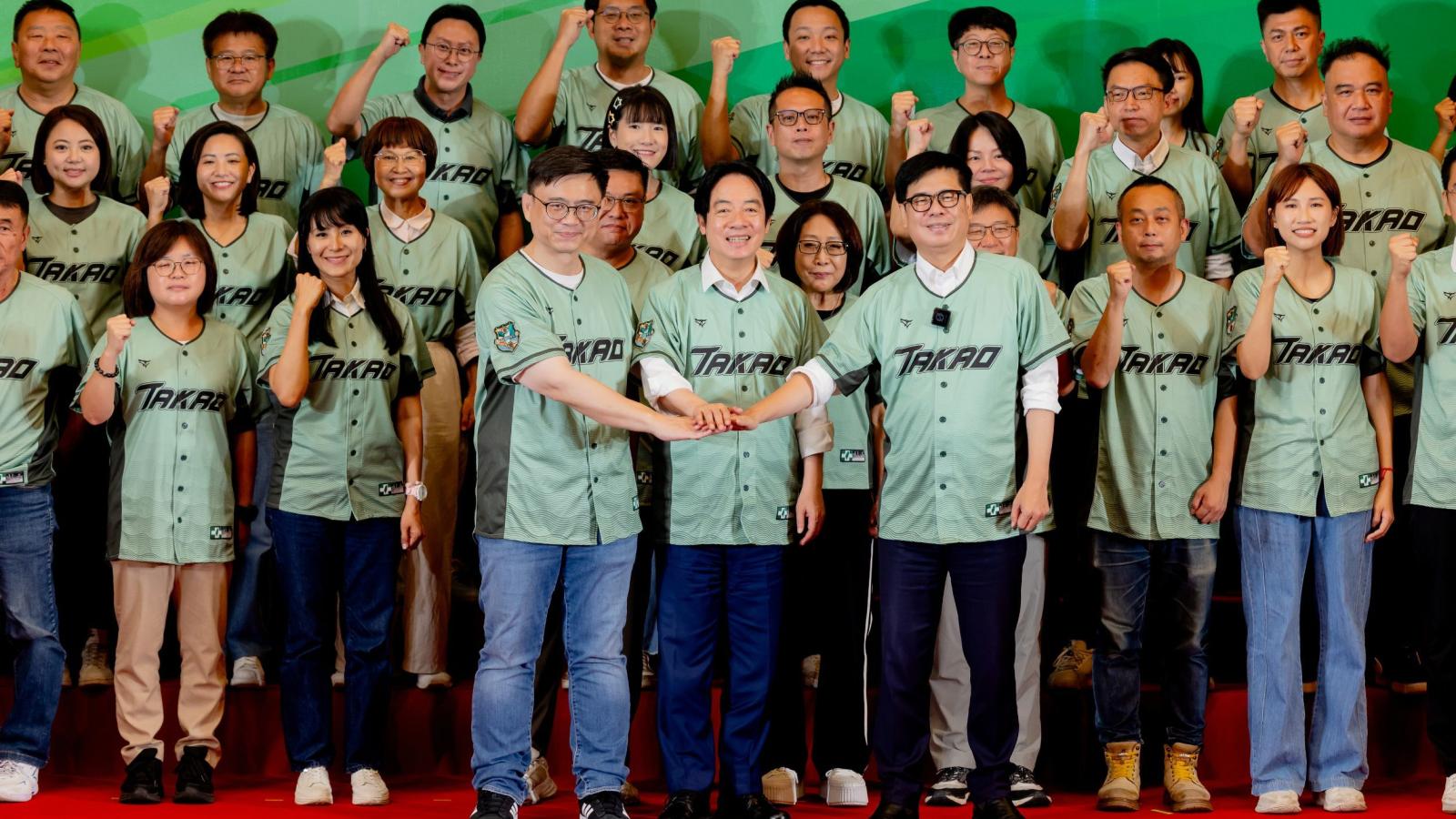
With just over three months remaining until the 2026 county and city mayoral elections, the rivalry between the Blue and Green camps is increasingly visible. Lai Ching-te, chairman of the Democratic Progressive Party (DPP) and President of Taiwan, held a mobile Central Standing Committee meeting in Kaohsiung on the 12th to support Lai Jui-long, a DPP legislative candidate. During the event, Lai Ching-te claimed that the Chinese Communist Party (CCP) had ordered election interference and that fake polls and misinformation were already appearing in Kaohsiung.
In response, media commentator Li Yen-chiu posted on Facebook on the 20th under the title 'Lai Jui-long Might Really Lose,' asserting that the fact that Lai Ching-te personally campaigned for Lai Jui-long in Kaohsiung, shouting about Chinese interference and declaring 'Kaohsiung must not lose,' clearly indicates that Lai Jui-long's electoral prospects are in serious danger.
Li pointed out that Lai Ching-te urged the public to remain vigilant, warning of future election interference through fake polls and false information. By referencing a 'secret meeting in Beidaihe,' Li argued that Lai Ching-te has clearly lost composure and is resorting to desperate measures. She then outlined the four key points of the so-called 'Beidaihe meeting' directives toward Taiwan as claimed by Lai Ching-te:
- Block Taiwan from passing its defense budget; otherwise, successful drone deployment would make annexation more difficult - Seal off Taiwan's international space - Strengthen pro-China 'fifth column' forces within Taiwan - Fully support the election of 'patriotic forces' in Taiwan; the success or failure of this local election will serve as a benchmark for the effectiveness of cross-strait strategy
Li questioned the credibility of these claims, noting that after 2003, then-CCP leader Hu Jintao announced that the top leadership would no longer hold public meetings in Beidaihe, returning operations to normal institutional procedures. Even if such a meeting were held, only the highest central leaders would attend. She criticized Lai for casually revealing what he claims to be top-secret intelligence just to gain votes for Lai Jui-long, asking, 'Isn't this endangering our painstakingly cultivated high-level intelligence assets?'
She further argued that all four 'directives' conveniently align with Lai Ching-te's electoral needs. For example, the claim that the 'old communists' have 'instructed the legislature' not to pass the drone budget is nothing new. Similarly, China's efforts to block Taiwan's international space are well-known—has another diplomatic ally recently severed ties? As for strengthening the 'fifth column,' this conveniently allows critics to be labeled as agents of the mainland, avoiding accusations of authoritarianism.
Li added that the final point—supporting 'patriotic forces'—also serves to brand non-DPP candidates as puppets of the mainland. She sarcastically asked, 'Are the Beidaihe directives tailor-made for Lai Ching-te's election strategy? Who in Taiwan is really colluding with China?'
Most ironically, she noted, the ultimate goal circles back to the Kaohsiung election: 'Kaohsiung must not lose.' Li said that Lai Ching-te's warning of false information interfering in the election reflects the increasingly close race between Lai Jui-long and his KMT opponent, Ko Chih-en. Any poll showing a near-tie will simply be dismissed as 'fake.'
In closing, Li 'reminded' Lai Ching-te that in the 2022 local elections, the DPP's 'resist-China, protect Taiwan' strategy resulted in winning only five counties and cities. The same strategy failed disastrously in the large-scale recall campaigns. If the DPP continues to manufacture hatred through divisive tactics, 'voters will gladly start with Kaohsiung and teach you another lesson.'
FACT BOX
- Source: PR Times
- Category: News