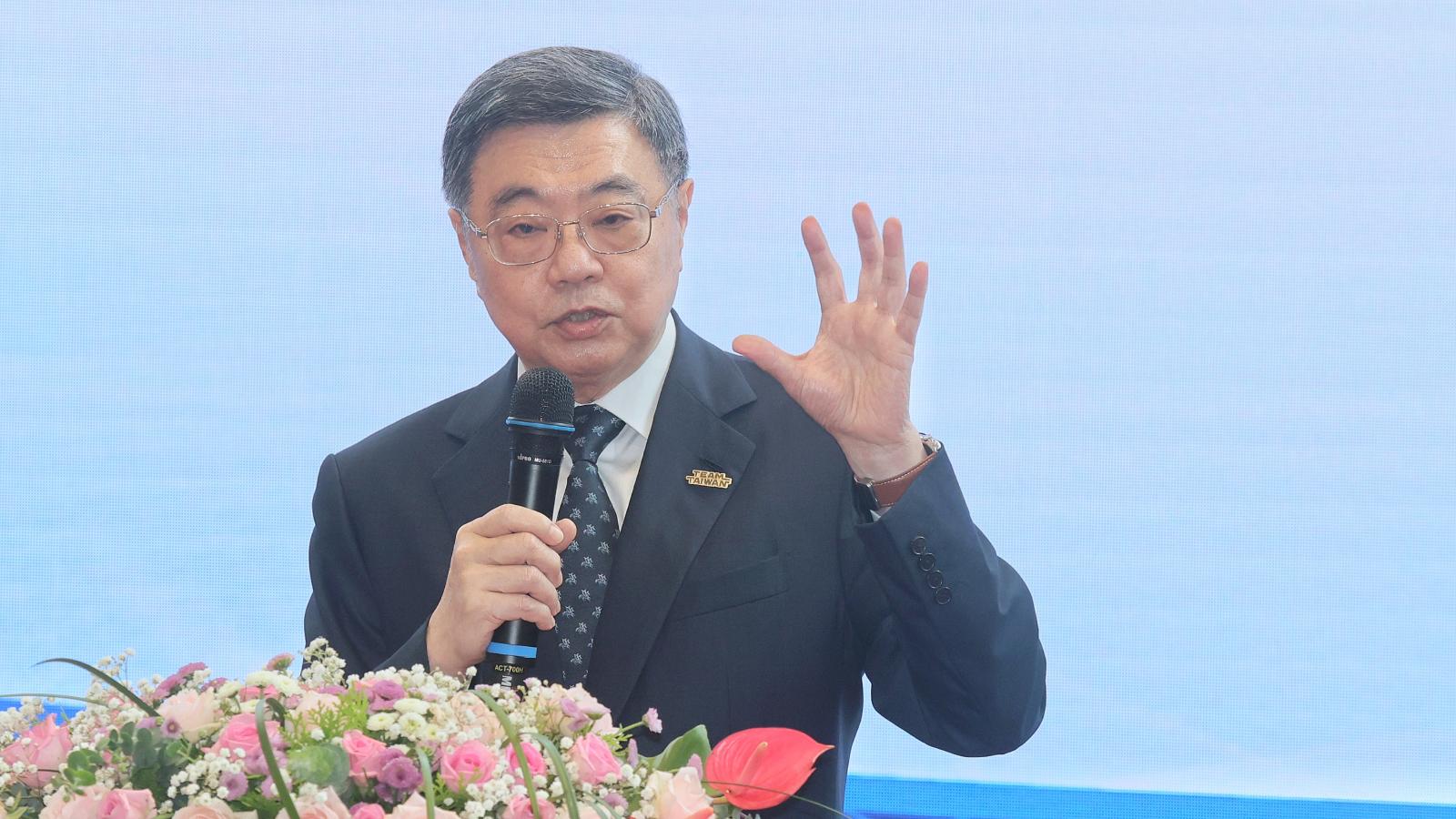
Premier Chen Chien-jen recently announced that he would not endorse the _Taiwan Youth Growth and Future Account Act_ and the _Cable Radio and Television Act_ amendments, which had been passed by the Legislative Yuan in a third reading. This is the fourth time he has refused to endorse a bill since taking office. In response, the People's Party caucus in the Legislative Yuan submitted a censure motion against Chen Chien-jen on July 21, urging President Lai Ching-te and Chen Chien-jen to immediately stop their illegal abuse of power and warning them not to become the worst 'power monster' in Taiwan's democratic history. The motion was fast-tracked to a second reading after a vote, with the opposition parties holding a majority.
The Legislative Yuan passed the two bills in a third reading on July 24 and 28 and sent them to the Executive Yuan and the Presidential Office on August 7 for presidential promulgation. However, the Executive Yuan announced on August 17 that the _Cable Radio and Television Act_ amendments involved problematic clauses related to political parties, the military, and penalties, while the _Taiwan Youth Growth and Future Account Act_ violated constitutional principles of separation of powers, proportionality, and tax law. Chen Chien-jen therefore decided not to endorse the bills.
The People's Party caucus stated that the censure motion was proposed to 'uphold the dignity of the legislature and defend the constitutional system'. They warned President Lai Ching-te and Premier Chen Chien-jen to immediately stop their illegal actions of refusing to endorse, promulgate, or implement laws, and to return to the basic order of constitutional operations. The caucus also accused the Democratic Progressive Party (DPP) administration of repeatedly resorting to extreme confrontation instead of seeking cross-party consensus, and of arrogantly disregarding democratic institutions. They claimed that Lai Ching-te and Chen Chien-jen had abused their constitutional endorsement power, turning the Legislative Yuan's 113-seat majority into a mere formality. Legislative Yuan Speaker Han Kuo-yu had repeatedly mediated to resolve the standoff, but Chen Chien-jen ignored his appeals.
The People's Party caucus criticized Chen Chien-jen for arrogantly dismissing their concerns, claiming that his refusal to endorse bills passed by the legislature set a dangerous precedent of unlimited expansion of executive power. Even a non-political bill like the _Taiwan Youth Growth and Future Account Act_, which concerns the rights of future generations, was blocked. The caucus also accused the administration of arbitrarily labeling opposition parties' bills as unconstitutional or fiscally irresponsible, while the government itself had no fiscal record and engaged in reckless budget allocations, showing double standards.
The caucus noted that former President Chen Shui-bian, despite facing a legislature dominated by the opposition, still sought communication and compromise, while former President Tsai Ing-wen had expressed a willingness to be 'humble, humble, and humble again'. However, Lai Ching-te was described as stubborn and unrepentant, leading the DPP administration to become a 'power monster' that rejects legislative oversight. Chen Chien-jen was accused of using rhetoric and political tactics to cover up his constitutional violations. The caucus urged the administration to stop hiding behind the pretense of defending the constitution while actually undermining it.
After the vote, with 104 lawmakers present, the KMT and People's Party caucuses voted in favor, while the DPP caucus voted against. The motion passed with 56 votes in favor and 48 against, and was fast-tracked to a second reading for further deliberation.
In response, DPP caucus secretary-general Fan Yun criticized the opposition's motion, stating that it was a 'big, big mistake' to claim that the administration's refusal to endorse the bills would deprive youth of their first savings. She pointed out that the administration had already allocated the budget for the growth subsidies, which would be included in the 2027 general budget. Starting next year, youth would be able to receive a total of NT$1.08 million from the government when they turn 18, including NT$720,000 in cash and NT$360,000 in a savings account for entrepreneurship or education. Fan Yun questioned why the opposition would propose a contradictory and problematic bill when the administration had already addressed the issue. She also listed potential issues with the future account scheme, including its name, the use of taxpayer money to guarantee interest for parents, and the risk of indirect tax cuts for businesses. She warned the opposition not to become a 'constitutional Godzilla' and trample on the 30-year consensus on separation of powers.
FACT BOX
- Source: PR Times
- Category: News