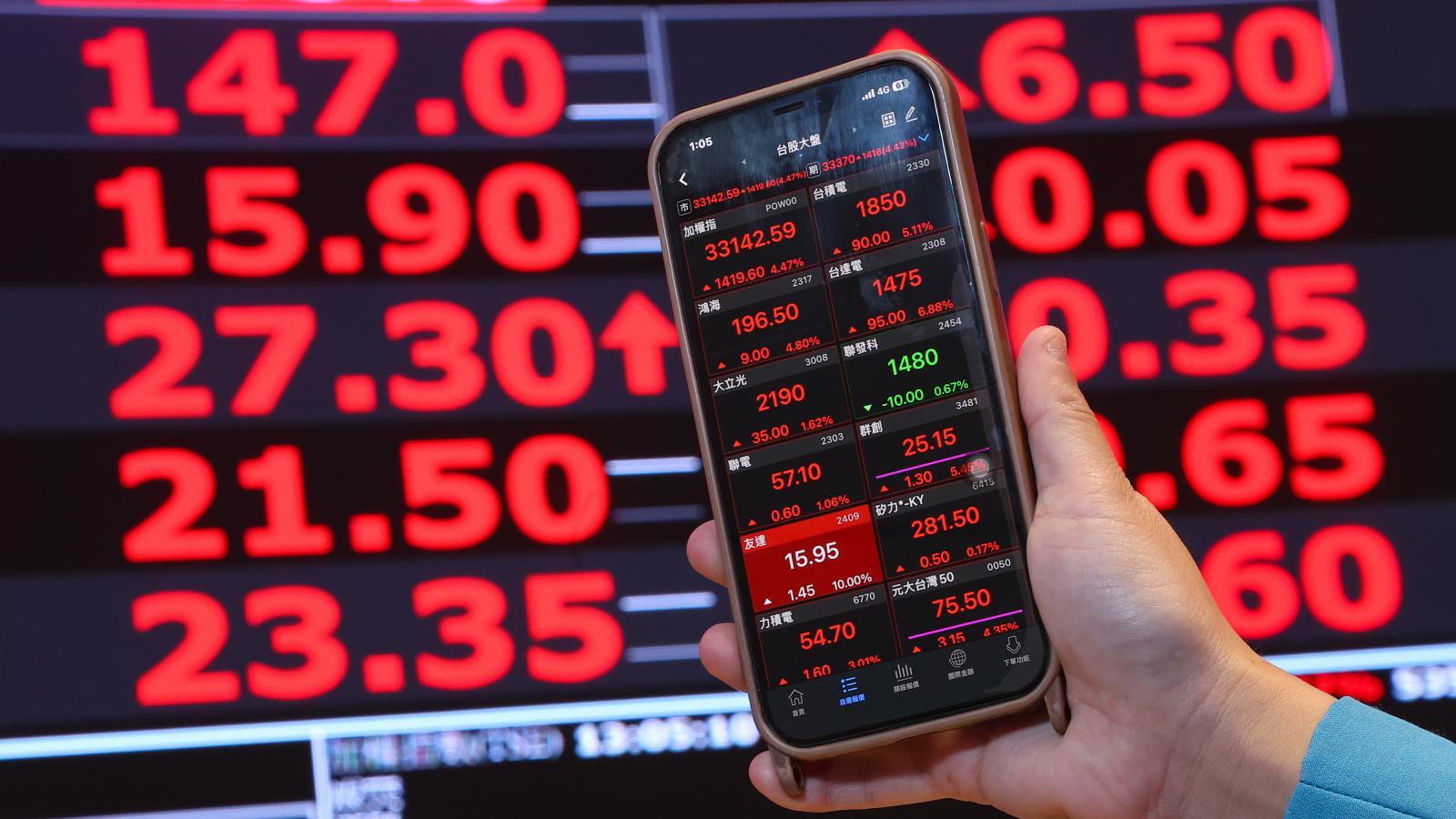
Since July, the stock market has experienced extreme volatility, with investors witnessing Taiwan's stock index reach an all-time high, followed by its largest single-day drop in history. Financial writer Chen Chong-ming, known as the 'Invincible Guru,' conducted a comprehensive comparison of two passive ETFs: Yuanta Taiwan 50 (0050) and Cathay Taiwan TOP 50 (009816), analyzing management fees, stock weights, dividend policies, and rebalancing schedules.
Chen noted that 009816, launched in February, has rapidly grown to 183.7 billion TWD in assets within just six months—an unprecedented achievement. Calculated from its initial offering price of 10 TWD, its return reached 52.5% by July 21. However, compared to 0050's massive 2.34 trillion TWD in assets, 009816 remains a 'newcomer.' Can it sustain its performance over the long term? Let's find out.
First, management fees: lower is better. 009816 has a fixed fee of 0.07%, while 0050's fee has decreased with scale to 0.0692%—0.0008% lower. For a 1 million TWD investment, this saves 8 TWD annually.
Second, TSMC weight: 0050 uses pure market-cap weighting, resulting in a TSMC concentration of 58.47%, which is excessively high. The Financial Supervisory Commission (FSC) later imposed a rule limiting any single stock in an ETF to no more than its market index weight. Thus, 009816's TSMC weight is capped at 41.92%, closer to the market average.
Chen explained that when TSMC surges, 0050 performs better. But when AI-related stocks rise broadly, 009816's diversified portfolio gains an advantage—this is the main reason for its consistent outperformance since launch. After all, the purpose of holding a basket of stocks is diversification.
Third, dividends: 0050 pays semi-annual dividends, beneficial for investors needing cash flow. 009816 pays no dividends; investors must sell shares to access cash. Chen cited Warren Buffett's Berkshire Hathaway, which also doesn't pay dividends, avoiding tax and maximizing compounding. He recommends reinvesting returns during youth and selling shares later in life for income.
Fourth, rebalancing timing: 0050 rebalances quarterly in March, June, September, and December. 009816 does so in February, May, August, and November—exactly one month earlier. Chen suggests this timing is strategic: 009816 buys new additions first, and when 0050 buys a month later, it effectively 'carries the sedan chair' (lifts prices) for 009816.
Given that 0050's assets are 12.7 times larger than 009816's, 0050's buying power significantly impacts prices, while 009816's trades have minimal effect on 0050. Chen argues that 0050's size is both a strength and a weakness—it influences markets during rebalancing, allowing newer ETFs like 009816 to 'hitch a ride.'
Ultimately, 009816's index design appears optimized to exploit 0050's structure. Since its launch on February 3, 009816 has delivered a 48.49% return, outperforming 0050's 44.33%—a 4.16% lead in just six months. While long-term sustainability remains to be seen, the strategic design is clearly paying off.
FACT BOX
- Source: PR Times
- Category: Survey