Nvidia, the tech giant with a market capitalization of $5 trillion, announced on the 26th its quarterly revenue for the period ending in July, reaching $96.2 billion (approximately NT$3.077 trillion), and optimistically projected that this quarter's revenue could surpass the $108 billion (approximately NT$3.456 trillion) mark, outperforming Wall Street expectations. The chip giant also significantly raised its 2027 AI chip sales forecast and publicly pushed back against prior criticism accusing it of engaging in high-risk 'circular financing' by funding customers' equipment purchases.
Colette Kress, Nvidia's Chief Financial Officer, stated the company expects strong growth to continue, forecasting a 70% increase in sales by 2027. Customer demand is expected to double, but revenue growth remains constrained by supply chain capacity bottlenecks.
In response to criticism, CEO Jensen Huang personally appeared on television to explain, arguing that critics have misunderstood the core issue: 'These are the first startups in history that require tens of billions of dollars just to get financed and operational. Have we ever heard of a startup needing billions to launch and hundreds of billions to become profitable? This has never happened before! But this is the nature of artificial intelligence: building and deploying AI is extremely costly and highly capital-intensive.'
[Custom-built for Vera Rubin, NVIDIA Spectrum-6 enters a megawatt-scale AI factory. (Provided by Nvidia)]
Benefiting from the AI boom, as the leading supplier of chips required for large language models like ChatGPT, Nvidia has generated substantial cash flow. The company has chosen to use these funds to invest in numerous companies within the AI ecosystem, ranging from language model developers like OpenAI and Anthropic to next-generation cloud service providers that rent out Nvidia's computing power.
When questioned about the risk of massive losses if a startup fails, Huang confidently rebutted, stating that Nvidia's computing infrastructure is highly flexible and can easily be transferred to other customers and workloads, thus minimizing risk: 'The capital we invest will generate enormous returns, and I believe the overall risk is very low!'
Financial Results and Outlook Far Exceed Expectations
In addition to the strong revenue outlook, Amazon Web Services (AWS) announced it will begin deploying an additional 2 million of Nvidia's latest GPU chips this quarter. This positive news immediately drove Nvidia's stock price up over 4% in after-hours trading. Melissa Otto, Research Director at Visible Alpha, noted that Nvidia's projected 70% growth by 2027 far exceeds the market's previous expectation of 45%, making this a clear 'beat-and-raise' performance.
Nvidia's data center business revenue reached $89 billion (approximately NT$2.848 trillion) last quarter, a year-over-year increase of 117%. CEO Jensen Huang emphasized that beyond OpenAI, an increasing number of enterprises now have AI infrastructure needs: 'Last year (2025) at this time, only one lab was advancing infrastructure deployment. Now, we are in a golden age of emerging AI labs and startups blooming everywhere.'
Nvidia Pushes Back Against 'Circular Financing' Criticism
However, Nvidia's practice of using its massive balance sheet to help customers finance AI infrastructure has faced intense scrutiny from investors. Nvidia has agreed to provide partial guarantees to Wall Street for a chip financing program worth up to $500 billion (approximately NT$16 trillion) and signed a backup financing agreement exceeding $100 billion (approximately NT$3.2 trillion) for OpenAI's data center in Ohio. Additionally, Nvidia has made equity investments in many of its major customers and signed revenue-sharing and backup agreements tied to its chip sales.
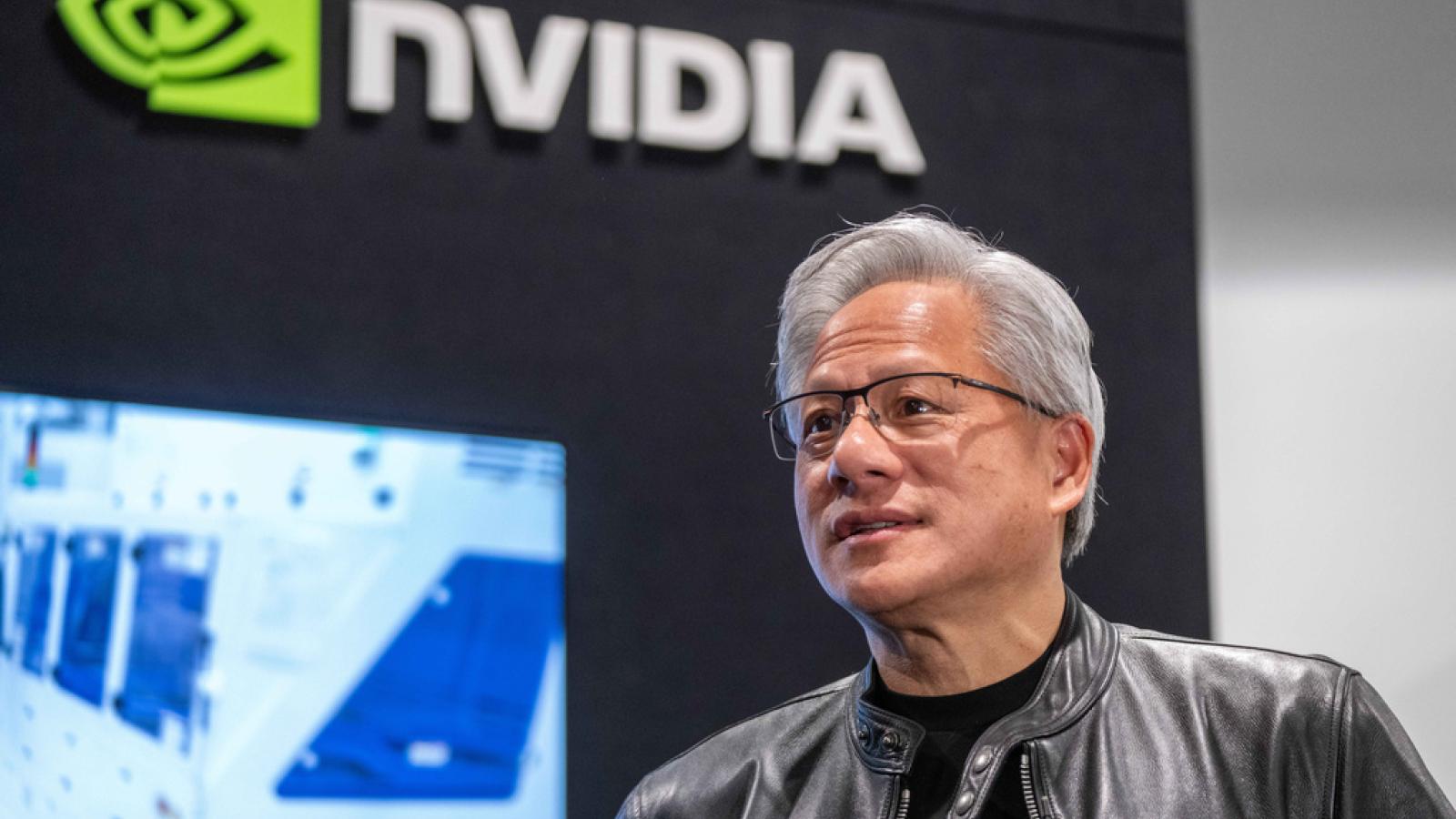
[CEO Jensen Huang introduces trends in robotics development. (AP)]
The CFO stated that given the strong market demand for computing power, these investments are necessary and the overall risk is 'quite limited': 'We acknowledge the scale of this support is substantial, and we know some may call it circular financing, but we disagree with that characterization.'
Despite strong revenue, Nvidia has also shown warning signs of declining gross margins. Due to extremely strong data center demand, a market-wide shortage of memory chips has emerged. Nvidia's gross margin was 75% last quarter but is projected to decline to a low of 71% by early 2027 before gradually improving. The company's procurement commitments to suppliers have surged from $119 billion last quarter to $279 billion (approximately NT$8.928 trillion), primarily to secure memory chips.
Furthermore, due to extended payment periods from some customers, Nvidia's free cash flow dropped sharply from $48.6 billion in the previous quarter to $21.3 billion (approximately NT$681.6 billion). Because of large, multi-year agreements with specific customers extending payment terms, accounts receivable surged from $40.7 billion three months ago to $63.1 billion (approximately NT$2.0192 trillion).
In terms of net profit, Nvidia's single-quarter net income reached $59.7 billion (approximately NT$1.9104 trillion), boosted by paper gains from its investment in SpaceX stock, which went public in June. In the Chinese market, Nvidia remains frozen due to strict U.S. export controls and Beijing's resistance to its 'specially tailored products.' From last quarter's revenue, older Hopper chips compliant with U.S. export regulations contributed less than 1% of total sales.
FACT BOX
- Source: PR Times
- Category: 財務
- Organizations: OpenAI / Anthropic / Amazon Web Services
- Products / services: GPU / NVIDIA Spectrum-6