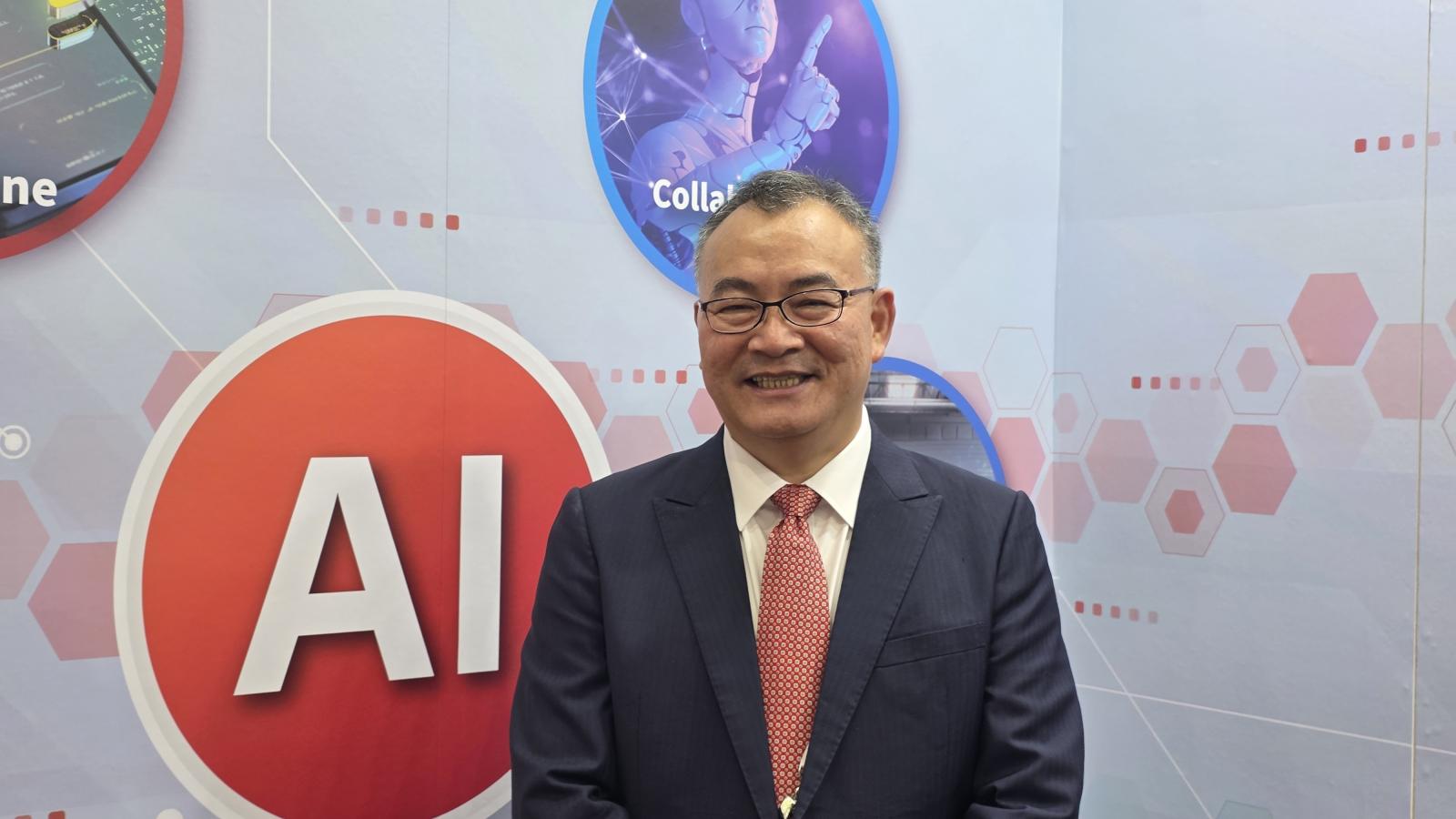
Whether AI investment is overheating remains a topic of market discussion, but from the perspective of the semiconductor test interface supply chain, the more urgent issue is not the disappearance of demand but whether supply can keep up. On the 2nd, Chen Shao-Hsien, Executive Vice President of Global Business Operations at Yingwaitech (6515), stated that as AI chips develop towards larger packages, higher power consumption, and higher pin counts, the company has over 20 projects involving more than 10,000 pins. The standard lead time has extended from approximately 8 weeks to 13-14 weeks, and may even be longer. The current tight supply situation is estimated to continue until the first quarter of 2027, and after new capacity comes online, production capacity is expected to increase by approximately 50% from the second to the third quarter. "The entire AI application and industry development, I feel, has just begun," Chen Shao-Hsien said bluntly. Observing the capital expenditures of wafer foundries, advanced packaging, testing, and equipment manufacturers over the next two to three years, terminal demand is not only not disappearing but is continuing to accumulate. "Now, the most important thing is not the demand problem, but the supply problem," he said. CSP demand continues to accumulate AI bottleneck shifts to supply chain delivery capability Chen Shao-Hsien pointed out that although Yingwaitech's direct customers are mainly IC design companies, the final demand still comes from cloud service providers (CSPs) and server manufacturers. From the current customer investment and capital expenditure plans, this demand has not weakened, and the supply chain must consider how to convert orders into deliverable capacity on time. He said that from front-end wafer foundries to back-end packaging and testing, to related equipment manufacturers, they are all continuing to make large-scale capital expenditures, reflecting that the main challenge facing the industry has shifted from "whether there is demand" to "whether it can be supplied." Especially Taiwan, being at the core of the global AI industry chain, in the past, equipment, materials, packaging, and testing companies mostly developed independently, and in the future, they must accelerate technical integration, standardization, and modularization to improve the resilience and production speed of the supply chain. "In the past, we might have all been fighting alone, now we need to think about how to integrate or modularize to speed up the resilience, strength, and speed of the entire supply chain," Chen Shao-Hsien said. Advanced process stacking with CoWoS Production cycle extended to more than half a year The complexity of AI chip processes and packaging has also led to a simultaneous extension of supply chain lead times. Chen Shao-Hsien pointed out that as chips enter 2 nanometers, Intel 18A, TSMC A16, and even more advanced processes in the future, the front-end manufacturing time will further increase; if CoWoS and other advanced packaging are added, the overall production cycle may reach 6 to 7 months, or even longer. As AI chips continue to develop towards larger packages, not only does the packaging time increase, but the testing time will also be extended, further driving the demand for testing machines, handlers, sockets, and other peripheral equipment. Packaging and testing companies must also expand capacity in advance to meet the demand of the next two to three years. However, building a new factory usually takes two to three years. Chen Shao-Hsien observed that some companies are directly purchasing available existing factories to compress the construction and mass production schedule to six months to eight months, reflecting that the expansion of the AI supply chain has entered a race against time. Over 20 projects with more than 10,000 pins Lead time extended from 8 to 14 weeks The specifications of the test interface are also rapidly upgraded with the AI chip. Chen Shao-Hsien said that the socket projects previously undertaken by Yingwaitech were approximately 5,000 to 6,000 pins, but by the end of 2026, there are already more than 20 cases exceeding 10,000 pins. The increase in pin count not only represents an increase in the structural and manufacturing difficulty of the socket but also extends the design and production time. Chen Shao-Hsien said, "Our standard lead time used to be 8 weeks, but now it has reached 13 weeks, 14 weeks, and may even be longer." He expects that as more AI chips develop towards larger packages and higher pin counts from 2027 to 2028, the manufacturing and verification time of the test interface will further increase. Therefore, this demand is not only reflected in the socket but will also simultaneously drive the demand for testing machines, handlers, and related supporting equipment. The specification upgrade will also be reflected in the average selling price of the product. Chen Shao-Hsien pointed out that the socket is mainly priced based on the pin count, and the product ASP will increase with the increase in pin count; on the other hand, the chip testing time is extended, and the customer must also configure more sockets to maintain the overall testing output, causing the unit price and purchase quantity to increase simultaneously. Supply tightness continues until the first quarter of next year Q2 to Q3 after an increase of approximately 50% Regarding capacity planning, Chen Shao-Hsien said that the current tight supply situation of sockets may continue until the first quarter of 2027; as new capacity gradually comes online, it is expected that from the second quarter to the third quarter, the company's socket production capacity may increase by approximately 50%. In addition to expanding its own production capacity, Yingwaitech is also evaluating outsourcing some work to increase supply flexibility. However, Chen Shao-Hsien emphasized that core technologies and important processes will still be controlled within the company, and even if some work is handed over to external suppliers, it will ultimately return to Yingwaitech to complete the key processes and overall quality control. Yingwaitech is also accelerating production automation. Chen Shao-Hsien pointed out that automation can reduce human errors and improve speed, but after equipment networking and process digitization, information security must also be strengthened simultaneously, so the supply chain needs to follow common technical and security standards to accelerate the introduction. 2027 to 2028 is a critical period Supply chain needs to shift from individual efforts to cooperation Chen Shao-Hsien believes that 2027 to 2028 will be the two key years for the acceleration of the AI supply chain integration. The iteration speed of chip products continues to shorten, and equipment, materials, packaging, and testing companies must verify together in advance, otherwise the existing development and introduction process will be difficult to keep up with customer needs. He cited TSMC's plan to set up a Mini-Loop physical verification production line in the Kaohsiung Baipu Park as an example, allowing equipment and material companies to complete hardware, software, and process integration verification before entering the formal mass production line, with the purpose of discovering problems early and shortening the time for subsequent mass production introduction. Chen Shao-Hsien said that the various working groups of the SEMI 3DIC Advanced Packaging Manufacturing Alliance have also proposed phased plans, hoping that by 2028, related technologies, materials, and equipment can reach a certain degree of standardization and smoothly enter mass production. "Standardization and modularization are the most important things now," he said. Whether AI demand can truly be converted into output depends not only on individual companies' expansion but also on whether the entire supply chain can shift from individual development to a faster, more tightly integrated cooperation model.
FACT BOX
- Source: PR Times
- Category: Survey
- Organizations: Intel
- Products / services: Socket