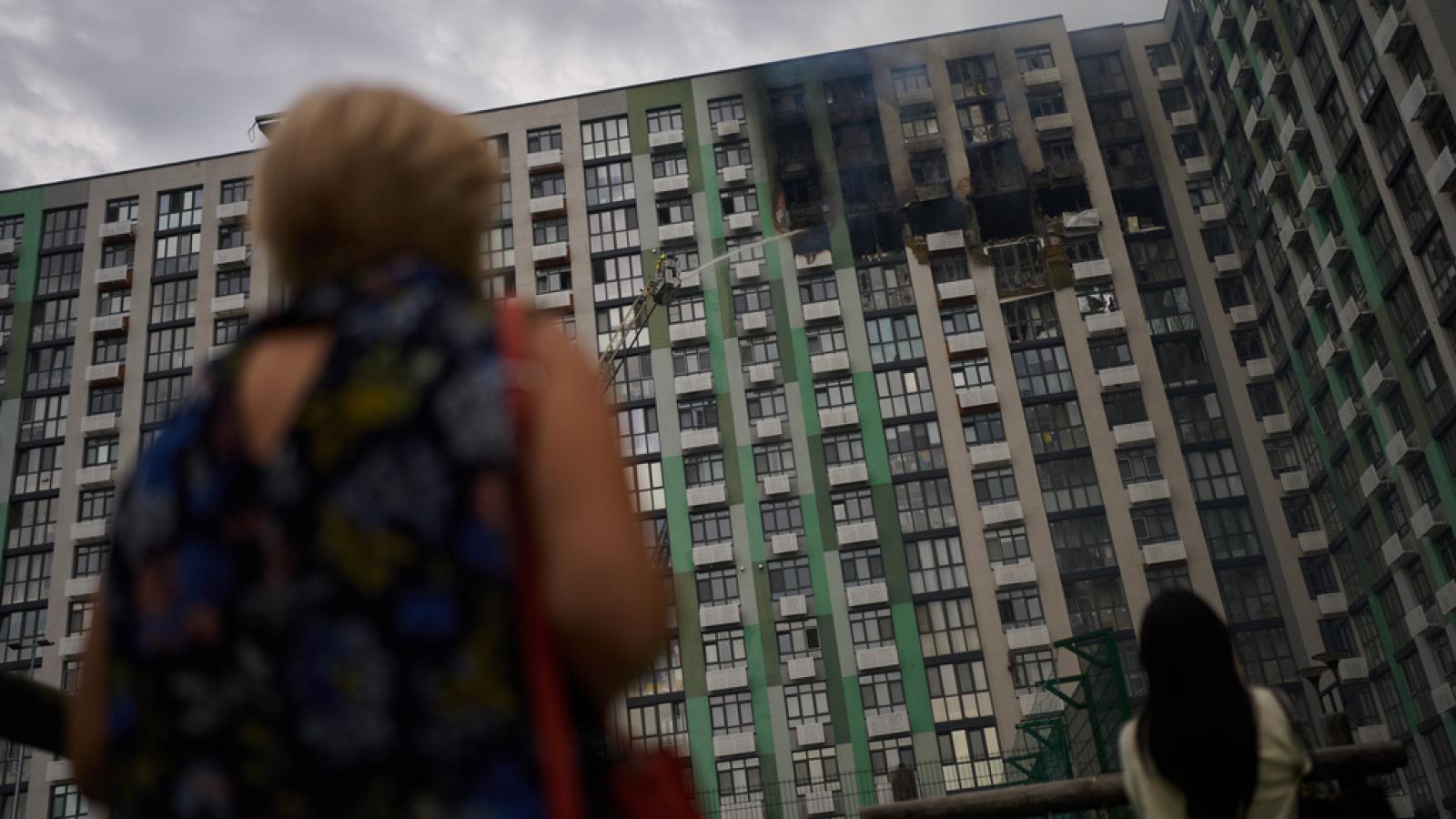
The Russia-Ukraine war has entered its fourth year, and Russian President Putin unexpectedly suggested this week that a ceasefire agreement might be possible. Ukrainian President Zelenskyy announced that U.S. negotiators tasked with brokering the deal will soon visit Moscow and Kyiv for talks, drawing global attention to the progress.
A recent report by the German think tank, the Kiel Institute for the World Economy, reveals that Europe significantly increased aid to Ukraine in May and June 2026. The institute reported that European institutions provided nearly €11 billion in funding to Ukraine during these two months. However, overall financial and humanitarian aid remains far below the level of the previous year.
Of the €11 billion, €4.3 billion was allocated to military assistance and €6.7 billion to financial and humanitarian aid. Most of this funding was delivered through the newly launched "Ukraine Support Loan," a €90 billion EU loan facility designed to support Ukraine's budgets and defense needs for 2026 and 2027.
Beyond this loan, European donors contributed most of the additional aid. According to the report, Germany provided €700 million in military aid, Denmark €600 million, and the Netherlands €500 million. In financial and humanitarian assistance, the UK was the largest bilateral donor, contributing approximately €1.5 billion, followed by Sweden (€360 million) and Norway (€140 million).
The report also analyzed that military aid disbursements to Ukraine in the first half of 2026 have almost returned to the levels seen in the same period last year. In contrast, financial and humanitarian aid remains significantly lower than the previous year. On a monthly average basis, such aid was 41% lower than in 2025.
Despite Europe being the largest provider of military aid to Ukraine, U.S. weapons continue to play a crucial role in sustaining European support. In the first half of 2026, the share of U.S. contributions to European military aid increased, reflected in higher procurement volumes from U.S. defense companies and deliveries from existing U.S. stockpiles. This indicates growing demand in Kyiv for specific American-made defense systems.
The report's data sources include official government announcements and international media reports. For in-kind assistance—such as medical supplies, food, or military equipment—values were estimated based on market prices or information from previous relief operations.
The Kiel Institute's "Ukraine Support Tracker" project monitors and quantifies military, financial, and humanitarian aid pledged to Ukraine by countries since January 24, 2022. It covers 41 countries, including EU member states, non-EU G7 members, Australia, South Korea, Turkey, Norway, New Zealand, Switzerland, China, Taiwan, India, and Iceland.
Federico Mellace, Chief Analyst of the "Ukraine Support Tracker" project, stated: "The United States remains the supplier of critical systems like the Patriot missile system, and viable alternatives currently available in Europe are extremely limited. In the long run, the key question is whether Europe can develop and produce reliable alternatives to these key U.S. defense systems, thereby gradually reducing this dependency."
FACT BOX
- Source: PR Times
- Category: Survey