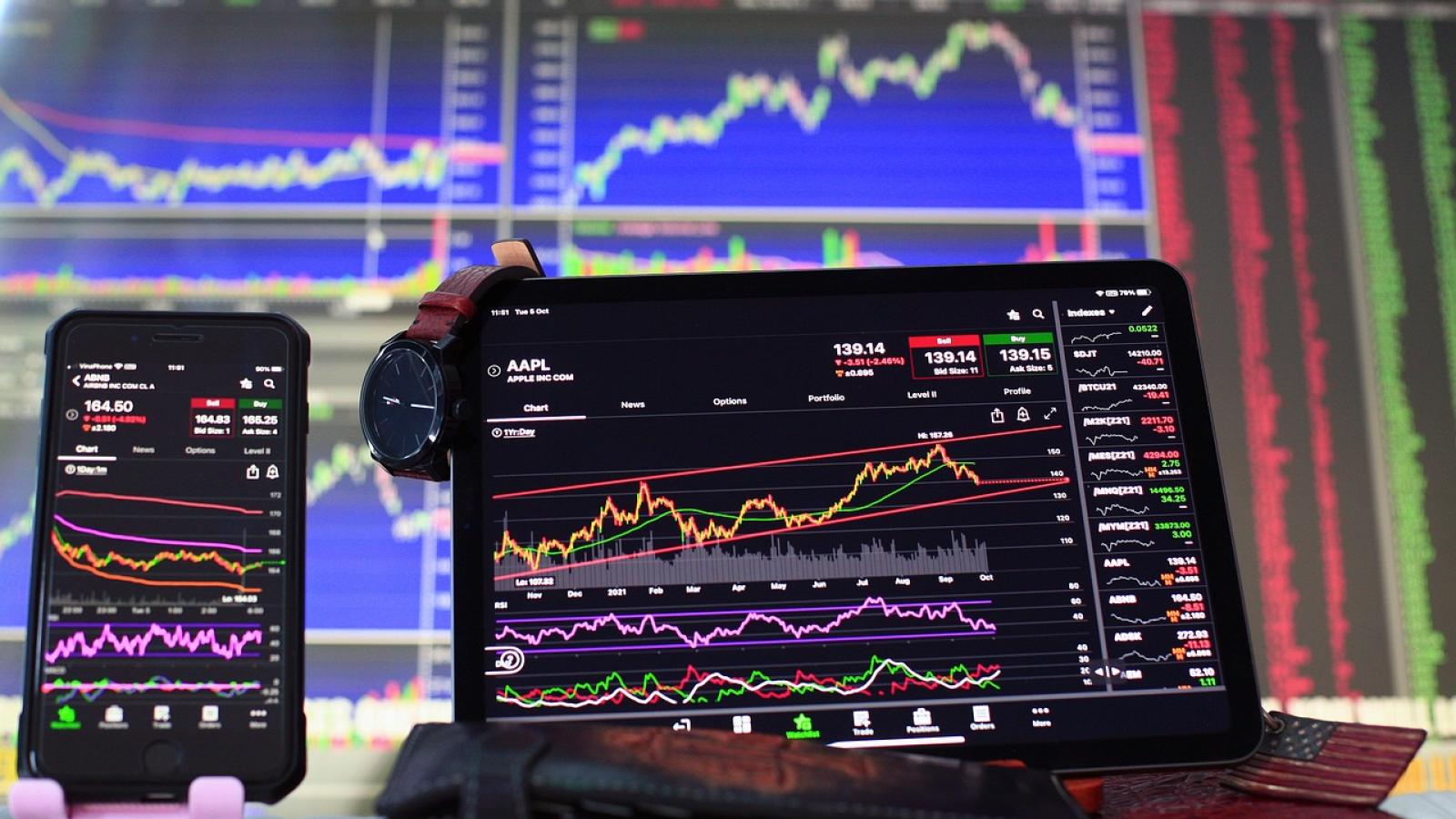
In the past, when people thought of AI agents, they typically imagined tasks like booking flights, organizing data, or writing emails. Today, this wave is advancing into financial markets. U.S. retail investors are now entrusting AI agents with stock, ETF, and even options trading. Through features offered by certain brokers, investors can connect AI tools like Claude and Codex to their trading accounts, enabling AI to scan markets, identify trading opportunities, monitor positions, and even execute trades autonomously.
One investor, Colin Edsman, has divided his AI trading account into different tasks, assigning each to a separate Claude agent. One agent searches for promising stocks and ETFs, another checks open positions daily, and a third compiles weekly performance reports. He has even given these AI agents names, making the entire system resemble a real investment team. Edsman describes the operation of this AI trading setup as "somewhat like a hedge fund," and so far, the AI agents have outperformed some of his personally managed portfolios.
Retail Investors Can Now Build 'Mini Hedge Funds'
Previously, systems capable of analyzing vast market data in real time, detecting trading signals, and automatically placing orders were primarily available to large financial institutions and quantitative funds. Professional investors could leverage high-performance computers and algorithms to complete data analysis and trades in fractions of a second. Ordinary retail investors, even if aware of such strategies, often lacked the technical expertise and resources to build such systems.
The emergence of AI agents, however, may be lowering this barrier. Investors can now use natural language instructions to direct AI—for example, "buy energy stocks when oil prices rise" or "sell options when a certain return threshold is reached." They can even instruct AI to continuously monitor social media posts by former U.S. President Donald Trump to detect signals that might impact markets.
In other words, tasks that once required collaboration among programmers, quantitative analysts, and traders can now be broken down and executed by a team of AI agents. Neil McDonald, CEO of Moomoo U.S., describes this shift as turning ordinary investors into "mini hedge funds." He estimates that by the end of this year, about 20% of the broker’s trading volume could be executed by AI agents.
From 'Market Watchers' to 'Rule Makers'
This AI-driven trading trend brings another significant change: investors no longer need to constantly monitor their screens. Dean Ahrens, a 19-year-old investor and content creator, used Codex to build an options trading strategy where AI analyzes large volumes of options flow data to detect potentially large, aggressive trades by institutional investors, then scores them based on multiple criteria. When the AI determines a trade is high-conviction and reconfirms it meets predefined conditions, it executes the trade.
Ahrens reports that his Public account grew from $3,000 to $8,000 within months, with one options trade on Micron Technology yielding over a 500% return. While such individual cases don’t prove AI strategies are universally profitable, they highlight an emerging trend: investors’ roles are shifting from "personally executing trades" to "setting strategies and letting AI execute them." This shift also offers a new solution to the emotional challenges that have long plagued retail investors.
Angel Gutierrez, a full-time options trader, says his custom-built AI agent scores options contracts and decides when to sell. He describes it as a "software version of myself without emotions," one that won’t deviate from the original trading plan due to greed or fear.
The Wall Street Journal original: "He’s Letting AI Agents Invest His Money. They Even Have Names."
The Smarter AI Gets, the More Dangerous Markets May Become
But the problem lies precisely here. If every investor uses AI, and all AI systems draw from the same public data to find trading opportunities, the result may not be a more efficient market—but rather, massive capital making similar decisions simultaneously.
A working paper from the National Bureau of Economic Research (NBER) found that when AI models are tasked with creating general investment strategies, they tend to recommend concentrated portfolios, high-valuation stocks, and companies with high media exposure. Researchers therefore suggest that AI may take on higher risks, concentrate on fewer assets and specific sectors, and show no clear performance advantage over passive investment benchmarks.
If large numbers of AI agents use similar data, models, and trading logic, a phenomenon known as "AI consensus trading" could emerge. This risk is not without precedent. In the lead-up to the 2007 financial crisis, several quantitative funds, using highly similar strategies, simultaneously sold off positions when market conditions changed, causing a "quant meltdown" that exacerbated market declines.
If AI agents become widespread among retail investors, the phenomenon of "everyone handing trading to AI" could create a new kind of systemic risk—previously rare in markets. Retail investors, who once made independent decisions, might now act in unison due to reliance on similar AI models, executing similar strategies at the same time.
Brokerages emphasize that they have already built risk controls into AI trading mechanisms. For example, Robinhood places AI-managed portfolios in separate accounts and sends notifications for every trade. Investors interviewed so far report no major AI malfunctions or severe losses. But what will happen when this model is adopted simultaneously by millions, or even tens of millions, of investors?
For individual investors, this is undoubtedly a form of "democratization" of capability—data analysis and automated trading tools once exclusive to large financial institutions are now accessible on personal computers. But on the flip side, as humans delegate decisions to AI, markets may gradually turn into a "machine versus machine" trading race.
Will AI make retail investors more sophisticated, or will it make everyone more prone to making the same mistakes at the same time? That may be the real question worth watching in this investment revolution.
This article was specially written for Feng Media by guest contributor Jin Niu Bang Bang Mang. Subscribe to Feng Media’s Wall Street Journal VVIP for exclusive access at the world’s lowest price, with full access to Japanese, English, and Chinese editions of the Wall Street Journal, keeping you ahead of global political and economic trends. Editor-in-Chief / Lin Yan-Cheng
FACT BOX
- Source: PR Times
- Category: Survey
- Organizations: Moomoo / Robinhood