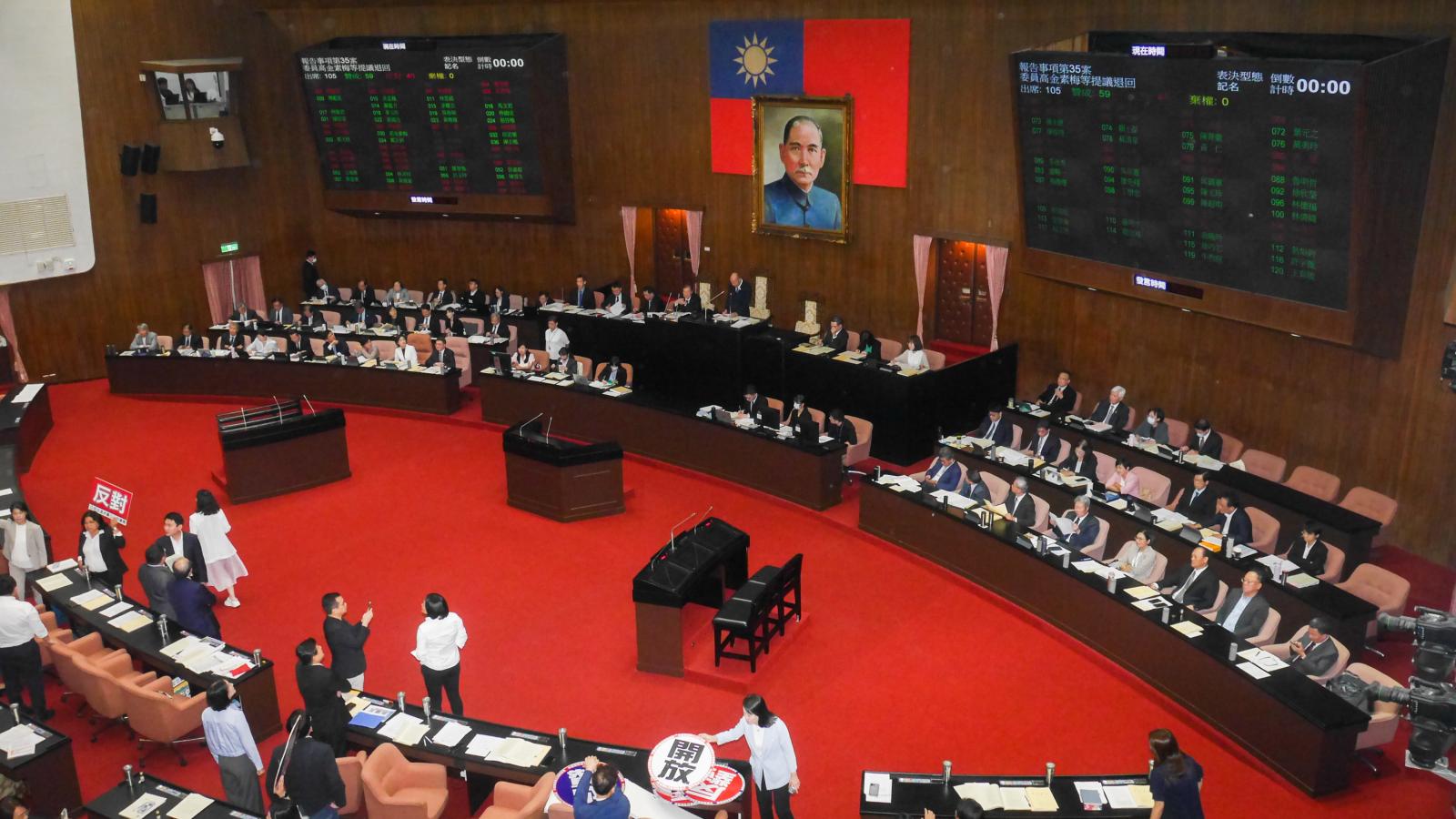
As the Legislative Yuan enters the budget review period, KMT legislator Chen Jinghui (24th) criticized the Ministry of Health and Welfare (MOHW) for underperforming budget execution across multiple major policy initiatives, including rural healthcare, nursing workforce development, the Healthy Taiwan Deepening Project, digital upgrades to the National Health Insurance system, and the Social Safety Net program.
Chen emphasized that during budget reviews, the legislature must not only debate cuts or freezes but also track actual implementation outcomes after executive agencies receive funding. She stressed that given the MOHW's massive budget—each dollar tied to public health and social welfare—execution rate should be the baseline for evaluating policy progress.
Several key programs were highlighted for low execution rates. According to data released by Chen, the 'Rural Healthcare Optimization and Advancement Plan Phase 2' had a 2025 execution rate of just 9.01%, with a cumulative rate of about 46% by the end of June 2026. The 'Nursing Workforce Policy Preparation and Mid-to-Long-Term Plan' had a 2025 budget of approximately NT$6.8 billion, achieving a full-year execution rate of 77.47%.
The 'Healthy Taiwan Deepening Project' had a 2026 available budget of NT$6 billion, with an execution rate of about 54% by end-June. The 'NHI Healthcare Equity Digital Upgrade Project' had a cumulative execution amount equal to 41.37% of allocated funds by June; when calculated against the total annual available budget, the execution rate dropped to 9.43%. The 'Strengthened Social Safety Net Program 2.0' reached 68.18% of its cumulative allocated budget by the same date.
Chen further revealed that 24 projects under the Taiwan Food and Drug Administration (TFDA) had execution rates below 80%, involving over NT$550 million in budget. Based on cumulative allocations as of June, the overall execution rate was about 55%, with three projects still at 0% execution. However, she did not list the names or budget timelines of these zero-execution projects in her public post.
Chen criticized that rural healthcare, nursing workforce, social safety net, and food safety are urgent public needs. 'We can support the budget in the legislature, of course—but once money is given, the ruling party has a responsibility to deliver results,' she said. The executive branch must convince the legislature with actual outcomes, not merely demand that budgets not be cut or frozen.
In addition to project execution, Chen released statistics on MOHW's media bidding contracts over the past five years. As of June 2026, CTV Culture won a total of NT$177,890,136, the highest among all media outlets. Sanlih TV ranked second with NT$65,515,473, EBC TV third with NT$60,527,743, and TVBS fourth with NT$34,740,882. The combined total of the second to fourth winners was approximately NT$160,780,000—still less than CTV's single total. Chen sarcastically commented, 'Legal begging! How delicious!' to highlight concerns over excessive concentration in government contracts.
FACT BOX
- Source: PR Times
- Category: News
- Organizations: TVBS