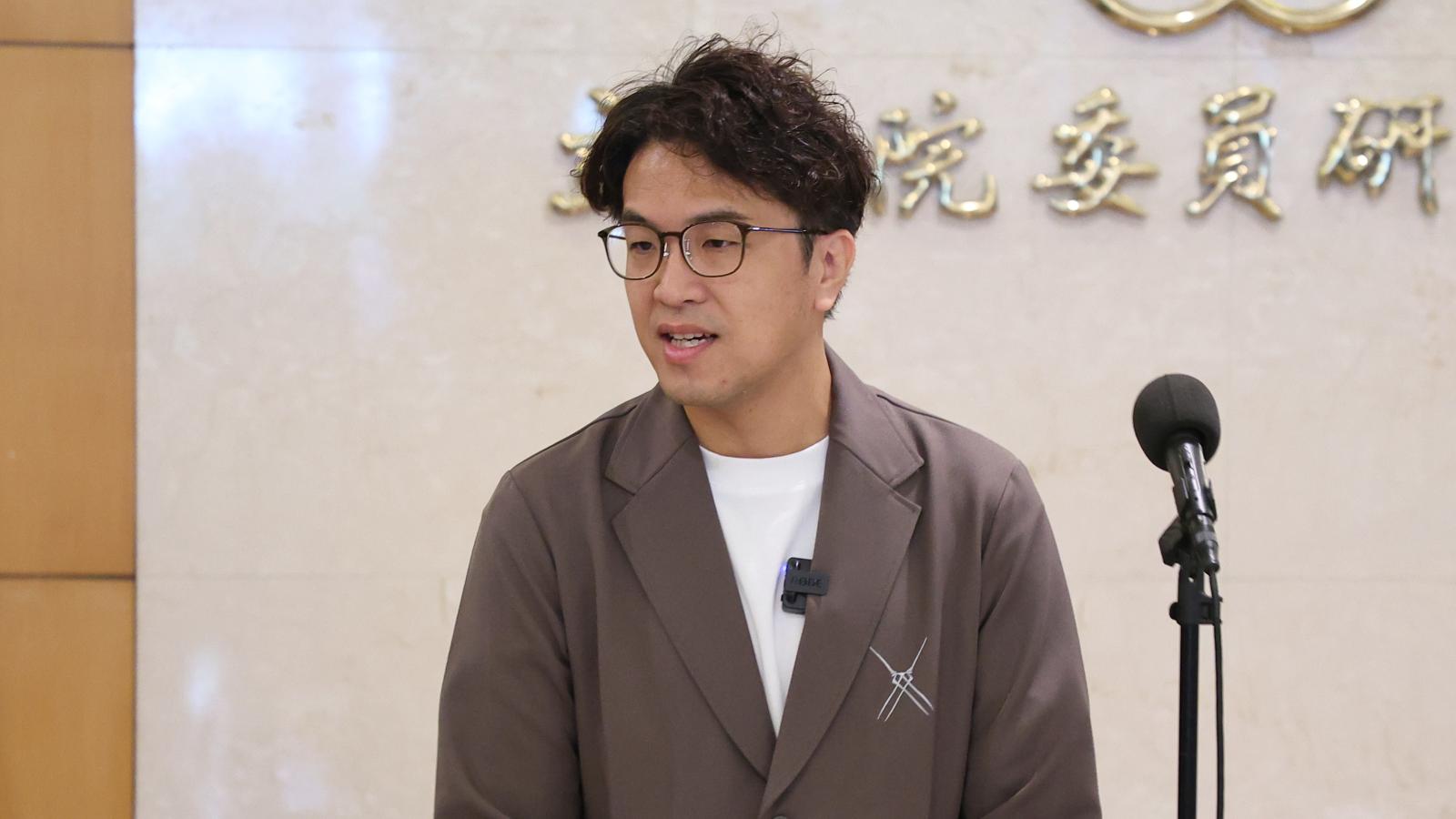
As the 2026 Taipei mayoral election intensifies, DPP candidate Shen Po-yang has proposed a series of policy initiatives, including civil servant stress reduction, temporary childcare, long-term care, urban renewal, and marriage-housing. In an interview on veteran media personality Li Situduan’s program Tonight with Situduan, he was directly questioned about the funding sources for these policies. Shen responded that the total expenditure for the policies currently proposed by his team would be less than half of the over NT$40 billion in additional revenue Taipei receives under the revised Fiscal Revenue and Expenditure Allocation Act. He also pledged that if elected, he would serve a full eight-year term.
The nearly one-hour interview covered a wide range of topics, including the city government cultures under Ko Wen-je and Chiang Wan-an, policy funding, how a minority mayor can navigate a city council dominated by the opposition, civil servants’ travel to China, and family caregiving. Shen admitted that while increased name recognition initially boosted his support, this advantage would soon hit a ceiling, and as he gets closer to his opponent, the campaign would become increasingly difficult. He also noted that Chiang Wan-an, as the frontrunner, adopting a low-key strategy is a reasonable choice.
How much will the new policies cost? Shen: Less than half of the NT$40 billion increase
Li Situduan pressed Shen on how much additional spending on construction and personnel he would incur if elected. Shen replied that under the new Fiscal Allocation Act, Taipei’s annual revenue would increase by over NT$40 billion, and the estimated cost of his team’s proposed policies would be less than half of that increase.
According to 2026 central ordinary fiscal allocation data, Taipei is allocated approximately NT$114.9 billion, an increase of about NT$44.22 billion from the previous year—consistent with Shen’s claim of “over NT$40 billion.”
However, the increased allocation does not equate entirely to freely usable net revenue. The Taipei City Finance Department has pointed out that adjustments in central government subsidies have reduced local revenue by about NT$21 billion. Moreover, Shen did not itemize the full costs, annual expenditures, or personnel estimates for each policy during this interview, so current figures remain preliminary estimates by his campaign team.
Shen noted that Taipei’s education budget already accounts for a significant portion, but frontline teachers bear heavy administrative workloads. He suggested investing more funds to hire administrative assistants and clerical staff so teachers can focus on teaching. He emphasized that population and building aging, insufficient long-term care beds, inadequate temporary childcare facilities, urban renewal, and marriage-housing are key issues the next mayor must address.
Low redemption rate of fresh milk policy; advocates prioritizing support for disadvantaged families
Regarding the 'Fresh Milk for All' policy promoted by the Chiang administration, Shen acknowledged its good intentions in providing nutrition for children but pointed out that the overall redemption rate is only around 60%, and for disadvantaged families, it’s about 50%. He argued that if a policy is universally applicable in theory but results in lower usage among disadvantaged families, it may inadvertently widen inequality.
Shen proposed that the city government could use neighborhood leaders and staff to identify families in need and directly distribute benefits to disadvantaged children to improve policy reach. On how a DPP mayor could work with a KMT-majority Taipei City Council, he stated that municipal issues such as food safety, child safety, urban renewal, river rehabilitation, and school lunches are not beyond cross-party cooperation. As long as policies benefit citizens, there is room to gain support.
How to win over KMT voters? Shen: First, build trust in the person
When asked how he would persuade long-time KMT supporters in Taipei to vote for the DPP, Shen said municipal governance should not be divided along blue-green lines and that voters care whether a candidate can solve problems. He said he must continue proposing concrete policies and show citizens that he is willing to admit and correct mistakes, gradually building trust.
He also criticized the current city government’s internal culture of “not daring to admit mistakes.” He argued that if departments fear accountability for errors, they may engage in upward management and fail to report problems honestly, ultimately leaving cases reported by citizens via 1999 or legislators unresolved for long periods. This statement represents Shen’s political critique of the incumbent administration’s management culture.
When Li further asked if he would truly serve a full eight years if elected, Shen immediately replied, “Of course.” He said he views political work as public service and, if elected mayor, would focus entirely on city affairs, not simultaneously planning his next political move.
FACT BOX
- Source: PR Times
- Category: News