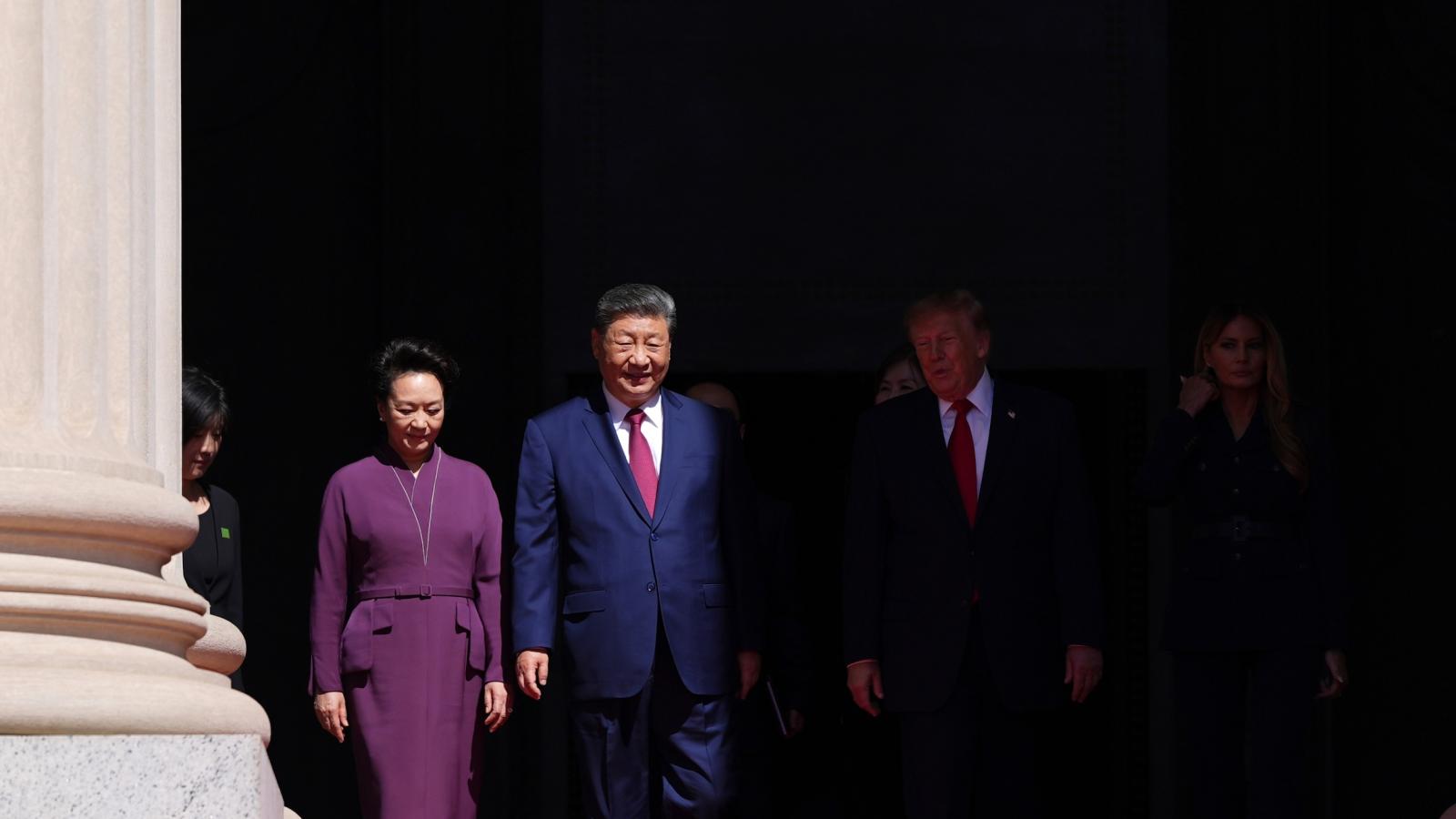
As the Trump-Xi meeting unfolds in Washington, a temporary calm appears to have settled over the Taiwan Strait. However, Jonathan A. Czin, a former White House official for China affairs, warned in Foreign Affairs on the 25th that the current calm is not the arrival of peace, but a temporary restraint by Beijing as it hopes for a party rotation in Taiwan's 2028 presidential election. If the 2028 US and Taiwan presidential elections do not meet Beijing's expectations, the nearly 80-year-old Xi Jinping may resort to more aggressive quasi-blockades and military coercion, and both the US and Taiwan must seize the time to prepare for defense.
Czin served as Director for China at the White House National Security Council (NSC) from 2021 to 2023, previously worked in the senior analysis division of the Central Intelligence Agency (CIA), and is now the Michael H. Armacost Chair in Foreign Policy Studies at the Brookings Institution's China Center. Czin noted that although Chinese military aircraft routinely cross the median line of the Taiwan Strait, warships continue to operate in waters east of Taiwan, and coast guard vessels keep intruding into surrounding waters, Beijing has not launched large-scale blockade exercises against Taiwan, which became routine after Nancy Pelosi's visit, over the past year.
Restraint Stems from Expectations of 'Party Rotation'
Czin believes this shift stems from renewed optimism in Beijing. Although the Trump administration has not formally adjusted its Taiwan policy, Trump's public remarks after meeting Xi in May have weakened Taipei's confidence in US commitments. Trump said bluntly at the time: "I'm not pushing for anyone's independence... and, you know, we'd have to fight a war 9,500 miles away, and I don't want that."
More critically, Xi Jinping is pinning his hopes on the opposition Kuomintang (KMT) regaining power. In November 2025, Cheng Li-wen, who advocates that both sides of the strait belong to one China and emphasizes dialogue, unexpectedly won the KMT chairmanship and met with Xi in Beijing this April. Czin believes Xi met with Cheng to project an image that his Taiwan policy is not only tough, but also to see her as a fulcrum for opening cross-strait political negotiations after 2028. However, Cheng's pro-China rhetoric lacks broad consensus within the party, and whether she can become the KMT candidate in 2028, or even win the general election, remains highly uncertain.
2028 US-Taiwan Elections Could Be the True 'Tipping Point'
For a long time, Washington and Asia-Pacific countries have generally viewed 2027 (the 100th anniversary of the People's Liberation Army) as a potential flashpoint for the Taiwan Strait. But Czin analyzes that, given the current situation, the likelihood of Xi using military force in the near term is extremely low. His ongoing systematic purge of top military brass also reflects that the CCP leadership does not fear an imminent Taiwan Strait crisis and believes it can simultaneously manage Washington and Taipei.
However, the real test for cross-strait relations may come in 2028, when the US and Taiwan will hold presidential elections simultaneously. Czin argues that if DPP President Lai Ching-te wins re-election and regains a majority in the Legislative Yuan, or if a KMT moderate more wary of Beijing takes power, Beijing will no longer be able to justify its failed Taiwan policy with claims like "Lai only has minority support." Since cutting off official contacts in 2016, Xi would face a stalemate of over 12 years in charge of Taiwan affairs with no political progress.
Czin warns that by then, Xi, entering his fourth term and nearing 80, will feel an acute urgency to resolve the Taiwan issue. After completing the leadership reshuffle at the 21st CCP National Congress and military reorganization, if the election results are unfavorable, Xi may resort to coercive measures far beyond those taken after Pelosi's 2022 visit. These could include boarding and inspecting foreign commercial ships heading to Taiwan on the high seas, designating multiple no-sail zones around Taiwan to disrupt international air and sea traffic, and deliberately obstructing commercial cargo ships carrying US-made weapons.
Czin assesses that while these measures do not amount to a full blockade or quarantine, they aim to signal to the world that "Taiwan's external contacts must have Beijing's consent." Additionally, the Iran conflict in the Middle East has exposed critical shortages in US ammunition stockpiles, which could take years to replenish, and attacks on US bases have revealed the vulnerability of overseas bases and logistics chains. If the US elects a "restraintist" president in 2028 who is skeptical of commitments to traditional allies, the incentive for Beijing to take drastic action will further increase.
Criticizes Trump for Delaying Arms Sales to Taiwan, Urges US to Seize Two-Year Window
Facing a potential storm, Czin believes Taiwan has shed its past numbness to threats from across the strait and demonstrated substantive actions in defense and economic restructuring. Economically, over 80% of Taiwan's outward investment went to China in 2010, but that figure has now dropped below 10%. Taiwan has also become the US's fourth-largest trading partner, with semiconductor giants pledging hundreds of billions of dollars in US investments and finalizing a bilateral trade agreement with the Trump administration in February this year.
However, compared to Taiwan's proactive self-defense and economic positioning, Washington has been hesitant in diplomatic and substantive security support. Trump has treated arms sales to Taiwan as a bargaining chip in negotiations with China, and a $14 billion arms sales package to Taiwan has yet to be approved. Czin points out that US defense industrial capacity is limited, and delivery of this equipment takes a long time; even if approved immediately, it would be difficult to arrive in Taiwan within Trump's current term, which may explain Trump's lack of motivation.
But Czin also notes that precisely because equipment introduction and troop integration take time, Washington should seize the critical two-year window when Taiwan has fiscal space and Xi is quietly waiting for the 2028 change. He argues the Trump administration should at least approve the $14 billion arms sale, even if split into several batches to avoid overly provoking Beijing. Delaying for political reasons would effectively acquiesce to Beijing's veto power over US-Taiwan arms sales, and the US will pay a higher diplomatic and strategic price later.
FACT BOX
- Source: PR Times
- Category: News