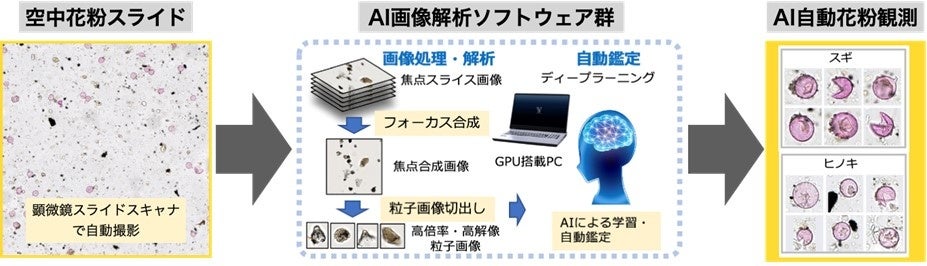
Figure 1: Overview of the 'AI Automatic Pollen Identification System'
Overview
・A joint research effort by the Biwako Museum, the National Institute of Advanced Industrial Science and Technology (AIST), and Fukuoka Hospital has successfully developed an automated airborne pollen identification system using a human-in-the-loop AI approach.
・To overcome the limitations of conventional AI—high accuracy on ideal images but reduced performance in real-world observation settings—a 'human-in-the-loop AI approach' was adopted, where experts repeatedly correct AI misidentifications and retrain the model, enabling the construction of a practical AI model.
・Applying the developed system to airborne pollen slides collected at Fukuoka Hospital in 2019 enabled practical pollen monitoring that successfully identified critical timings such as the 'onset of pollen dispersal' and 'peak dispersal period,' which are highly valued in clinical settings.
・This achievement has been published in the academic journal 'Aerobiologia' by the International Association for Aerobiology.
Key Points of the Study
Development of a practical 'AI Automatic Pollen Identification System' through a human-in-the-loop AI approach
Previously, high-accuracy AI models for pollen identification have been developed using 'clean pollen images'—samples photographed by experts under ideal conditions, free from damage or contamination. In this study, an initial AI model (Pre-model) trained solely on pollen specimens collected from living flowers showed high identification accuracy. However, when applied to actual airborne pollen microscope slides (samples from Fukuoka Hospital), it failed to distinguish between 'Sugi (Japanese cedar)' and 'Hinoki (cypress family, excluding cedar),' the two major spring pollens.
This limitation is attributed to the presence of dust and other particles in real slides, along with broken or damaged pollen grains—conditions not represented in 'clean pollen images' (a domain shift problem).
To address this, the study introduced a novel approach: 'human-in-the-loop machine learning,' where experts manually re-identify misclassified images generated by the AI system and update the training dataset. This process—visually verifying and correcting misidentified pollen images (primarily Sugi and Hinoki), adding them as new training data, and retraining the model—was repeated three times. As a result, the AI model evolved into a high-accuracy, practical system capable of closely replicating real-world pollen dispersal trends.
* 'Hinoki' refers to cypress family pollen excluding Sugi.
Figure 2: Development Method of the 'AI Automatic Pollen Identification System' via Human-in-the-Loop Approach
Integration of microscope slide scanners and advanced AI models to build an automated identification system
This study combined (1) the application of a microscope slide scanner to automatically capture digital images of large numbers of slide specimens, and (2) AIST’s AI image analysis software suite developed for geological sample analysis, to identify and count pollen grains. By integrating these two cutting-edge technologies, the researchers successfully constructed a comprehensive automated pollen identification system capable of significantly reducing the observational burden on human experts.
Reproducing pollen dispersal trends directly relevant to hay fever management
Using the final AI model (Fine3 model), refined through repeated human-in-the-loop improvements, the system automatically identified airborne pollen from slides collected at Fukuoka Hospital between February and April 2019. The results successfully replicated the timing of Sugi and Hinoki pollen peaks with accuracy comparable to manual counts by experts. Furthermore, the system was also able to reproduce trends in the 'onset of continuous pollen dispersal,' a critical factor for initiating early allergy treatment.
Figure 3: Comparison of airborne pollen observation values between AI and experts (Fukuoka Hospital, 2019)
Significance of the Study
1. Social and Medical Significance: Improving QOL for hay fever patients and reducing expert workload
To suppress hay fever symptoms, 'early treatment'—taking medication before pollen starts dispersing in earnest—is recommended. If this system is commercialized, it will enable rapid and low-cost provision of region-specific information on 'pollen onset' and 'peak dispersal periods.' This allows patients to take preventive actions at the right time and provides medical institutions with foundational data for diagnosis and prescription.
Currently, detailed pollen monitoring in Japan relies on manual visual counting by medical professionals with specialized knowledge and experience, who spend hours each day using microscopes. This immense labor requirement and shortage of successors have been major challenges in sustaining pollen monitoring. By replacing or assisting manual observation, this AI system can dramatically reduce expert workload and enable the establishment of a sustainable nationwide pollen monitoring system.
2. Academic Significance: Practical application of 'human-in-the-loop AI' in bio-imaging
This study demonstrates the effectiveness of a human-in-the-loop AI approach—not by modifying the AI program itself, but by improving the quality of data fed to AI through expert correction of misidentifications—in real-world airborne pollen identification. This approach is expected to have broad applications beyond airborne pollen monitoring, including automated identification of microfossils and other environmental particles in earth and environmental sciences.
Publication Details
Title: Practical implementation of Artificial Intelligence for airborne pollen monitoring in Japan through the Human-in-the-Loop machine learning
Authors: Ryoma Hayashi*, Takuya Itaki, Ayumu Miyakawa, Kazuhide Mimura, Chie Oshikawa, Eiko Koto & Reiko Kishikawa (*corresponding author)
Journal: Aerobiologia
Online publication date: July 6, 2026
DOI: https://doi.org/10.1186/s40645-025-00726-2
FACT BOX
- Source: PR TIMES
- Category: 研究開発