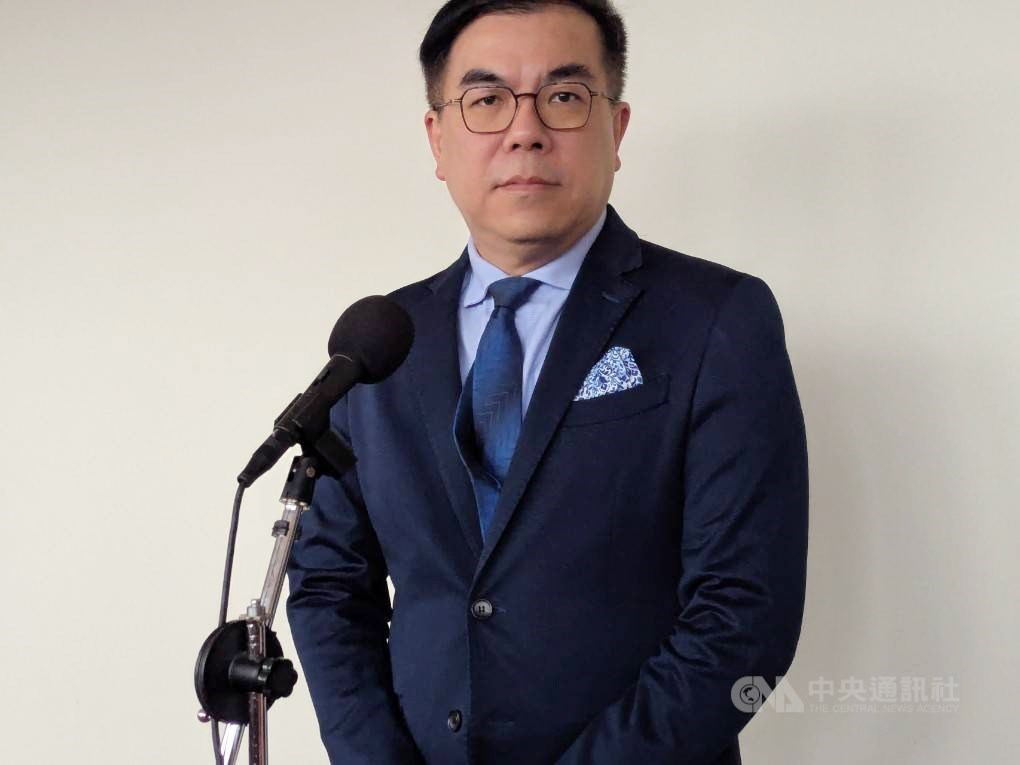
Environment Minister Peng Chi-ming stated that because the development base of the Southern Taiwan Science Park's Shalun campus involves the habitat of the grass owl, he suggested that the developer establish an 'Ecological Conservation Collaboration Platform' to communicate fully with the public. He also hopes that future major environmental impact assessment (EIA) cases can be handled using this collaborative platform model. The Southern Taiwan Science Park Bureau of the National Science and Technology Council plans to develop the 'Southern Taiwan Science Park Shalun Campus' in Guiren District, Tainan City, with a development area of approximately 506.97 hectares. Since the development area exceeds 100 hectares, it must enter a more rigorous second-stage environmental impact assessment by law. The park bureau submitted the case to the EIA committee, which agreed today to proceed to the second stage. Minister Peng Chi-ming told the media after the meeting that since this case involves the habitat of the first-class protected grass owl, it is an important test of how to seek a balance between national technological development, ecological habitat preservation, and social trust. The Ministry of Environment proactively suggested that the developer establish a collaborative discussion platform for prior communication, which in this case is the 'Shalun Ecological Conservation Collaboration Platform.' Peng emphasized that the Ministry of Environment itself, in order to maintain the fairness of the EIA review, does not participate in the platform but presents the discussion content completely to the EIA committee. Peng pointed out that this is the first attempt of its kind because the case involves not just the execution of the park bureau or a single developer, but a more complete ecological corridor, habitat system, and regional environmental governance. Through this experience, he hopes that in the future, when developers face major environmental issues, they can form relevant collaborative platforms. For example, the Chinese white dolphin case should also be handled in the same way, rather than directly conflicting in the EIA meeting and becoming a zero-sum relationship. Peng also encouraged developers to invite ecological groups, environmental groups, experts, scholars, and local sectors to participate through collaborative platforms in the future, forming a new governance model of 'environmental protection first.' Furthermore, Peng stated that the purpose of the platform is not to endorse any party or shift pressure to participating groups, but to allow different positions to continue dialogue on an open, transparent, and scientific basis, gradually revise, and jointly find solutions that can be verified by society. Peng said that for highly controversial cases like the Shalun Science Park, he does not want it to end with just a public hearing; promoting a collaborative platform is an experimental approach, and the Ministry of Environment is observing whether it can become a better standard, as social credibility and fairness are important.
FACT BOX
- Source: CNA (Central News Agency)
- Category: policy_news