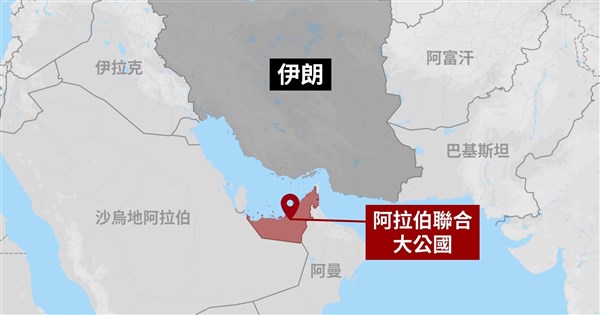
Central News Agency, Washington, May 30. The US Wall Street Journal reported that from the beginning of the Middle East conflict until the day after the ceasefire in early April, the United Arab Emirates (UAE) conducted dozens of airstrikes against Iran, indicating that the UAE's participation in US and Israeli-led airstrike operations was deeper than previously known. The Wall Street Journal cited relevant informed sources as saying that these airstrikes by the UAE were carried out in cooperation with the US and Israel, both of which provided intelligence support. Some sources said the targets included Qeshm Island and Abu Musa Island in the Strait of Hormuz, Bandar Abbas in Iran, and oil refineries on Lavan Island in the Persian Gulf. The scale of the aforementioned airstrikes further proves that the UAE is more willing to defend what it sees as its strategic interests. This distinguishes the UAE from some of its neighbors in the Persian Gulf, who have taken a more cautious stance in responding to the Iranian threat. Some of the sources revealed that some of the airstrikes targeted Iranian energy facilities in retaliation for Tehran's attacks on UAE oil and gas infrastructure. After the Middle East conflict broke out at the end of February, Iran launched a large number of missiles and drones at densely populated areas, energy infrastructure, and airports in the Persian Gulf region, attempting to increase the economic and political costs of the conflict, and the UAE was at the forefront of these attacks.
FACT BOX
- Source: CNA (Central News Agency)
- Category: international_politics