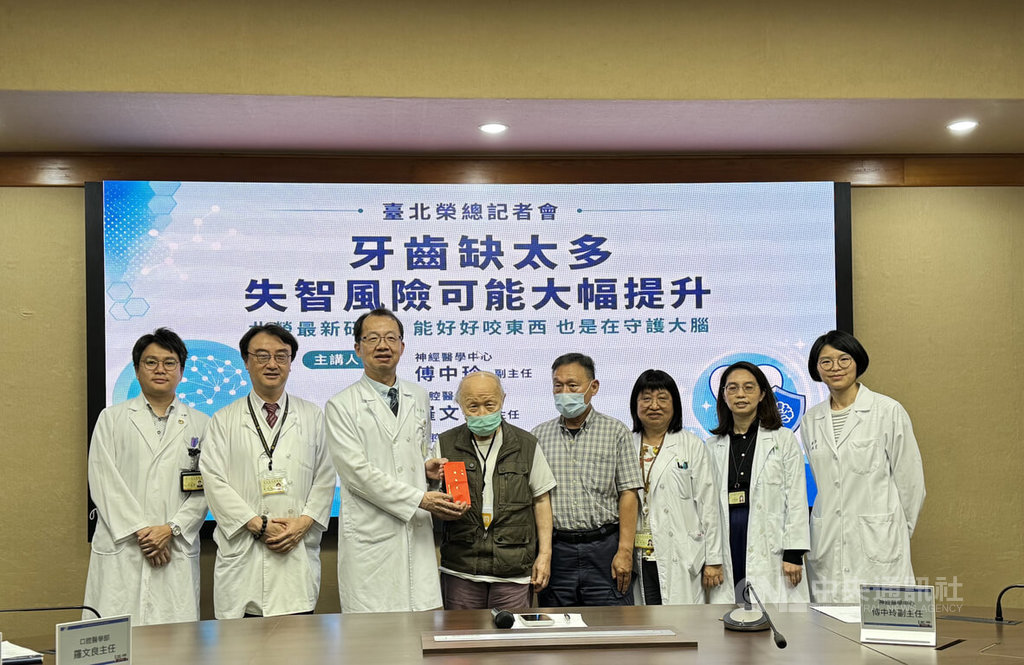
(Central News Agency, reporter Shen Peiyao, Taipei, 3rd) As Taiwan enters a super-aged society, the prevalence of dementia is rising with the aging population. The latest research from Taipei Veterans General Hospital (TVGH) warns that the more teeth a senior is missing and the less able they are to chew properly, the higher their risk of dementia. Those missing more than 14 teeth have a 10 times higher risk of developing Alzheimer's disease compared to the general population.
The Taiwanese drama "Forget Me Not" vividly depicts the impact of dementia on families. In the drama, dementia is not just a medical term but a gradual journey that quietly changes lives. The latest study by TVGH has found a strong correlation between "oral health" and the risk of dementia: the more teeth missing, the earlier the path to dementia.
According to the latest domestic survey, the prevalence of dementia among seniors aged 65 and over in Taiwan has reached 7.99%. The TVGH research team recruited 81 individuals aged 60 and over for cognitive function tests. They were divided into four groups based on their cognitive status: normal cognition, subjective cognitive decline, mild cognitive impairment, and Alzheimer's disease. Each participant underwent a comprehensive oral examination, including the number of missing teeth, denture condition, upper and lower teeth occlusion, periodontal condition, and chewing ability.
TVGH held a press conference today to share three key findings. Dr. Wu Shih-Yun, Director of the Family Dentistry Department in the Division of Oral Medicine, explained that compared to seniors with fewer missing teeth, those who had lost more than 14 natural teeth had approximately a 10 times higher risk of developing Alzheimer's disease and nearly a 5 times higher risk of developing mild cognitive impairment. Overall, the more teeth missing, the more severe the cognitive decline.
In addition to the number of missing teeth, Dr. Wu stated that the study also found that the risk of cognitive impairment significantly decreased after restoring missing teeth with dentures. In other words, enabling normal occlusion of the upper and lower teeth may have a positive effect on brain health.
Dr. Wu pointed out that the third key finding was that, within the group with subjective cognitive decline, those whose tooth loss prevented normal occlusion of the upper and lower teeth scored significantly lower on cognitive tests. Occlusal problems may begin to subtly affect brain function even before the formal onset of dementia.
Dr. Wu also explained the main reasons for the link between dementia and tooth loss, including four factors: "reduced chewing stimulation," "interrupted sensory feedback," "chronic inflammation," and "decreased nutrient absorption." Tooth loss affects chewing efficiency, leading to decreased neural activity in the hippocampus. Periodontal disease can cause systemic inflammation, potentially promoting neurodegeneration. A lack of occlusal support also affects diet quality, reducing the intake of brain-protective nutrients.
"Dementia is a gradual process," said Dr. Wang Shu-Chun, Vice Superintendent of TVGH. Alzheimer's disease is the most common form of dementia, and the number of patients worldwide continues to rise. Known risk factors include hypertension, diabetes, and depression, but oral health is often overlooked. This study was published in the internationally renowned Journal of Dentistry last September. (Editor: Chang Ya-Ching) 1150603
FACT BOX
- Source: CNA (Central News Agency)
- Category: 社會
- Dates in source: 1150603