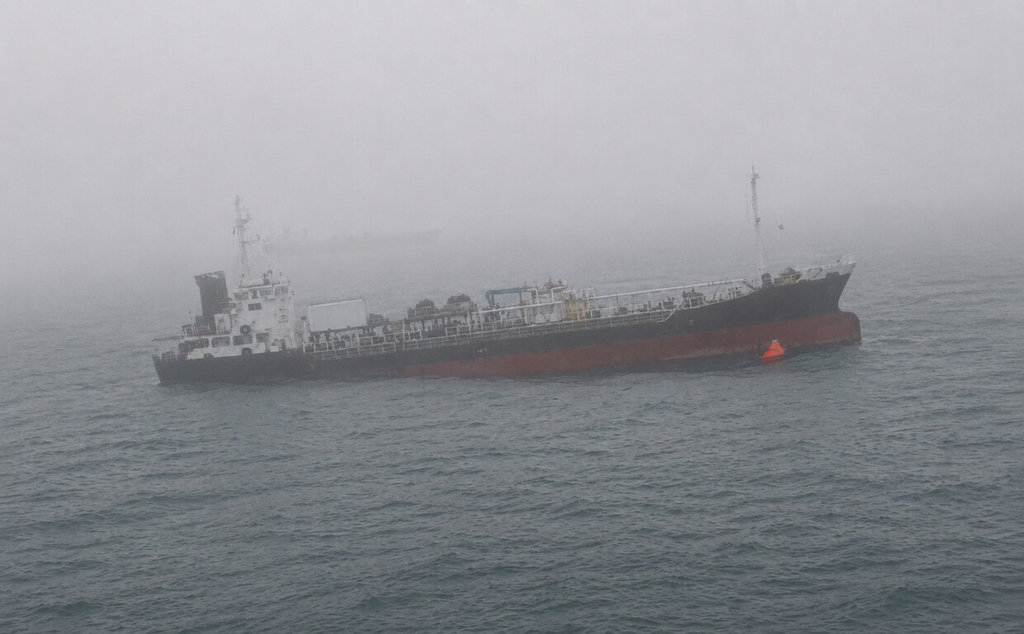
The St. Kitts and Nevis-flagged oil tanker 'AQUARIUS' lost power and anchored approximately 4.3 nautical miles southwest of Kaohsiung's Mituo Fishing Harbor on the evening of May 4 due to engine room flooding. Upon receiving the report, the Ocean Conservation Administration (OCA) under the Ocean Affairs Council immediately verified the vessel's registry and insurance status, initiated satellite monitoring, and participated in an emergency response meeting convened by the Maritime and Port Bureau (MPB) of the Ministry of Transportation and Communications on the morning of May 5 to prevent marine pollution.
The OCA stated that all 9 crew members were safely rescued by Coast Guard vessels on the evening of May 4 and are in good condition. The vessel is currently empty. The tanker was en route to mainland China and carries approximately 15 tons of fuel oil (diesel) and 200 liters of lubricating oil. All oil valves and related water gates have been closed. As of now, Coast Guard patrols have found no signs of oil spillage on the sea surface.
After receiving the incident report, the OCA activated its satellite monitoring mechanism to continuously monitor the waters surrounding the distressed vessel. On the evening of May 4, it completed an inventory of marine pollution response equipment and materials from Taichung to Pingtung and assessed the necessity of deploying the specialized decontamination vessel 'Mailiao Ocean'. These preparatory measures were taken to address potential marine pollution risks.
According to the latest information from the first emergency response meeting convened by the MPB, the towing company has completed the towline connection operation and is currently towing the distressed vessel to a safe area off the coast of Eluanbi. The shipowner provided valid insurance documentation during the meeting for review by relevant authorities.
The MPB has requested the shipowner to submit a vessel towing plan by 2:00 PM on May 5. During the meeting, the OCA demanded that the shipowner complete pollution prevention measures, including the deployment of oil containment booms, within 24 hours after the vessel is towed to the designated location. The OCA also required continuous monitoring of the vessel's condition and the integration of these pollution prevention actions into the towing plan to minimize the risk of an oil spill.
FACT BOX
- Source: CNA (Central News Agency)
- Category: 事件