(Central News Agency, reporter Zeng Yining, Taipei, 8th) The development of the unmanned aerial vehicle (UAV) industry has gained attention amid discussions on national defense issues. The Taiwan People's Party (TPP) Policy Committee stated today that the domestic market is still dominated by government procurement, and there is room for further discussion and improvement in areas such as airspace governance, market liberalization, technology verification, and regulatory adaptation, with the goal of building an industrial ecosystem.
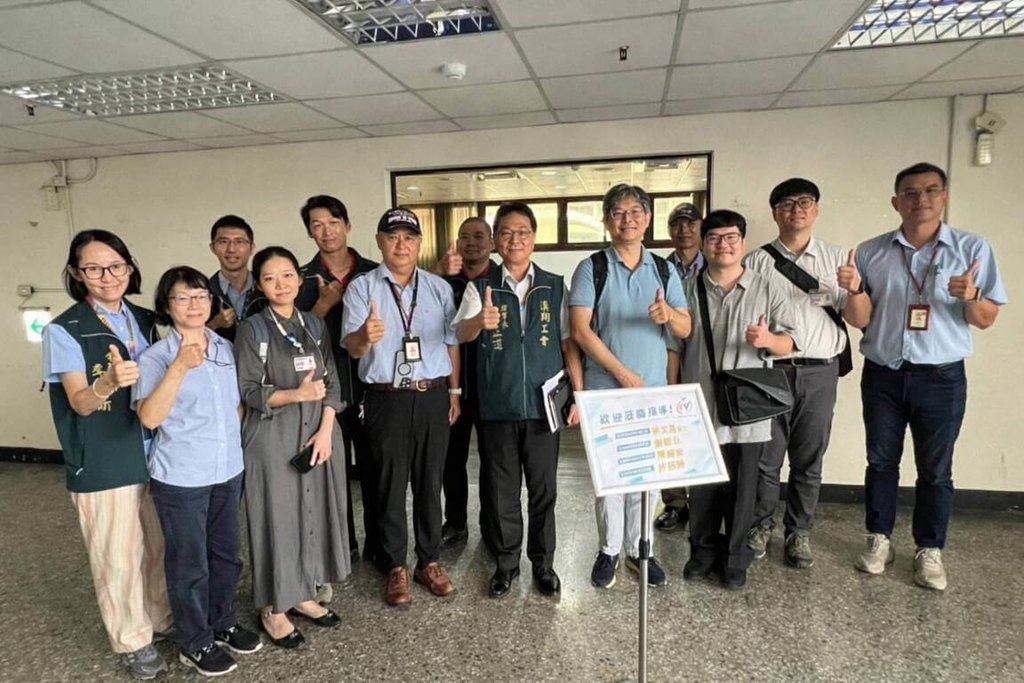
Xu Wenlu, Deputy Executive Director of the TPP Policy Committee, led a policy team today to visit the enterprise union of Aerospace Industrial Development Corporation (AIDC). They held a seminar with union cadres to exchange views on topics including national defense autonomy, aerospace industry development, and drone policy.
After the meeting, the TPP Policy Committee issued a press release stating that while the government has actively promoted the development of the drone industry in recent years, the current industrial structure shows that the domestic market is still primarily driven by government procurement demand, with relatively limited commercial applications in the private sector. How to establish a sustainable business model with international competitiveness will be a key factor in the future success of Taiwan's drone industry.
The TPP Policy Committee noted that former U.S. President Donald Trump signed an executive order last year elevating drones to a strategic level for national competitiveness and next-generation transportation systems. The order promotes initiatives such as Beyond Visual Line of Sight (BVLOS) operations, electric Vertical Takeoff and Landing (eVTOL) pilot programs, and national airspace integration, aiming to create new economic growth momentum through regulatory and institutional adjustments.
The TPP Policy Committee believes that, compared to the U.S. focus on airspace management, regulatory innovation, and market application development, Taiwan's current drone policy still leans heavily towards government procurement. There is room for further discussion and improvement in areas such as airspace governance, market liberalization, technology verification, and regulatory adaptation.
The TPP Policy Committee stated that in the future, Taiwan should re-examine its drone industry policy direction through international comparison, establish fair competition and transparent verification mechanisms, and build an industrial ecosystem that is truly internationally competitive. (Editor: Su Longqi) 1150608
FACT BOX
- Source: CNA (Central News Agency)
- Category: Event