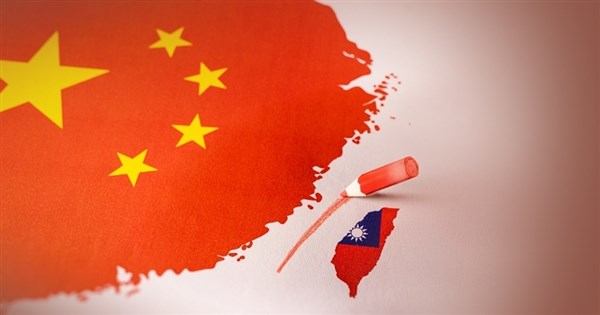
(Central News Agency, Washington, 9th) China's rare earth industry holds a dominant position globally. Hsu Tzu-ti, Director of the Taiwan ASEAN Studies Center at the Chung-Hua Institution for Economic Research (CIER), stated during an online seminar hosted by a Washington D.C. think tank today that as China uses rare earths as a "weapon," she hopes more countries will cooperate with Taiwan to build a non-red supply chain. Taiwan's Industrial Technology Research Institute (ITRI) has already developed rare earth refining technology.
The online seminar, titled "New frontiers in the trade-economic security nexus in Asia," was organized by the Brookings Institution. Panelists included Hsu Tzu-ti and Kari Heerman, a senior fellow at the Brookings Institution.
On the issue of rare earths, Hsu stated that if countries believe having a stable and secure supply of critical minerals is crucial, they should work together to integrate technology, capital, human resources, and natural resources to make significant progress.
China is the world's leading producer of rare earths, which are raw materials for manufacturing critical magnets used in industries such as automobiles, electronics, and national defense. China's use of rare earths to coerce the world has prompted Western countries to seek to reduce their dependence on Chinese rare earths.
Hsu noted that many people may not know that Taiwan's ITRI has already developed rare earth refining technology, and the United States is aware of this. "But until now, we are still waiting for more countries to discuss this kind of cooperation mechanism," she said.
She emphasized the need to gather all parties that can contribute to building a non-red supply chain, stating, "because we don't have much time left." She observed that China is currently using resources like rare earths as a "very useful weapon."
Taiwan's Minister of Economic Affairs, Kung Ming-hsin, earlier this year pointed out that the ministry is supporting ITRI's independent R&D and experimental line technology for rare earths, planning to establish a trial production line within three years as a crucial foundation for enhancing Taiwan's self-sufficiency in key materials.
Meanwhile, since U.S. President Donald Trump returned to the White House, tariff measures have been continuous, prompting many countries to negotiate with the U.S. to mitigate the tariff impact. The U.S. has already signed agreements with several trading partners, including Taiwan.
Taiwan and the U.S. signed an Investment Cooperation Memorandum of Understanding (MOU) and a Reciprocal Trade Agreement this year. Hsu analyzed four key points. First, it lowers tariffs on Taiwanese traditional industries, machinery, and auto parts exported to the U.S., which helps improve competitiveness, but these products account for only about 20% of Taiwan's exports to the U.S. Second, Taiwan committed to opening most of its market to U.S. industrial and agricultural products.
Third, regarding investment, Taiwan agreed to invest in the U.S. with two different types of capital commitments. One is $250 billion in autonomous investment by Taiwanese enterprises. The second is the Taiwan government providing up to $250 billion in corporate credit lines to financial institutions through credit guarantees. Fourth, the U.S. and Taiwan are aligned on export control mechanisms, national security-related investment reviews, and trade policies towards China.
Hsu pointed out that the Taiwan-U.S. trade agreement has been welcomed by some industries in Taiwan, but other industries are worried, with mixed reactions. She believes that the real discussion will begin when the Taiwanese government sends the agreement to the Legislative Yuan for review.
Furthermore, the U.S. is the world's largest economy. Heerman stated that the Trump administration has demonstrated that the U.S. can leverage its open market as influence to extract commitments from other countries. Some commitments fall within the traditional trade sphere, while others go beyond typical trade liberalization agreements, involving economic and security areas such as investment and procurement commitments. "Future policymakers will find it very difficult to give this up," she said.
FACT BOX
- Source: CNA (Central News Agency)
- Category: Taiwan