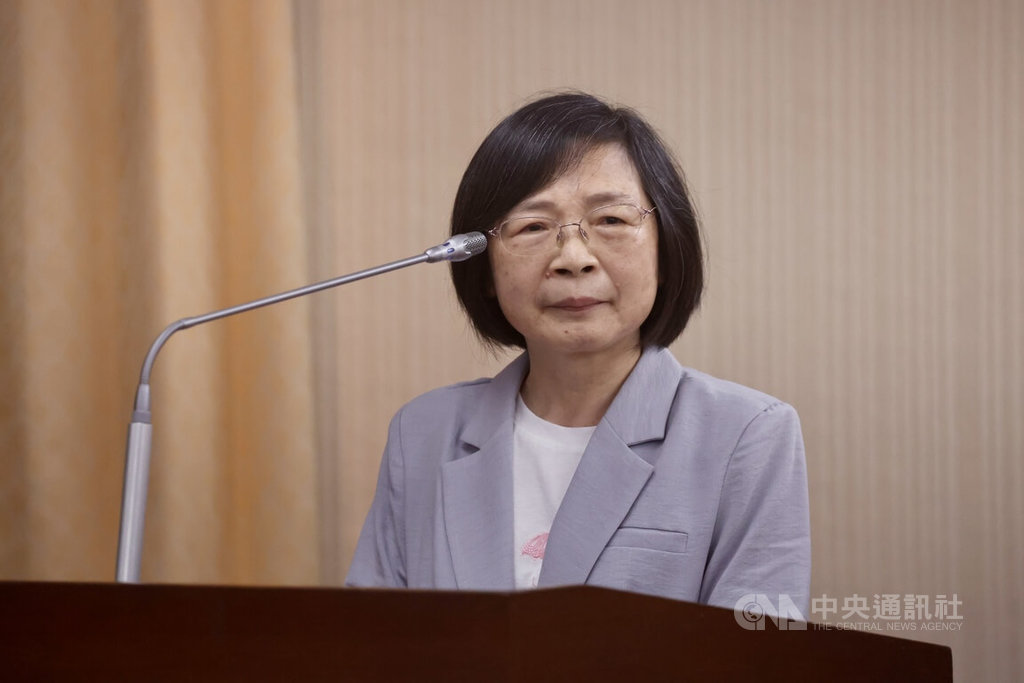
(CNA, Taipei, June 10) In response to a KMT legislator's proposal for a referendum on legalizing caning, Shen Shu-fei, a nominee for Vice Chairperson of the Central Election Commission (CEC), stated today that there are external views that caning may violate humanitarian principles and could also increase subsequent national medical expenditures. For referendum proposals submitted by the Legislative Yuan, the CEC still has the power and responsibility to review them according to law.
KMT Legislator Hung Meng-kai and 52 others proposed a referendum on "legalizing caning" in the hope of deterring crimes such as sexual assault, child abuse, major fraud, and aggravated fraud, but it has not yet been passed by a vote in the Legislative Yuan.
The Internal Affairs Committee of the Legislative Yuan reviewed the list of three CEC commissioner nominations submitted by the Executive Yuan today.
KMT Legislator Chang Chih-lun asked for her opinion on the caning referendum. CEC Vice-Chairperson nominee Shen Shu-fei said that some have raised humanitarian concerns, while others believe that after caning is administered, the person would need medical treatment, potentially costing the state health insurance funds. She believes that besides humanitarian concerns, it's also necessary to consider the principles of proportionality and equality regarding whether caning would be a main or an additional punishment in the criminal code and which crimes it would apply to.
Chang Chih-lun further asked if the CEC's review of referendum proposals from the legislature would align with the "agreement in principle" attitude of CEC Chairperson You Ying-lung. Shen Shu-fei stated that her view is the same, but based on the Referendum Act and the CEC's organizational act, even for referendum proposals from the legislature, the CEC still has the legal power and responsibility to review them.
Shen Shu-fei said that regarding the review principles, the effect of a referendum is at the level of law and cannot conflict with the Constitution, Judicial Yuan interpretations of equivalent constitutional status, or Constitutional Court judgments. Therefore, if a nationwide referendum proposed by the legislature clearly violates these three, the CEC, based on the principles of administration by law and its independent authority, should probably not approve it. As for other parts that are not clearly unconstitutional, the legislature's decision should be respected.
Hung Meng-kai questioned who determines unconstitutionality and whether the law grants the CEC the authority to make such a determination.
Shen Shu-fei responded that the final determination of unconstitutionality is made by the Constitutional Court, but all administrative agencies, when accepting applications or reviewing cases, are supposed to act according to the law and must first make a judgment during their review.
Hung Meng-kai pressed further, asking if the caning referendum involves amending legal articles or a major policy direction. Shen Shu-fei said she believes it is a major policy direction, and whether the referendum can be held depends on its content.
Additionally, several ruling and opposition legislators expressed concern about the ballot shortage incident in South Korea, stating that Taiwan must avoid similar problems. Shen Shu-fei said that Taiwan legally prints ballots at 100% of the number of eligible voters, so this problem will not occur, and "this must absolutely not happen."
FACT BOX
- Source: CNA (Central News Agency)
- Category: 政策