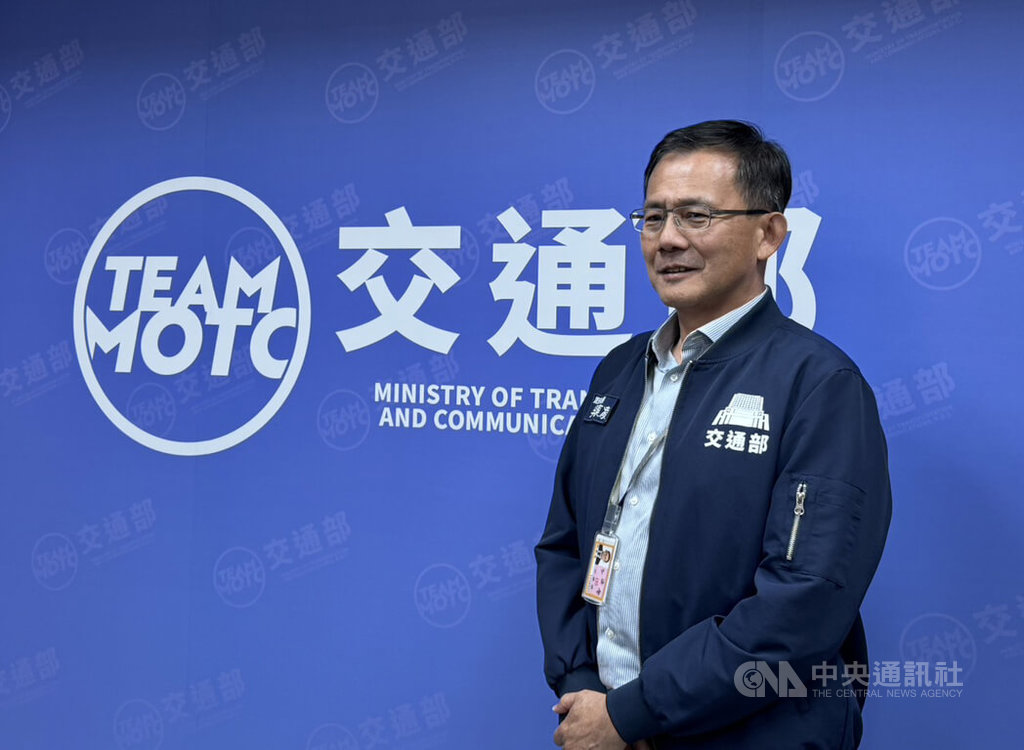
(Central News Agency, Taipei, June 10) Scholars have proposed that the solution to the left-turn problem lies in whether rider safety can be guaranteed, and that Tainan's experience should not be directly applied to intersections across Taiwan. In response, the Ministry of Transportation and Communications (MOTC) agreed with the scholars' views, stating that the Institute of Transportation has already begun collecting and analyzing intersection data from various counties and cities. Once completed, discussions will be held with local governments.
Professor Wu Kun-feng from the Department of Transportation and Logistics Management at National Yang Ming Chiao Tung University wrote in a media submission today that the solution to the scooter left-turn problem is not about whether to allow it, but whether traffic signals and road design can eliminate the causes of accidents: "not seeing, mis-seeing, and misjudging."
Professor Chu Chih-yuan from the Department of Civil Engineering at National Taiwan University also submitted an article today regarding two-stage left turns, stating that the results of Tainan's pilot program, which showed a reduction in non-fatal accidents, should not be directly applied nationwide.
In response, Wu Tung-ling, Director-General of the Department of Railways and Highways and Road Safety at the MOTC, told the media today that the MOTC's views are largely in line with the two scholars. He expressed appreciation for scholars from different fields showing concern for traffic issues and providing diverse perspectives.
Wu noted that Professor Wu Kun-feng's article cited Japanese research indicating that 96% of traffic accidents are caused by human factors. It also pointed out that the reaction time for direct left turns is the shortest, and because scooters are small, the risk of injury to riders is highest without adequate protection.
Wu stated that Professor Wu Kun-feng considers two-stage left turns and left-turn phases as protective measures, and the MOTC agrees with this view. Professor Wu also provided some suggestions, which the MOTC will study and discuss with local governments to adapt measures to local conditions, minimize conflict points, and allow scooter left turns under safe conditions.
"Phase" is a traffic engineering term referring to the direction of traffic flow permitted during a green light.
Regarding Professor Chu's submission, Wu said it serves as a reminder not to overinterpret Tainan's experience. The study was conducted on specific road sections in Tainan, not comprehensively. It was also conducted under the premise of not mandating two-stage left turns on those specific sections. Under these conditions, the data is relatively macroscopic, and the comparison period was only three weeks, making it unsuitable for overinterpretation or nationwide application based on this single paper.
The MOTC agrees with the views of both professors. Wu emphasized that it is indeed inappropriate to directly apply the findings of one paper nationwide. Whether to abolish two-stage left turns should be decided based on local conditions. Research on how to allow left turns must prioritize scooter protection. If the risk of conflict is deemed too high, safety should be the primary concern.
Wu announced that the Institute of Transportation has already begun collecting intersection data from all counties and cities. Once the data analysis is complete, discussions will be held with local governments.
Wu added that the issue of scooter left turns is discussed with local governments during monthly coordination meetings, and there is a general consensus that measures should be tailored to local conditions. No one wants to see scooter accidents at intersections, he said. (Editor: Li Heng-shan) 1150610
FACT BOX
- Source: CNA (Central News Agency)
- Category: Survey