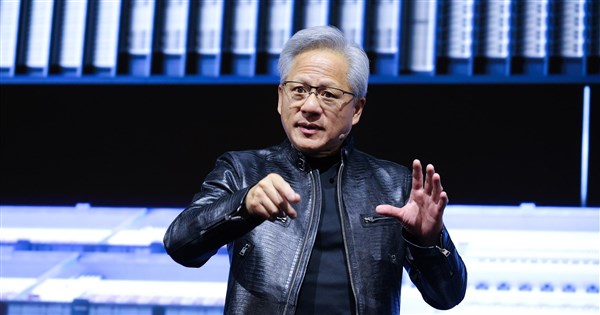
Central News (Central News reporter Zhang Xinyu, San Francisco, October 10th special report) Jensen Huang, the CEO of NVIDIA, said in a conversation with former U.S. Secretary of State Condoleezza Rice that a series of extremely low-probability events created NVIDIA, and that he is a concrete embodiment of the American Dream. He recalled the sacrifices of his parents and his brother's brave journey of bringing him to the United States, emphasizing that the immigrant spirit deeply influenced him. To welcome the 250th anniversary of the United States, the Hoover Institution planned the "Only in America" character interview series, hosted by the director and former U.S. Secretary of State Condoleezza Rice, to explore the stories of the American Dream. In the first episode, Rice and NVIDIA (NVIDIA) CEO Jensen Huang had a dialogue at NVIDIA's Silicon Valley headquarters. In today's episode, Jensen Huang began by reviewing his journey of immigrating to the United States at the age of 9. Born in Taiwan, he moved to Thailand with his family at the age of 5 due to his father's work, and stayed there for 4 years. Later, a political upheaval occurred in Thailand, and his parents sent him and his brother to the home of relatives in Tacoma, Washington. His first impression of the place was that the house had carpets, which felt very strange. He talked about the initial impact of American culture on him, from morning cereal and TV programs to afternoon comedy shows like "The Partridge Family," and "various candies, Snickers chocolate bars (SNICKERS)." Three months later, the Huang brothers were sent to Kentucky, where their parents sent them to a cheaper, lower-threshold boarding school. The small town of Oneida, where they stayed, had only 600 people. Rice said that before the interview, she had never heard of Oneida. Jensen Huang said that he followed his brother all the way, "My brother was really amazing," emphasizing that a 10-year-old child took him to so many places. He frankly said that in 1973, Kentucky, USA, still had some prejudices, and Chinese people were unfamiliar faces to the locals. He joined the swimming team and the soccer team, "After the swimming competition, the coach took us to the most amazing restaurant in the world, where the food was packed in boxes, the menu was lit, and we sat in a restaurant that looked like a spaceship. That was McDonald's." Jensen Huang said that when he was 4 years old, his father had gone to New York for training, and that experience left a deep impression on his father, which also made him think of sending his family to the United States in the future. Jensen Huang said, "The truly amazing thing about immigration is that when you come, you don't have too many preconceived expectations, but you have great hopes and dreams, and therefore you will cherish everything in front of you." He said that later his parents also came to the United States, "My mother worked as a cleaner in a Catholic school, and my father was an engineer." His parents saved money, and his father bought a green van, which once took them from Oregon to Los Angeles and to Disneyland. Talking about his academic career, Jensen Huang said that in high school he loved mathematics and science and had few friends. Later, his best friend said he wanted to go to Oregon State University, and he listened and thought it was a good idea. After entering, he met a girl named Lori. Jensen Huang mentioned the process of meeting his wife, "In a class of 250 boys, she was one of only three girls. I was the youngest student in the school, only 16 years old at the time. She was a year and a half older than me. I made up my mind to get to know her." He shared how he pursued Lori, using a statistical approach to eliminate others and find a way to get into her experimental class, "This way, I reduced the number of competitors from 250 to 4." He said with a smile, "Finally, I used the ultimate pickup line on her (Lori), asking her if she wanted to see my homework." Later, Jensen Huang accepted the opportunity provided by AMD, working while studying at Stanford University (Standford University), and took 8 years to obtain a master's degree. He said, "Probably no one has paid Stanford more tuition than me." But during that time, his son Huang Shengbin and daughter Huang Minxuan were born one after another, and he also founded NVIDIA. The interview video is interspersed with early media reports of NVIDIA. Jensen Huang talked about how he views the American Dream. He said, "The American Dream has its core foundation. It exists for a reason. There is a purpose driving it, a promise within it, and some pillars supporting it... We have a word to describe it, which we call freedom." Rice asked how Jensen Huang views the concern that "AI will make people unemployed" or doubts "Is the American Dream still there?" Jensen Huang encouraged young people to return to the "first principle" (First principle) to look at things, asking themselves: "What is my core value? What has made me excellent today? What is my vision? And then find that original point again." Jensen Huang said that when technology is changing and the world is turning upside down, it is an opportunity to pursue excellence. Under the current situation, it is very difficult to truly make a change, "I will delve into the capabilities of artificial intelligence (AI) and do everything possible to use it." Talking about AI, Jensen Huang believes that the United States should remain vigilant and, when formulating policies, should not obstruct the most important layer, which is the application layer of the five-layer cake, because whoever can promote the most in this layer can grasp the opportunity of this industrial revolution to the greatest extent. He said that in many ways, NVIDIA is a "Only in America" story, and he is a concrete embodiment of the American Dream. (Editor: Wei Shui) 1150611
FACT BOX
- Source: CNA (Central News Agency)
- Category: 人物
- Organizations: NVIDIA
- Products / services: NVIDIA