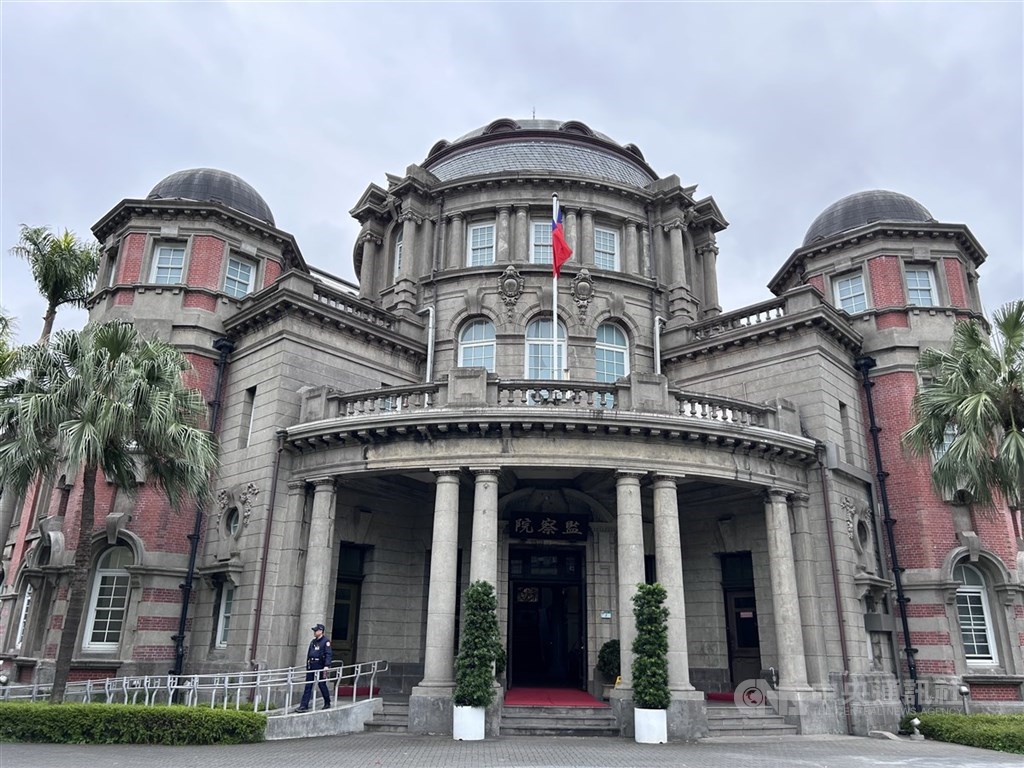
(Central News Agency reporter Kao Hua-chien, Taipei, June 16) The Control Yuan announced today that the National Museum of History's application and approval process for the 'Construction of the National Museum of History Artifact Storage Facility' project has been severely delayed. From the Executive Yuan's approval of the plan in August 2017 to the scheduled completion in November 2027, the project has spanned eight museum directors and five ministers, taking over 10 years. Due to low administrative efficiency and inadequate supervision by the Ministry of Culture, the Control Yuan has formally censured both the Ministry and the museum.
Control Yuan members Fan Hsun-lu, Tsai Chong-yi, and Chao Yung-ching stated in a press release that the National Museum of History was the first national museum established by the government after relocating to Taiwan, aimed at strengthening social education. Having opened in 1955, the museum has operated for over 60 years and now faces challenges such as outdated facilities, insufficient space, and disorganized surroundings. As a result, it proposed the 'Greater South Sea Cultural Park Project – Initial Phase of the National Museum of History' (main plan), which was approved by the Executive Yuan in May 2015.
According to the Control Yuan, the initial phase focused on renovating the main museum building. The construction of the artifact storage facility was only incorporated into the later revised phase of the main plan after the Executive Yuan approved the allocation of land in Zhonghe District, New Taipei City—formerly the National Defense Management College—in November 2015. It was not until the Executive Yuan approved the first revision of the main plan in August 2017 that the design and planning for the cultural storage facility could begin.
However, during the application process for the 'Construction of the National Museum of History Artifact Storage Facility' sub-project, the museum failed to accurately investigate the status of state-owned property, resulting in the Ministry of Finance's Bureau of Public Property rejecting the application five times for revisions. This delayed approval until November 2015, causing the project to miss the opportunity to be integrated into the already-approved main plan. Only after the Executive Yuan approved the first revision of the main plan in August 2017 could the design process begin, leading to significant schedule delays. The Control Yuan criticized the Ministry of Culture, as the supervising authority, for inadequate oversight and review.
Furthermore, during the planning phase of the sub-project, the museum failed to accurately estimate required funding, leading to significant underestimation. Later, during the integration into the second revised plan of the 'National Museum of History Upgrade and Development Plan' approved by the Executive Yuan, the plan was returned twice for revision due to fluctuations in construction price indices and repeated changes in the structural design of the storage facility.
It took a total of 1 year and 6 months to complete the revisions. During this time, the contracted firm, citing over six months of suspended execution, requested contract termination. This resulted in non-economic expenditures exceeding NT$7.35 million, and the need to re-initiate the technical service tender for planning, design, and supervision, further delaying the project timeline.
The Control Yuan also pointed out that the construction site for the artifact storage facility was independent and relatively simpler compared to the renovation and reuse of the main museum building. However, it was merged into the broader 'National Museum of History Upgrade and Development Plan' instead of being processed as a separate project. The museum failed to actively coordinate with the National Development Council and the Public Construction Commission to establish it as an independent case or to emphasize the importance of SRC (Steel Reinforced Concrete) structure for the storage facility.
From the Executive Yuan's approval in August 2017 to the scheduled completion in November 2027, the project has involved eight directors and five ministers and is expected to take nearly 10 years and 3 months—indicating extremely low administrative efficiency. The Ministry of Culture, playing a key leading role throughout the process, was found to have significant lapses in supervision and management. (Edited by Wan Shu-chang) 1150616
FACT BOX
- Source: CNA (Central News Agency)
- Category: Taiwan