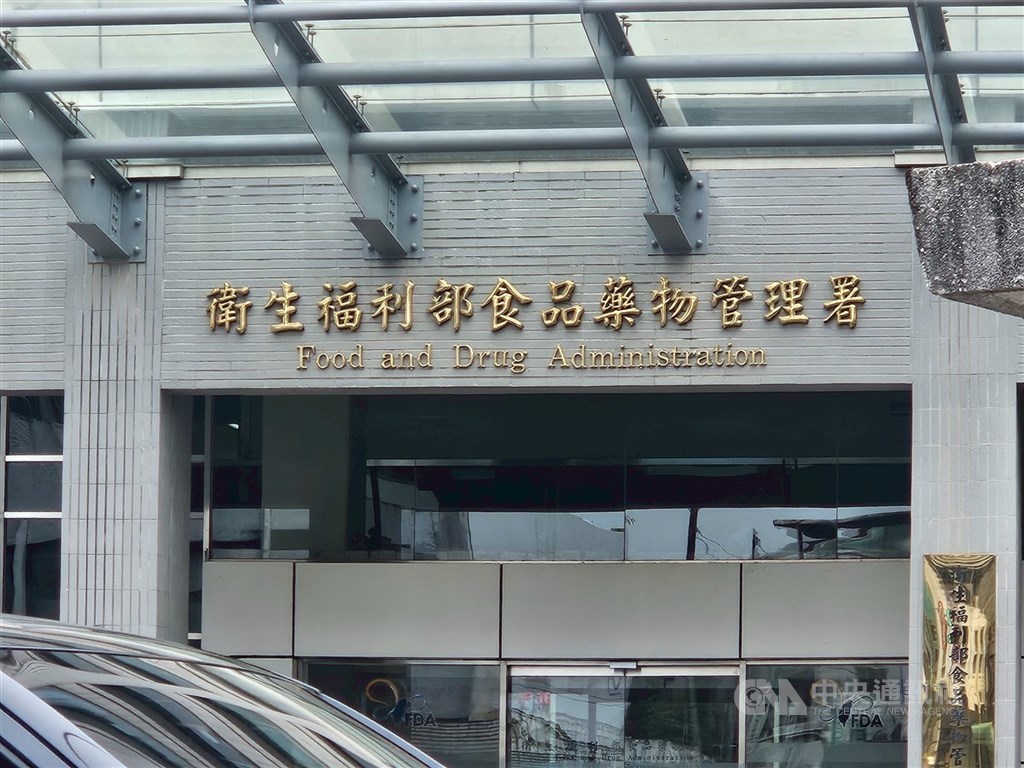
(CNA Taipei, June 18) -- The Food and Drug Administration (FDA) has announced new regulations for olive oil, but legislator Lin Shu-fen questioned the standards, deeming them unscientific and not aligned with international norms, effectively allowing businesses to take advantage of consumers. FDA Director-General Chiang Tze-hsiang was reportedly abroad during the budget review, leading to the freezing of at least NT$20 million of the FDA's budget.
On June 12, the Food and Drug Administration (FDA) of the Ministry of Health and Welfare (MOHW) announced a draft regulation titled "Designation and Labeling Regulations for Edible Olive Oil and Olive Pomace Oil." Under the proposed rules, only six categories of products will be permitted to be labeled as olive oil, with mandatory labeling for businesses. Those found to be adulterating or misrepresenting their products could face up to seven years in prison and a fine of up to NT$80 million. The regulations are scheduled to take effect on July 1, 2027.
The Social Welfare and Environmental Hygiene Committee of the Legislative Yuan reviewed the 2026 budget for the MOHW today, with Minister of Health and Welfare Hsueh Jui-yuan and other ministry officials in attendance.
During the review of the FDA's budget, Democratic Progressive Party legislator Lin Shu-fen pointed out that despite 14 years having passed since the fake oil incidents, businesses continue to deceive the public by mixing inferior oils with premium ones. She criticized the FDA's newly established standards as not being internationally aligned or scientifically sound, describing the FDA as "speaking like a giant but acting like a dwarf."
Lin Shu-fen specifically highlighted that the draft only includes two testing standards: free fatty acid content and Delta K. The FDA claimed these standards are based on the Codex Alimentarius Commission (CODEX) standards, but Lin argued that they are not up-to-date and even fall behind Taiwan's national standards (CNS) announced by the Ministry of Economic Affairs. "Is this what you call aligning with international standards?"
"This is not just taking the easy way out; it's condoning businesses and treating the public as fools." She further expressed dissatisfaction, stating that FDA Director-General Chiang Tze-hsiang was in the United States during the review of the main budget. "He finished his meetings but hasn't returned, still enjoying himself abroad. Since the director-general doesn't care, repeating myself many times is useless."
Ultimately, Lin Shu-fen proposed freezing NT$10 million of the FDA's budget. She demanded that the FDA establish clear regulations for the naming and labeling of edible olive oil, olive pomace oil, and blended oils, specifying the use of product names and the labeling of ingredient proportions. She emphasized that freezing the budget is not the goal, but rather the willingness to make changes.
Wang Te-yuan, Deputy Director-General of the FDA, pledged on the spot that the draft is still in the public comment period. He stated that in addition to the current labeling regulations for edible olive oil, the FDA will add four more testing items beyond the current free fatty acid content and Delta K. These will include sterols (specifically, the sum of delta-7-stigmasterol, delta-7-avenasterol, and campesterol), wax content, UV absorbance at 270 nm or 268 nm, and UV absorbance at 232 nm.
Furthermore, Lin Shu-fen questioned why online platforms continue to illegally sell mainland Chinese food products such as peanuts and tea, which are prohibited from import. This indicates that despite the FDA's claims of supervising local authorities' inspections, it has failed to effectively control the source and flow of goods in the market. Consequently, she proposed freezing another NT$10 million. The FDA's budget was frozen by over NT$20 million. (Editor: Li Heng-shan) 0618
FACT BOX
- Source: CNA (Central News Agency)
- Category: 政策爭議