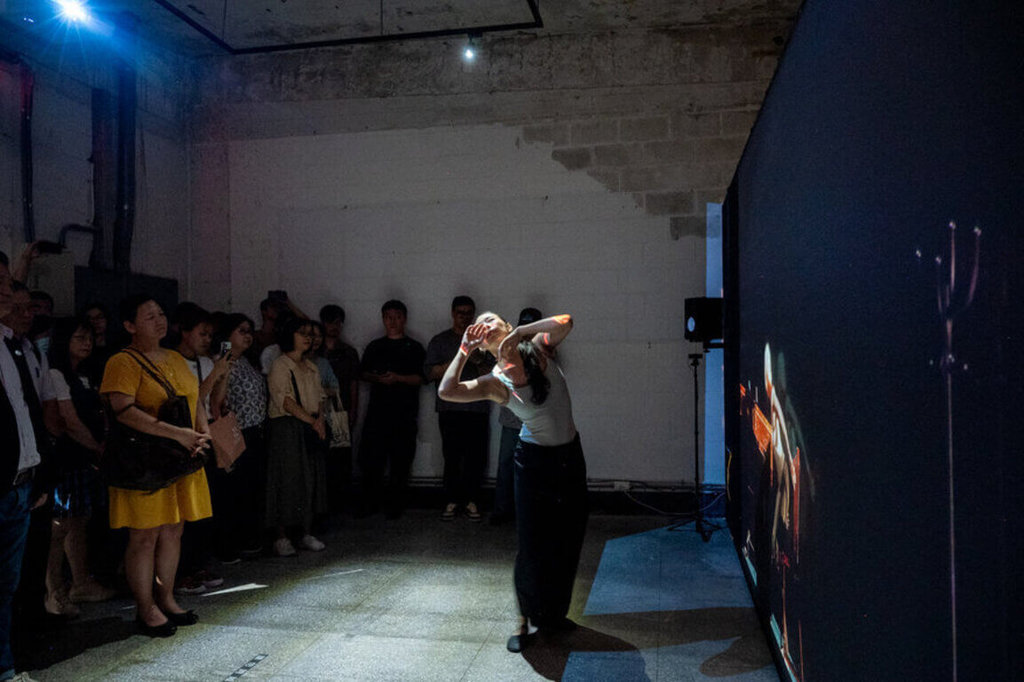
(Central News Agency reporter Hsu Chih-wei, Taipei, 18th) The winners of the US Core77 Design Awards have been announced. A cross-disciplinary team led by Professor Liu Yu-cheng of the Department of Sociology at Soochow University, under the National Science and Technology Council's (NSTC) Taiwan Chip-based Industrial Innovation Program (TCIIP) Humanities Sub-project, created "After 80s." Combining a sociological perspective with technological innovation, the work won the US Core77 Speculative Design Award.
According to a press release issued by Soochow University today, the internationally renowned "US Core77 Design Awards" is one of the most influential competitions in the global design community. The "Speculative Design Award" category specifically recognizes works that present bold hypotheses and critical thinking regarding future lifestyles, technological evolution, and societal changes.
The NSTC TCIIP Humanities Sub-project, directed by Professor Liu Yu-cheng, invited Paul Gong, Associate Professor Rank Specialist of the Department of Industrial Design at Shih Chien University, and curator Chen Hsiang-wen to co-lead the initiative. They brought together cross-disciplinary experts in interactive technology, visual design, and music design for this collaborative creation.
The project "After 80s" uses the year 2049 as its timeline to explore the super-aged society Taiwan is about to enter. Through AI technology and immersive interactive devices, it transforms elders over 80 into "holographic lifeforms." This allows viewers to ponder, through their experience, how humans will perpetuate their sense of existence and memory when technology becomes capable of overcoming the limits of physical decline. Developed in technical collaboration with the Industrial Technology Research Institute (ITRI), the work showcases a high degree of integration between technology and the humanities, earning it the US Core77 Speculative Design Award.
The creative team stated that they will continue to cultivate the field of technology art and plan to participate in major international tech-art events, such as the International Symposium on Electronic Art (ISEA) and the Ars Electronica Festival in Austria. Simultaneously, they aim to explore more possibilities for AI and chip technology within a human-machine symbiotic society, striving to ensure that Taiwan's sociological research capacity continues to hold a significant place in the international arena of innovative design. (Editor: Lee Shu-hua)
FACT BOX
- Source: CNA (Central News Agency)
- Category: Event
- Organizations: Core77