Key News on Trump's Tariff War
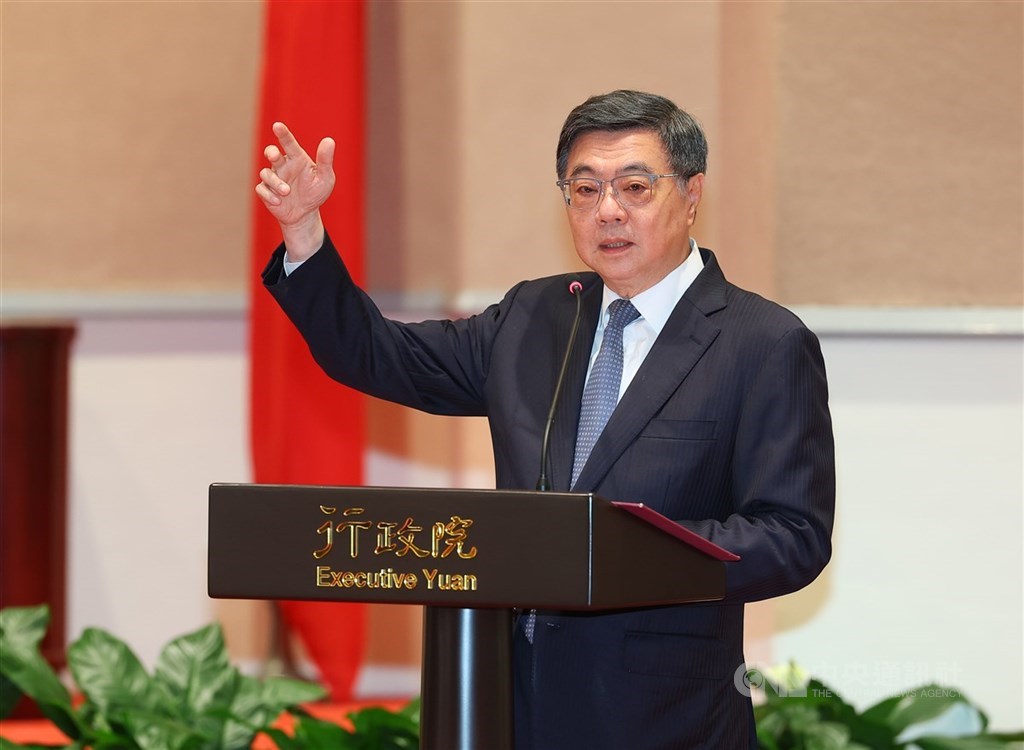
(CNA Taipei, June 18) Premier Cho Jung-tai stated today regarding Taiwan-U.S. tariffs that Taiwan and the U.S. signed the Equivalent Trade Agreement (ART), securing the most reasonable terms and outcomes. This is currently undergoing final confirmation and assurance through various channels, with the hope that the U.S. will make a favorable judgment based on the ART agreed upon by both sides during the Section 301 investigation and the transition to other legal tools.
The U.S. Department of Commerce, citing forced labor, proposed imposing a 10% tariff on Taiwan and 13 other countries under Section 301. The Office of the U.S. Trade Representative (USTR) noted that Taiwan currently does not legally prohibit the import of products made with forced labor. The Executive Yuan's Taiwan-U.S. Economic and Trade Working Group stated that the U.S. acknowledges the Equivalent Trade Agreement (ART) signed by Taiwan and the U.S., which is why Taiwan was listed as one of the 14 countries recommended for a lower tariff rate of 10%. The announcement is merely one step in the Section 301 investigation process, and the final tariff rate has not yet been determined. Taiwan is confident in obtaining relatively preferential treatment among deficit-ridden nations.
Cho Jung-tai held a press conference after presiding over the Executive Yuan's Drug Control Meeting today. When asked by reporters how to actively demonstrate sincerity in improvement before the ART agreement takes effect, Cho stated that Taiwan's economy is becoming increasingly sound, and its chip exports are increasingly needed internationally, signifying the growing importance of the nation, its industries, and its enterprises. In this process, it is also necessary to consider friendly trade relations with all countries worldwide.
Cho said that, based on considerations of national fiscal capacity and the nation's various construction and development needs, it is reasonable and systematic to adjust procurement targets and to utilize private investment for industry self-deployment. The government should assist major domestic industries in going global, strengthen their overall capabilities, and enhance bilateral investment outcomes.
Cho pointed out that after lengthy negotiations between Taiwan and the U.S., the ART secured the most reasonable terms and outcomes. This is currently undergoing final confirmation and assurance through various channels, with the hope that the U.S. will make a favorable judgment based on the ART agreed upon by both sides during the Section 301 investigation and the transition to other legal tools. The government is actively working on this.
Cho also expressed hope that upon completion of the U.S. legal tool transition process, a stable market mechanism will be provided for domestic industries, allowing everyone to regain their footing and make various plans.
Cho stated that while developing the domestic high-tech industry, the government is comprehensively strengthening small, medium, and micro enterprises, enabling them to become part of the vertical supply chain for high-tech industries. This will not only improve the nation's overall condition but also make it more complete and stable.
Cho emphasized that when small, medium, and micro enterprises undergo transformation and upgrading, the basic rights of workers cannot be overlooked. Therefore, the Ministry of Labor was specifically included in the discussions for the Small, Medium, and Micro Enterprise Transformation and Upgrading Act, with the aim of fully considering the nearly ten million employees. The healthier the domestic industry becomes, the more capable Taiwan will be in engaging with foreign countries and the more it will focus on balanced bilateral and multilateral trade relations with other nations. (Editor: Yang Lan-hsuan) 06/18/115
Stand with facts, and your every contribution is a force for safeguarding press freedom.
Download the CNA "First-Hand News" APP to get the latest updates in real-time.
Text, images, and videos on this website may not be reproduced, publicly broadcast, publicly transmitted, or used without authorization.
FACT BOX
- Source: CNA (Central News Agency)
- Category: 貿易