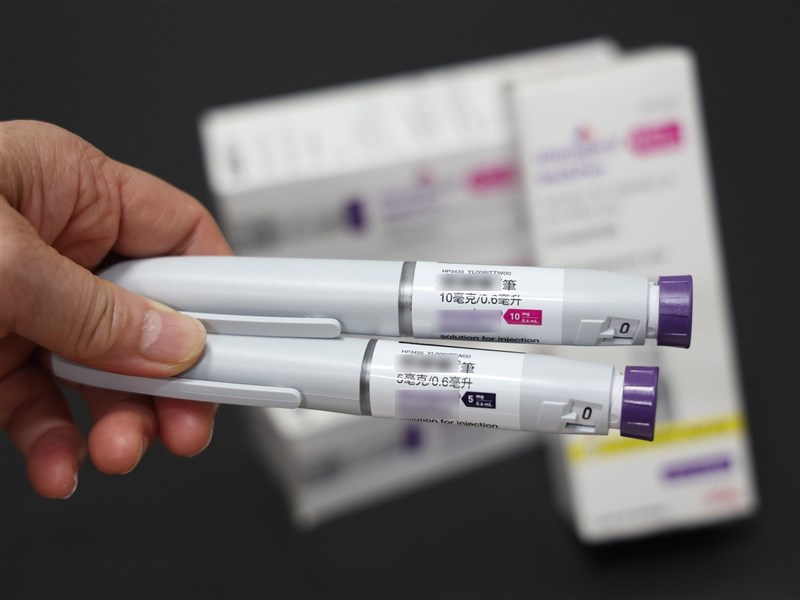
Slimming Injection Era 2 (CNA reporter Chen Jie-ling, Shen Pei-yao Taipei, June 21) Slimming injections are a groundbreaking weight loss medication. Taiwan's obesity treatment guidelines have recently undergone a major revision, incorporating slimming injections into the standard treatment pathway. Several new drugs are currently in trials, and the medical community anticipates the launch of long-acting injections and oral slimming pills, offering more flexible and diverse options.
"Slimming injection" is the common name for prescription drugs containing ingredients like GLP-1 and GIP incretins. Originally developed for diabetes treatment, these drugs act on the intestines and central nervous system. In addition to promoting insulin secretion and regulating blood sugar, they can also delay gastric emptying, induce a feeling of fullness, and temporarily suppress appetite, now sweeping the globe as weight loss drugs.
Previous generations of weight loss drugs were introduced to Taiwan around 2000, but were subsequently withdrawn from the market or lost favor with patients due to side effects such as exacerbating cardiovascular diseases like stroke, or causing oily stools and diarrhea. Dr. Hsiao Tun-jen, honorary chairman of the Obesity Society of Taiwan, stated that the advent of slimming injections a decade ago became a powerful tool for treating obesity, rewriting the weight loss guidelines.
Dr. Hsiao Tun-jen, who has been involved in obesity treatment for many years, focused on helping patients manage fatty liver, not for cosmetic reasons. At that time, there were no effective treatment methods, only medical advice to eat less and exercise more, or to use meal replacements as a supplement. However, even with strict dietary control, patient outcomes were often unsatisfactory, with a 5% weight loss considered quite good.
He told CNA that with the use of slimming injections, many patients can now achieve a weight loss of 10% to 15%. Numerous studies have also confirmed that these injections can reduce the risk of chronic diseases such as cardiovascular disease. Instead of patients relying on blood pressure and blood sugar medications long-term, managing weight offers a win-win solution.
Medical professionals and the public are gradually understanding that weight loss is not just about eating less and moving more, nor can it be achieved solely through willpower. However, "from an internal medicine perspective, weight loss is fundamentally a medical need," emphasized Dr. Hsiao Tun-jen, stressing that obesity is a disease, a chronic condition requiring long-term management.
He further explained that when patients successfully lose 10 kilograms, they have the opportunity to improve or reverse obesity-related chronic diseases such as diabetes, hypertension, and fatty liver. Through weight loss treatments like slimming injections, a decrease in weight brings additional benefits, with some patients able to reduce their use of chronic disease medications.
Regarding the future development of slimming injections, Dr. Huang Kuo-chin, vice superintendent of National Taiwan University Hospital, who is involved in many related drug clinical trials, revealed that everyone fears injections. Reducing the need for injections is a major direction, with two main trends: developing longer-acting injections and developing oral formulations, both of which are still in the clinical trial stage.
Dr. Huang Kuo-chin said that diabetes medications originally requiring daily injections, when given at higher doses, were found to be effective as weekly slimming injections. In the future, there is potential for monthly injections for weight management therapies. Similarly, transforming slimming injections into slimming drugs or pills is also necessary, not only to alleviate patients' fear of needles but also to lower the storage requirements for current injectable medications.
Over half of Taiwan's overweight and obese population exceeds the total population. With the advent of weight loss medications, many more people are willing to accept weight loss treatment, said Dr. Kao Hsiang-han, secretary-general of the Obesity Society of Taiwan.
Dr. Kao Hsiang-han reminded that weight loss medications play an auxiliary role, and lifestyle adjustments remain crucial. Professional interventions from dietitians, exercise therapists, and traditional Chinese medicine practitioners, along with the use of legal medications, are all part of weight loss treatment. Especially for women, slimness symbolizes confidence and beauty, but it was less associated with cardiovascular and metabolic diseases. Now, the focus is shifting towards pursuing better health.
Dr. Huang Meng-chuan, chairperson of the National Federation of Dietetic Associations, stated directly, "Slimming injections" do indeed have significant short-term effects, but their side effects cannot be ignored. Because the medication suppresses appetite, if users do not consume enough protein when calorie intake is insufficient, it can lead to muscle loss and a decrease in basal metabolic rate, which is the main reason for rapid weight regain after discontinuing the medication.
"If one relies solely on injections and neglects nutritional intake, what is lost is not just fat, but also valuable muscle," warned Dr. Huang Meng-chuan. Muscle loss leads to a decrease in basal metabolic rate. Once the medication is stopped and appetite returns, weight will quickly rebound. The role of a dietitian is to supervise patients during the weight loss process to ensure adequate protein intake, and to simultaneously develop good lifestyle habits with the aid of medication. (Editor: Chen Ching-fang) 1150621
Stand with facts, your every donation is a force to protect press freedom
Download the CNA "First News" APP to get the latest news in real-time
Text, images, and videos on this website may not be reproduced, publicly broadcast, publicly transmitted, or used without authorization.
FACT BOX
- Source: CNA (Central News Agency)
- Category: 健康醫療