Special Report on Europe's Energy Transformation (3 parts total)
The European Union is set to surpass fossil fuels in renewable energy share by 2025. However, as the explosion in AI computing power brings a "tsunami of electricity consumption," cracks are appearing in Europe's green energy ideals. Many countries are re-strategizing – Germany is experimenting with artificial suns, Italy is crossing a 40-year taboo to restart nuclear power and participate in hydrogen corridors, while France views nuclear energy as a strong asset. Europe is unveiling an "energy transformation" crucial for industrial development and geopolitical security.
BERLIN, June 24 (CNA) -- Germany shut down its last three nuclear power plants in 2023, a policy once considered irreversible, which has now become a hot topic of discussion again. The Alternative for Germany (AfD) party proposed restarting nuclear power in March, but the anti-nuclear generation firmly opposes going back. Under pressure from energy security and industrial competitiveness, German society is once again engaged in a debate about the future of energy.
The far-right Alternative for Germany (AfD), which has risen to become Germany's second-largest party, proposed a bill in parliament in March to restart nuclear power. They advocate for Germany to immediately halt the dismantling of decommissioned nuclear power plants and reactivate the units shut down in 2023, reigniting public debate in Germany about the future of energy.
This proposal to resume nuclear power has not gained support from other major political parties. According to parliamentary debate records, the ruling coalition, the Greens, and Die Linke all oppose the restoration of traditional nuclear power as an energy option.
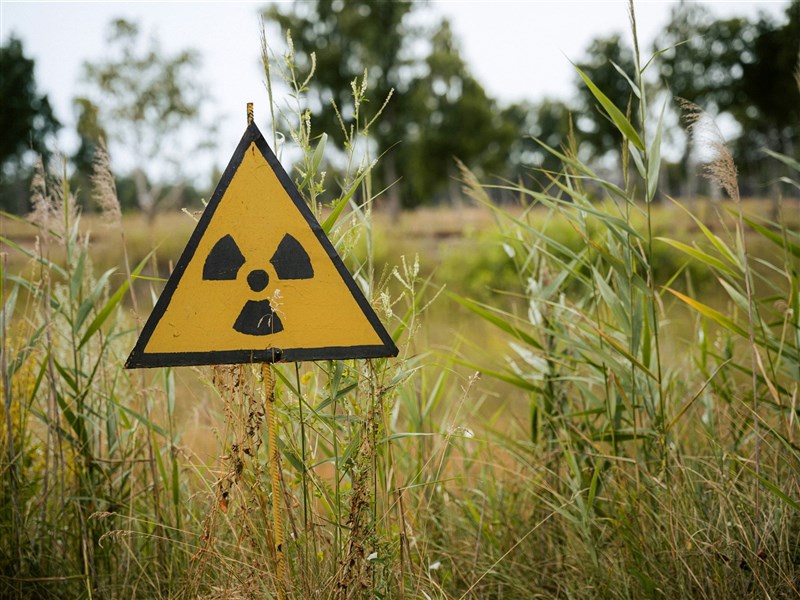
On April 26, 1986, the Chernobyl nuclear power plant experienced an explosion, causing the most severe nuclear disaster in global history. The radioactive fallout spread to neighboring countries, forming the basis of Germany's subsequent anti-nuclear movement. After the Fukushima nuclear disaster in Japan in 2011, then-Chancellor Angela Merkel decided to accelerate the phase-out of nuclear power, and in 2023, Germany shut down its last three nuclear power plants.
However, following the Russia-Ukraine war, Russia's natural gas supply was interrupted, energy prices soared, and Germany's industrial competitiveness faced pressure. German society began to re-examine its nuclear phase-out policy. The recent crisis in the Strait of Hormuz, which led to a sharp increase in German oil prices, also highlighted the vulnerability of energy security to geopolitical influences.
In April of this year, a survey by the large German polling center YouGov and the social research institute Sinus Institute showed that over half of respondents believed that closing the last nuclear power plants in 2023 was a wrong decision. However, less than 40% of respondents agreed that nuclear energy should become Germany's primary source of electricity in the future. Solar and wind power, with support exceeding 60%, remain the energy options more favored by the German public.
Thomas, a British national living in Berlin for three years, told CNA that he has indeed felt the impact of rising energy prices on overall living costs in recent years, particularly the increase in fuel and food prices. He believes nuclear energy is a "clean, modern, and relatively safe" baseload power source that can coexist with wind and solar energy to help maintain grid stability.
Craja Bogdan, who fled communist Romania to West Germany in 1982 and has since helped many German companies set up factories in Romania, believes that Germany, as a highly industrialized nation, needs a stable and affordable energy supply. He frankly stated that accelerating the nuclear phase-out after the Fukushima disaster "was a decision made out of panic" and was Merkel's biggest mistake during her tenure.
Arnim Stauth, a veteran journalist for German public television, holds a different view. Stauth, who was stationed in Russia and the EU and has long reported on international politics and energy issues, recalled that when he was 20 years old, during the peak of the West German anti-nuclear movement, he joined tens of thousands of people in protesting against the construction of new nuclear power plants.
For Stauth, Germany's renewed embrace of nuclear energy is not only unrealistic but also fails to solve the current energy problems. He pointed out that it often takes 10 to 20 years or more from the planning, approval, to the completion of a new nuclear power plant. By the time it is actually operational, Germany's energy structure will have already changed.
Compared to traditional nuclear power, Germany should continue to expand wind and solar power generation and develop green hydrogen and energy storage technologies. Although renewable energy currently faces challenges with aging grids and energy storage bottlenecks, these issues can eventually be resolved through technological and infrastructure investment.
The current government of German Chancellor Friedrich Merz is actively promoting nuclear fusion, vowing that Germany will be the first country in the world to achieve commercial fusion power. Regarding this, Stauth stated that he always believed nuclear fusion was still a distant prospect for practical application. However, two years ago, during a trip to Kenya, he coincidentally met two nuclear fusion scientists who told him that technological progress might be faster than the public imagines.
"If nuclear fusion is successful, it could indeed become an important energy source in the future." He emphasized that even if nuclear fusion ultimately fails to achieve commercial operation as planned, Germany must not go back and continue to rely on traditional nuclear power and fossil fuels.
To ensure power supply stability and industrial competitiveness, German Minister of Economic Affairs Katherina Reiche recently proposed a new round of natural gas power plant construction plans, which has been met with large-scale protests from environmental groups. Before nuclear fusion technology truly moves out of the laboratory and achieves commercial operation, Germany still needs to find a balance between energy security, industrial competitiveness, and climate goals. This debate about the future of energy still has a long way to go. (Editor: Tang Pei-chun) 06/24/2025
Stand with facts, your every donation is a force to protect press freedom
Download CNA's "One-Stop News" APP for real-time updates
The text, images, and videos on this website may not be reproduced, publicly broadcast, publicly transmitted, or used without authorization.
FACT BOX
- Source: CNA (Central News Agency)
- Category: 政治
- Organizations: YouGov / Sinus Institute