(CNA, Brussels, June 24) With the explosive growth in artificial intelligence (AI) computing power, the "power-hungry beast" hidden behind technological development has brought electricity anxiety to the European Union. Former senior EU energy officials and energy scholars closely connected with the industry believe that AI ambitions are reshaping the EU's Green Deal.
The EU continues to promote strict adherence to carbon reduction timelines and expand new energy sources. However, the stable and massive energy required for the development of AI technology industries presents a structural contradiction with net-zero carbon emissions. The strong collision between green ideals and digital technology development not only tests the EU's energy policy but also directly influences future industrial competitiveness.
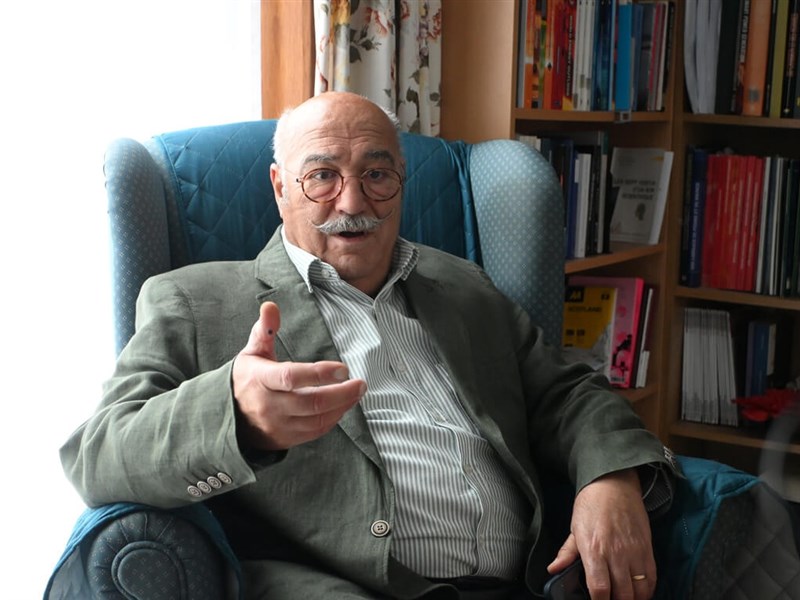
What impact will this tug-of-war between technological development and electricity have on the EU's energy policy? Samuele Furfari, a former senior official who served at the European Commission's Directorate-General for Energy (DG ENER) for over 36 years, and Damien Ernst, a professor at the University of Liège in Belgium specializing in AI and energy issues, were interviewed separately by CNA.
Both interviewees emphasized that if the EU insists on using only "renewable energy" ideals while developing the AI industry, it would be a completely incompatible idea.
Furfari pointed out that if all citizens are to enjoy a good quality of life, a prerequisite is abundant energy. The increasing demand for AI also simultaneously increases energy demand. This idea conflicts with the Green Deal.
He further explained that the problem with renewable energy is its decentralized distribution across various locations. Decentralization makes the grid structure larger and more dispersed, but energy is produced intermittently and variably. However, AI development requires stable electricity. Therefore, it is impossible to develop AI if electricity fluctuates unpredictably within hours, weeks, or a day.
Ernst highlighted the current problems faced by the EU from the perspective of grid construction.
He said that the risk facing the EU's power grid is a lack of "available electricity" to drive these new demands. Although the EU is seeking solutions to these problems, including "installing power generation facilities near where demand exists," meaning generating power next to AI data centers to avoid all grid congestion issues, this is a huge problem in the EU itself because the EU has invested too little in grid infrastructure.
The problems faced in reality are also gradually reflected in the EU's policy direction and the statements of its leaders.
Furfari pointed out that between the first and second terms of European Commission President Ursula von der Leyen, the relevant terminology has subtly changed. Previously, officials always emphasized the "Green Deal," but now they have shifted to "Clean Deal."
He noted that a strong economy cannot be built on wind turbines and solar panels alone. The EU is gradually changing, but it still needs time.
Ernst analyzed that in the next few years, the decarbonization goals previously set will more or less be phased out or shelved, replaced by more pragmatic objectives. The EU is now facing a major transformation, leaning towards providing cheap, affordable, and sufficient energy rather than solely pursuing decarbonization policies.
Amidst the electricity anxiety brought about by AI development, a return to nuclear energy has also become one of the choices for countries and businesses.
Furfari cited the United States as an example. About 10 years ago, tech giants still insisted on using solar power but gradually realized it was impossible. This is why some tech companies have decided to invest in long-term nuclear power generation in recent years, as stable and sufficient electricity is the most important factor.
He said that the EU must also acknowledge this point. If it wants to have stable electricity, it must return to nuclear energy and make decisions to build nuclear power plants, which is crucial for AI development.
Ernst also agreed that a return to nuclear energy is an inevitable trend. However, he also pointed out that the current state of the EU's nuclear industry is not ideal. Currently, only France has the independent capability to build nuclear power plants. From decision-making to seeing results, the EU will need to wait 10 to 20 years.
He also warned that if the EU cannot resolve this energy crisis, all large-scale AI-related investments may not materialize in Europe and could flow to the United States, China, or even Africa, which concerns the survival of the EU. (Editor: Tang Pei-chun) 1150624
Stand with facts, and your every contribution is a force to protect press freedom.
Download the CNA "First-Hand News" APP to get the latest news in real-time.
Text, images, and videos on this website may not be reproduced, publicly broadcast, publicly transmitted, or used without authorization.
FACT BOX
- Source: CNA (Central News Agency)
- Category: 分析