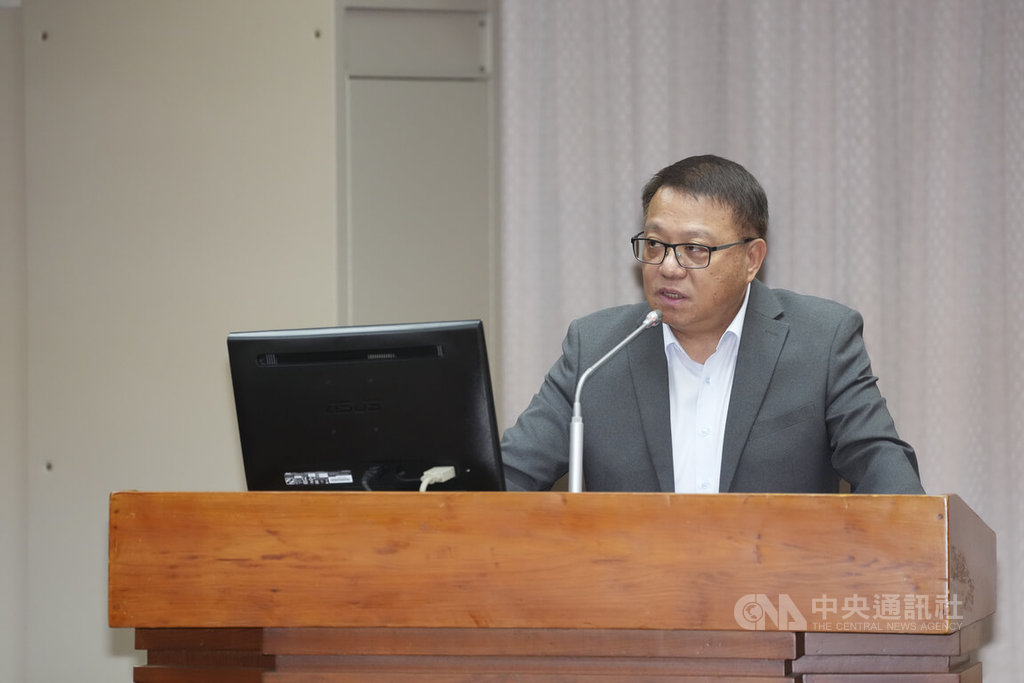
Taipei, June 25 (CNA) The Council of Indigenous Peoples (CIP) will adopt a transitional strategy of "publicly operated, privately managed" to address challenges in establishing indigenous schools, including insufficient teacher training and follow-up measures for further education, said CIP Vice Minister Du-Jang Mei-Chuang today. Scholars suggest that teacher education centers should establish departments focused on "cross-disciplinary fields" to cultivate suitable indigenous cross-domain teachers.
The Legislative Yuan's Education and Culture Committee held a public hearing today on "Constructing an Autonomous Governance System for Indigenous Education - Legislation for the Indigenous Peoples Education Act," inviting experts, scholars, CIP Vice Minister Du-Jang Mei-Chuang, and Deputy Minister of Education Chang Liao Wan-chien to attend.
In his report, Deputy Minister Chang Liao Wan-chien stated that the establishment of indigenous schools is aimed at creating a comprehensive and practical indigenous education system, which is a concrete manifestation of safeguarding the educational rights of indigenous peoples. The Ministry of Education supports the establishment of indigenous schools to implement the constitutional intent of indigenous peoples and protect their educational rights, demonstrating indigenous autonomy and self-determination.
Vice Minister Du-Jang Mei-Chuang said that indigenous schools are centered on the indigenous knowledge system and implement education based on the educational philosophy, cultural values, and development goals of specific indigenous groups. In addition to general national education curricula, they emphasize indigenous language teaching, traditional culture and history, tribal knowledge, and life skills. The educational philosophy is to enable students to continue their ethnic culture and values.
Du-Jang Mei-Chuang pointed out that promoting the establishment of indigenous schools faces many challenges. The primary issues are that "teacher training with cultural and indigenous language expertise" is not yet in place, and follow-up measures for "further education and academic accreditation" are insufficient, with gaps still existing in curriculum development. The CIP will adopt a "publicly operated, privately managed model," combining public sector resources with private cultural expertise, as the most pragmatic transitional strategy.
Li Wen-chi, director of the General Education Center at Dawn College of Technology, advocated for not treating indigenous culture as an "add-on curriculum," but rather integrating the indigenous knowledge system comprehensively into the core of education and making it substantially localized. Teacher training should shift from "passive requirements" to "local autonomy," establishing professional indigenous teachers and tribal inheritors. The Indigenous Peoples Education Development Fund should be legalized to ensure stable resource allocation and prevent interruptions due to changes in political parties.
Chen Chang Pei-lun, an associate professor in the Department of Indigenous Development and Social Work at National Dong Hwa University, stated that cultural transmission through indigenous schools cannot be merely a romantic ideal; it must address the actual needs of indigenous parents and students. The university entrance examination system still relies on general academic knowledge, and what is learned in indigenous schools is not recognized by general universities, which may cause parents and students to experience a crisis of confidence, ultimately leading them to choose regular schools. He suggested making simultaneous changes at the university level, otherwise, it will only be well-received in name but not in practice.
Ao Yu Mo Na, dean of the College of Humanities and Social Sciences at National Dong Hwa University, agreed that indigenous languages should be the primary language of instruction, but the indigenous language proficiency required for indigenous schools should be tiered based on job requirements. Cultural and indigenous language teachers, as well as principals, should possess higher indigenous language proficiency, while general academic teachers can gradually improve. Initially, the central government should be responsible for planning the system, guaranteeing funding, and ensuring teacher training, while local governments should cooperate with tribes to promote school establishment and local curriculum development.
Pan Yu-wen, an instructor for the indigenous experimental education special class at Badao High School, suggested that indigenous schools should open a certain proportion of enrollment to non-indigenous teachers and students, and that curriculum design should focus on how to connect with professional academic subjects. Existing teacher education centers should establish departments focused on "cross-disciplinary fields" to cultivate suitable indigenous cross-domain teachers. The draft's requirement for principals and teachers to pass "advanced" indigenous language certification is a good threshold, but it may be difficult to find qualified personnel at the beginning, so there should be more flexibility in this regard. (Editor: Huang Kuo-lun) 1150625
Stand with the truth. Every donation you make is a force to protect press freedom.
Download the CNA "One-Stop News" APP for real-time updates.
The text, images, and videos on this website may not be reproduced, publicly broadcast, publicly transmitted, or used without authorization.
FACT BOX
- Source: CNA (Central News Agency)
- Category: 教育政策