(CNA, Taipei, July 6) China test-fired a submarine-launched intercontinental ballistic missile capable of carrying nuclear warheads into the Pacific Ocean today. Scholars point out that the Chinese Communist Party's (CCP) intention is to increase its nuclear deterrence capabilities, primarily targeting the United States, but this could indirectly affect the Taiwan Strait, posing new obstacles to joint defense.
The last time China test-fired an ICBM into the Pacific was in 2024, which was a land-based mobile ICBM. This time, it was a submarine-launched type with "second-strike" implications. Although China has not disclosed the model of the missile tested, external predictions suggest that China's test-fire this time should be the "JL-3" submarine-launched ballistic missile.
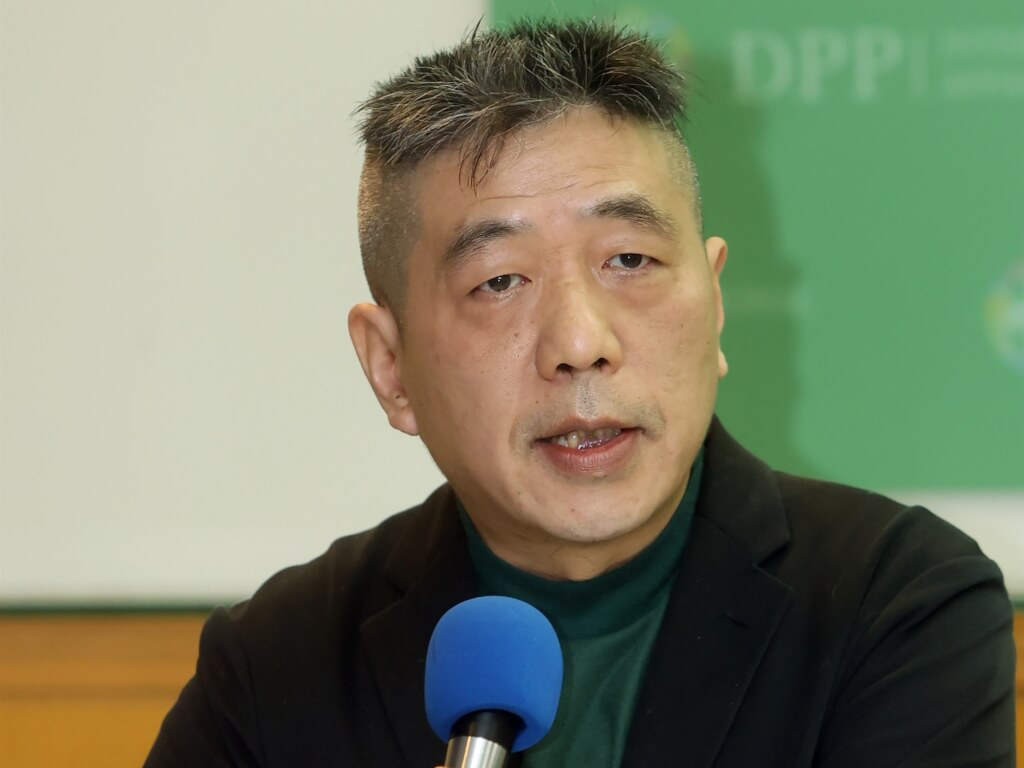
Su Tzu-yun, Director of the Institute for National Defense Strategy and Resource Research at the National Defense Research Institute, told CNA today that the CCP's intention is to increase its so-called nuclear deterrence capabilities.
He pointed out that the "JL-3" has a longer range than the previous "JL-2," reaching 12,000 kilometers, and has more multiple independently targetable re-entry vehicles (MIRVs) in terms of technology. When it enters space and re-enters the atmosphere, it can release about 10 MIRVs, similar to a shotgun, capable of attacking 10 cities or targets separately.
Su Tzu-yun continued, saying that because it is carried on a submarine, it has greater stealth capabilities. Submarines move underwater, making countermeasures more difficult and increasing the credibility of deterrence.
In terms of political implications, Su Tzu-yun said that for the CCP, this can create a political denial deterrence effect. Similar to the Russia-Ukraine war, countries did not send troops into Ukraine because Russia possesses about 6,000 nuclear warheads.
He said that in addition to China's existing conventional weapons denial strategy (A2/AD), adding nuclear warheads politically creates a more effective nuclear deterrence or nuclear coercion capability. This is also why the United States in recent years, especially during Trump's first term, has emphasized that China has been increasing its nuclear warheads, becoming a new threat.
However, Su Tzu-yun believes that the impact on Taiwan is indirect. He pointed out that it is difficult for the CCP to use nuclear warheads to attack Taiwan, as this would also cause pollution to China's own coastal areas. Nevertheless, it may increase the CCP's perceived willingness to deter the United States from jointly defending Taiwan. According to estimates by the U.S. Department of Defense, China's nuclear warheads could increase from the current approximately 400-500 to 1,500 by 2030, shifting from conventional deterrence to coercion, posing new obstacles to joint defense in the Taiwan Strait.
As for Taiwan's response, Su Tzu-yun believes that the most important thing is still conventional deterrence. Moreover, Taiwan has the world's highest-altitude Leshan radar, which can see very far. If the CCP intends to threaten the United States with intercontinental missiles or other nuclear weapons, Taiwan can assist in early tracking.
He also pointed out that from Taiwan's location, the Bashi Channel to the south is the most important channel for China's submarine forces to enter the Pacific. Therefore, by strengthening its own defense capabilities and providing early warning capabilities to allied nations, and by deterring Chinese submarines from entering the Pacific, Taiwan can enhance its strategic position.
Lin Ying-yu, an associate professor at the Graduate Institute of International Affairs and Strategic Studies at Tamkang University, explained that it is currently uncertain which model of JL is being tested. He speculated that if it is the "JL-2," it could also represent that the "JL-3" is in preparation, because generally speaking, it might be "one generation for export, one generation for actual combat, and one generation for research and development." The ability to test-fire directly this time also indicates that the next generation of missiles has made some progress.
Lin Ying-yu pointed out that since this is a submarine-launched ballistic missile, it also proves the importance of anti-submarine warfare and underwater battlefield operations by the United States and surrounding countries recently. Especially for Taiwan, if Taiwan or countries in the First Island Chain can strengthen their anti-submarine warfare capabilities, it will make it difficult for Chinese nuclear submarines to break through the First Island Chain and enter the Pacific for test-firing. In the future, attention should not only be paid to missile technology or intercontinental missiles, but also to underwater combat capabilities.
He said that the CCP will not use such submarine-launched nuclear missiles to directly attack Taiwan; it is mainly to form nuclear weapon deterrence against the United States. This will make the United States think more about intervening in Taiwan Strait issues in the future.
Lin Ying-yu added that if the missile tested is the "JL-3," with a range exceeding 9,000 kilometers, this also reaffirms the importance of sea control in the waters within the First Island Chain, including the East China Sea, South China Sea, and Taiwan Strait. This is also why China has many oceanographic survey ships patrolling around the Taiwan Strait recently, as it wants to understand the underwater hydrological conditions to develop the underwater battlefield. (Editor: Chu Chien-ling) 1150706
Stand with facts, your every donation is a force to protect press freedom
Download CNA's "First News" APP for real-time updates
Text, images, and videos on this website may not be reproduced, broadcast, transmitted, or used without authorization.
FACT BOX
- Source: CNA (Central News Agency)
- Category: 军事