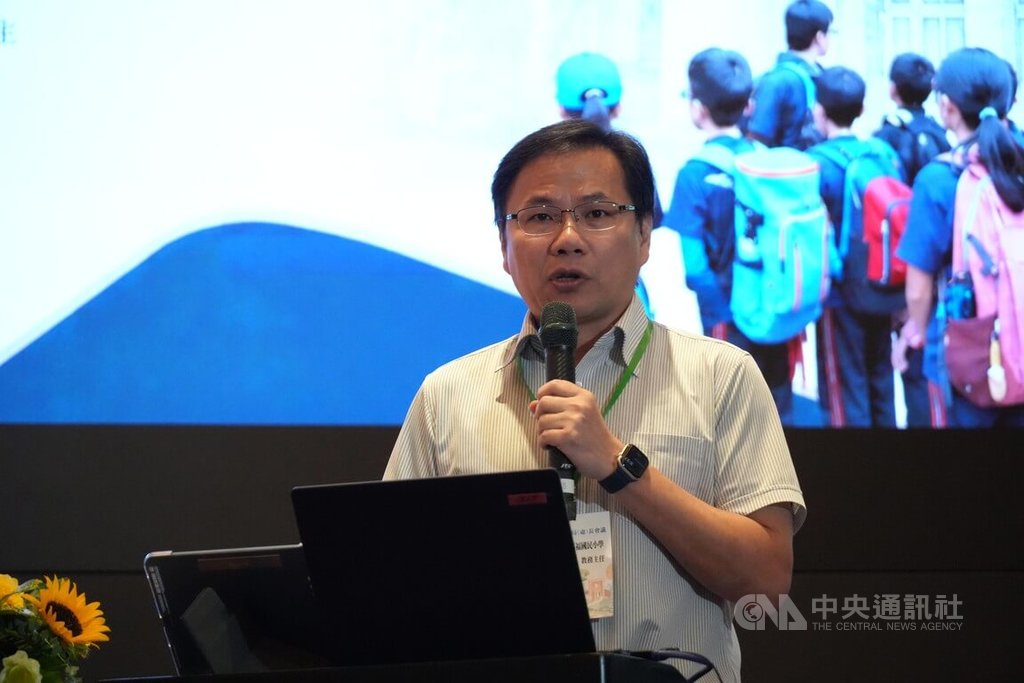
(CNA reporter Chen Chih-chung Hsinchu, July 7) The 2026 National Education Bureau Directors Meeting was held in Hsinchu today, inviting several teachers to share their experiences in teaching human rights and transitional justice. Taipei's Wanfu Elementary School encourages students to engage with historical sites, such as reflecting on authoritarian history at the Chiang Kai-shek Memorial Hall and practicing democratic dialogue.
The Ministry of Education held the 2026 National Education Bureau Directors Meeting in Hsinchu County today, selecting Social-Emotional Learning, AI Integration in Curriculum, and Human Rights and Transitional Justice as the three major themes, and invited several teachers and principals to share their experiences.
Lin Chiang-tai, a teacher from Wanfu Elementary School, pointed out that each county and city has cultural heritage sites and former residences. Teachers can design worksheets and teaching kits to encourage students to visit historical sites and transform cultural heritage into a classroom for civic literacy.
Lin Chiang-tai used the "Yin Hai-gu's Former Residence" as an example, guiding students to consider how intellectuals faced unreasonable power and expressed their concern for society through writing, thereby helping students understand that freedom of speech requires a rational, responsible, and safe environment.
In the "Chiang Kai-shek Memorial Hall" curriculum, democratic dialogue can be practiced. Lin Chiang-tai said that people of different generations have different feelings about this space. Some see it as a historical symbol of the authoritarian era, some see it as a field for practicing democratic movements, and some consider it a place for recreation. The curriculum does not require immediate value judgments but aims to teach students to listen and understand people's different feelings.
Huang Chia-shan, a teacher from Minsheng Junior High School in Chiayi City, approached the topic through banned songs and books, guiding students to consider how freedom of speech was deprived during the martial law period. She also said that transitional justice issues are often labeled as political and easily associated with the policy operations of specific political parties. Today's students have not experienced the martial law period and tend to be "unmoved" by such materials. More dialogue between teachers and students is needed, rather than one-way output, to provide more diverse media and debatable issues, so that the DNA of democracy can grow.
Chen Fen-chi, a teacher from CTBC International High School in Tainan City, also pointed out that many students feel that the White Terror is far away, or they don't understand why they need to teach such terrible history. In fact, what students are truly unfamiliar with is "why people chose to remain silent during the authoritarian era." She uses "readers' theater" to lead teachers and students into historical contexts, allowing them to experience the characters' fear, struggles, and choices. (Editor: Lin Shu-hui) 20270707
Stand with facts, your every donation is a force to protect press freedom
Download the CNA "One-Stop News" APP and grasp the latest news in real-time
No unauthorized use, broadcasting, or transmission of the text, images, and audio on this website is permitted.
FACT BOX
- Source: CNA (Central News Agency)
- Category: 教育