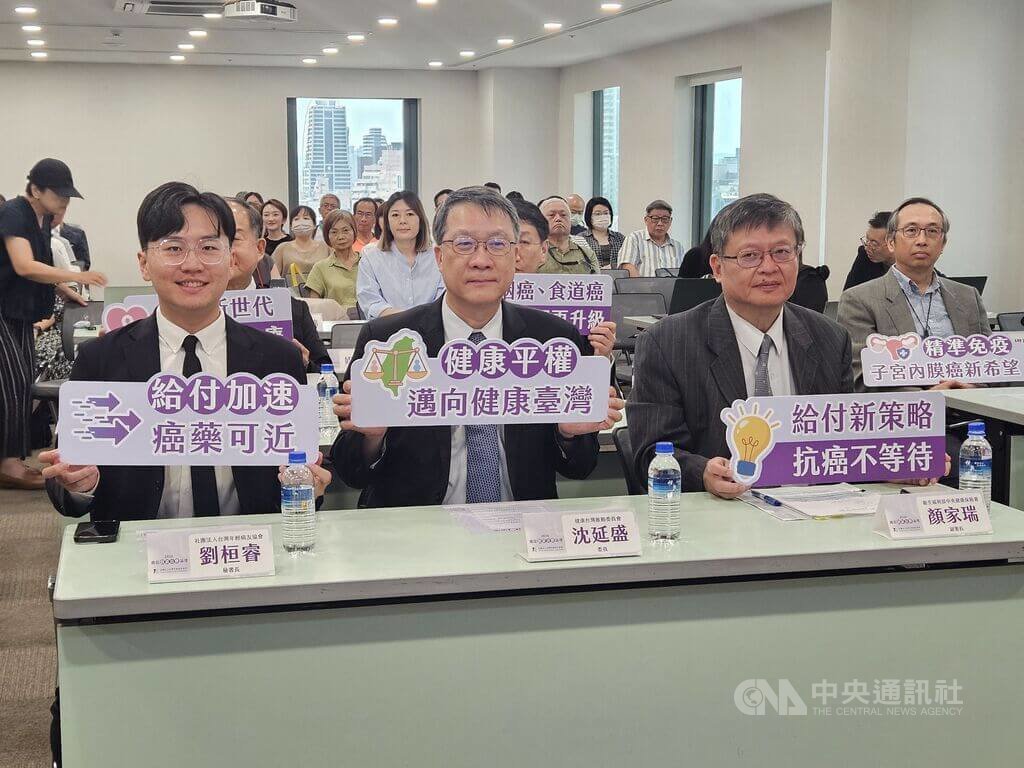
The fastest journey to Mars takes about 200 days, yet many cancer patients cannot even wait for new drugs to be covered by national health insurance before their condition worsens. The NT$10 billion new drug fund can provide emergency relief; so far, NT$2.7 billion has been used, benefiting over 3,500 individuals with new drug treatments. The medical community hopes for an increased budget.
The Taiwan Young Patients Association held the 2026 Cancer Innovative Treatment Forum today, discussing how innovative treatments can more quickly meet clinical needs from the perspectives of patient needs, cancer medical equity, new drug accessibility, and national health insurance coverage strategies.
For most people, national health insurance helps cover medical expenses when visiting a doctor and receiving treatment. However, Shen Yen-sheng, a committee member of the Healthy Taiwan Promotion Association and a physician in the Department of Surgery at National Cheng Kung University Hospital, pointed out today that there are still disparities in resources for cancer treatment in Taiwan, and a phenomenon where patients with the same cancer have different outcomes.
Shen Yen-sheng stated that due to effective screening and the launch and subsequent national health insurance coverage of new drugs such as targeted therapies and immunotherapies, the 5-year survival rates for lung cancer, breast cancer, and colorectal cancer have significantly increased. Conversely, for cancers like extrahepatic bile duct cancer, intrahepatic bile duct cancer, and urothelial carcinoma, the 5-year survival rates remain low or even decrease due to a lack of appropriate drugs.
Shen Yen-sheng further explained that there are many obstacles to fairness in cancer treatment. Firstly, there is the urban-rural gap. Taiwan's medical resources and medical centers are mainly concentrated in the northern region, making it difficult for people in remote areas like Hualien, Taitung, Chiayi, and Tainan to receive adequate medical care. They lag behind urban medical centers in terms of medical resources and drug accessibility. Small hospitals in remote areas have fewer cases, and their surgical experience and outcomes are naturally inferior.
Secondly, there is the 'financial toxicity' of high-priced new drugs. Shen Yen-sheng explained that new cancer drugs, such as immunotherapies (IO) and antibody-drug conjugates (ADC), cost about NT$2 million to NT$3 million per year out-of-pocket. Many patients are forced to abandon treatment. The average time from new drug review to national health insurance coverage is 700 days, causing patients to miss the golden period for treatment.
Although the cancer new drug fund provides temporary payment, Shen Yen-sheng pointed out that the NT$10 billion cancer new drug fund allocated for 2026 has already used NT$2.7 billion as of July 2026, enabling over 3,500 patients to receive new drug treatments. However, 78% of oncologists still advocate for an increased budget to provide earlier support to patients.
Shen Yen-sheng urged the National Health Insurance Administration to accelerate the review process for new drugs to be included in national health insurance, shortening the time lag with international treatment guidelines. Medical institutions should promote telemedicine technology, using video conferencing to enable regional hospitals and medical centers to jointly conduct multidisciplinary teams, bridging the gap in technology and expertise.
Pan Yi-ling, the founding president of the Taiwan Young Patients Association, stated that the ultimate meaning of treatment progress lies in whether patients can receive support when needed. Reducing mortality is not just a healthcare issue but also an equity issue. In the future, she looks forward to continued cooperation between the government, the medical community, and patient groups to increase the opportunities for clinically valuable treatments to be incorporated into actual patient care. (Editor: Chen Ching-fang) 0708
Stand with facts, your every donation is a force to protect press freedom
Download the CNA 'One News' APP for real-time updates
The text, images, and videos on this website may not be reproduced, publicly broadcast, publicly transmitted, or used without authorization.
FACT BOX
- Source: CNA (Central News Agency)
- Category: 政策